Author: Devika R
June 2, 2026
8 min read
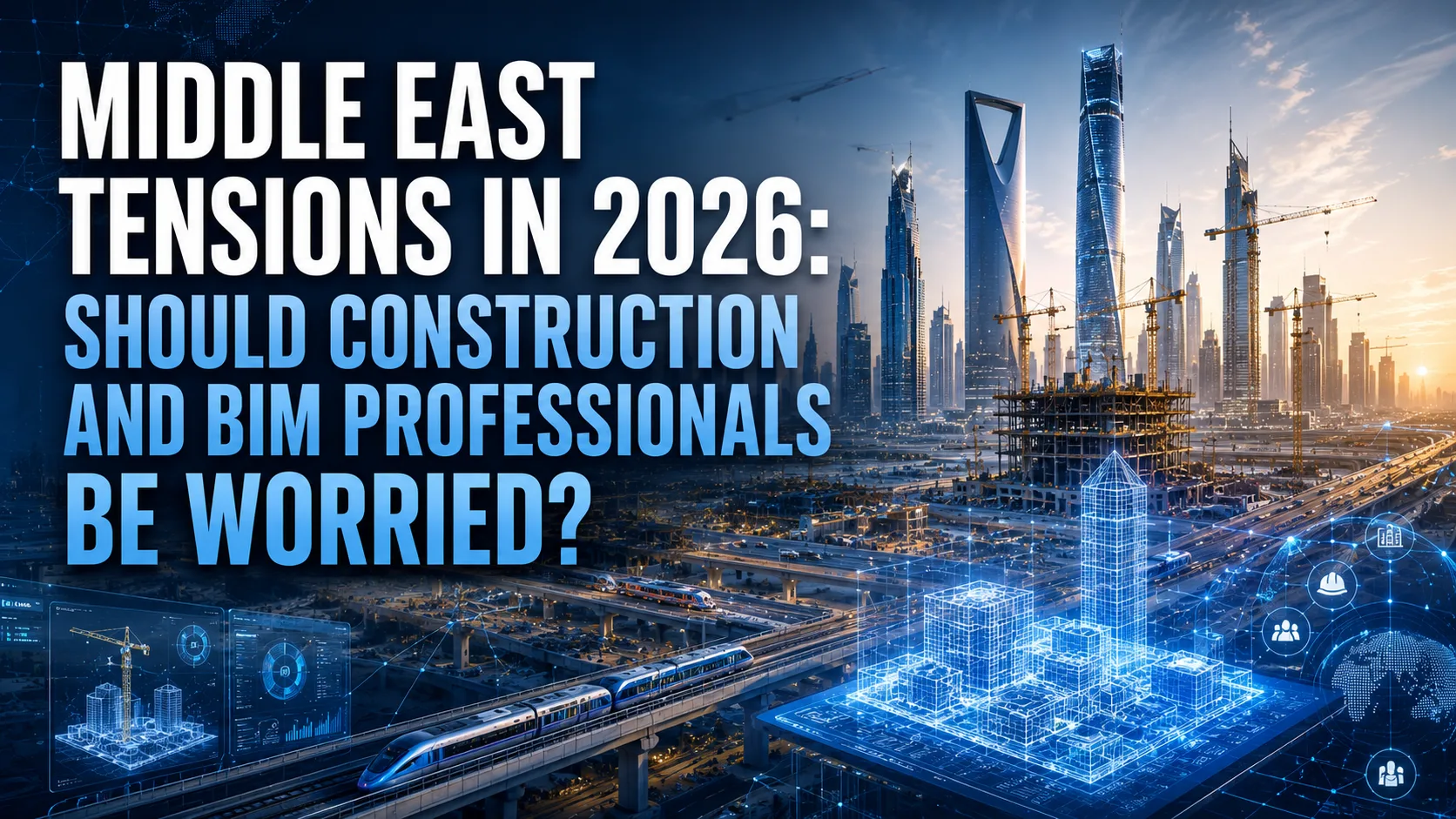
Over the past few weeks, concerns surrounding tensions in the Middle East have once again started appearing across industry discussions. Engineers are asking: These concerns are understandable.
Over the past few weeks, concerns surrounding tensions in the Middle East have once again started appearing across industry discussions.
Engineers are asking:
- Will Gulf construction projects slow down?
- Could hiring be reduced across Saudi Arabia and the UAE?
- Will mega projects be delayed?
- Is this another COVID-style disruption for the construction industry?
These concerns are understandable.
Many professionals still remember the uncertainty of 2020, when the COVID-19 pandemic disrupted global supply chains, paused projects, and created hiring challenges across the construction sector.
However, while today's geopolitical situation creates uncertainty, it is fundamentally different from what the industry experienced during COVID-19.
And understanding that difference is important.
1. Why Comparisons with COVID Keep Appearing
Whenever major global events occur, people naturally compare them to the biggest disruption the industry experienced in recent years.
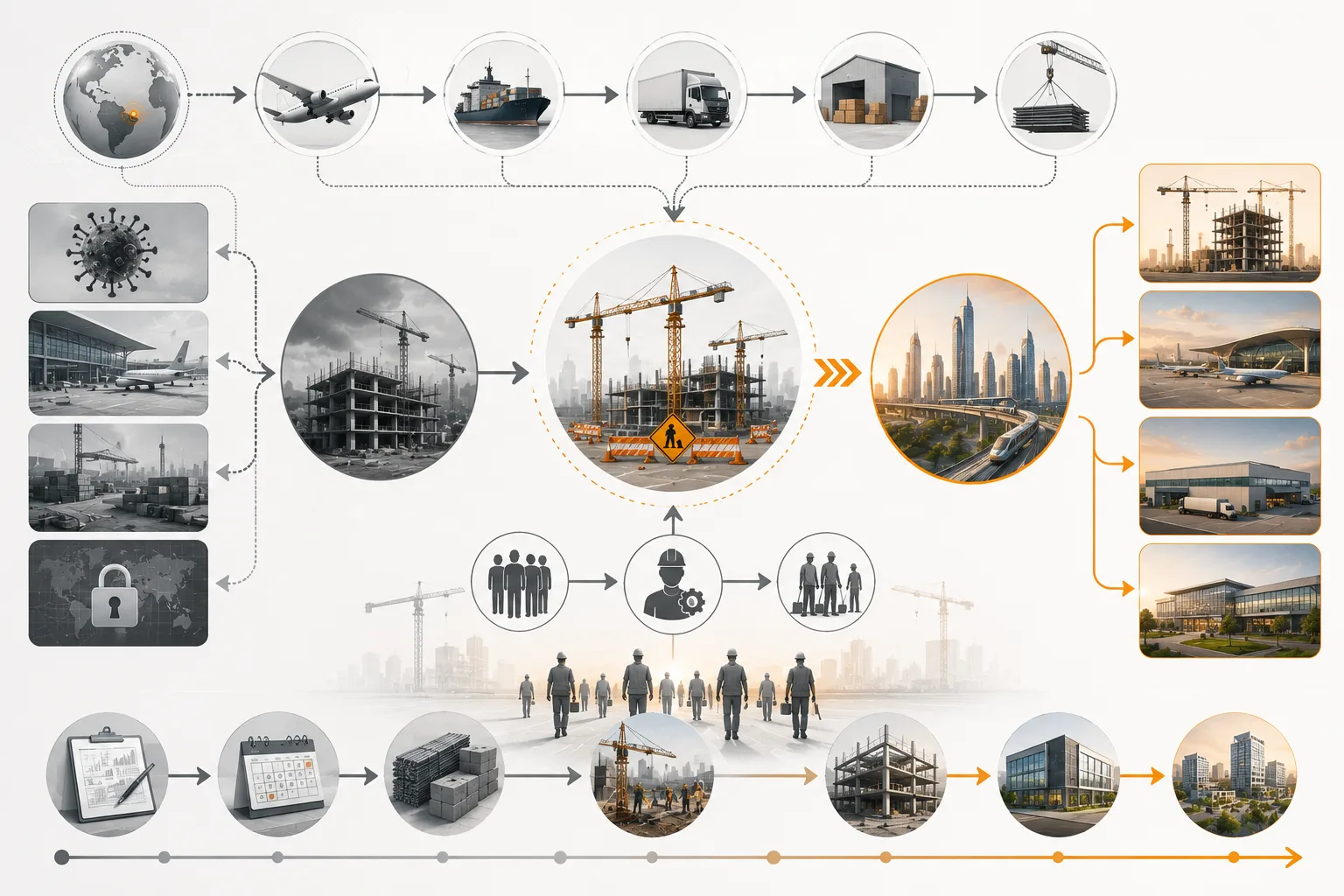
During COVID:
- Borders closed
- Flights stopped
- Labour movement became difficult
- Supply chains were disrupted globally
- Construction activity slowed across multiple countries simultaneously
Projects were delayed not because companies wanted to pause them, but because movement itself became restricted.
The impact was global.
Almost every market experienced the same challenge at the same time.
Yet something interesting happened after the recovery.
Construction returned faster than many expected.
Dubai accelerated development.
Saudi Arabia expanded Vision 2030 initiatives.
Infrastructure spending increased.
Demand for BIM professionals, engineers, coordinators, and project teams returned strongly.
The biggest lesson from COVID was simple:
Construction may slow down temporarily, but long-term development rarely stops.
2. The Current Situation Is Different
Unlike COVID, the current challenge is not a global shutdown.
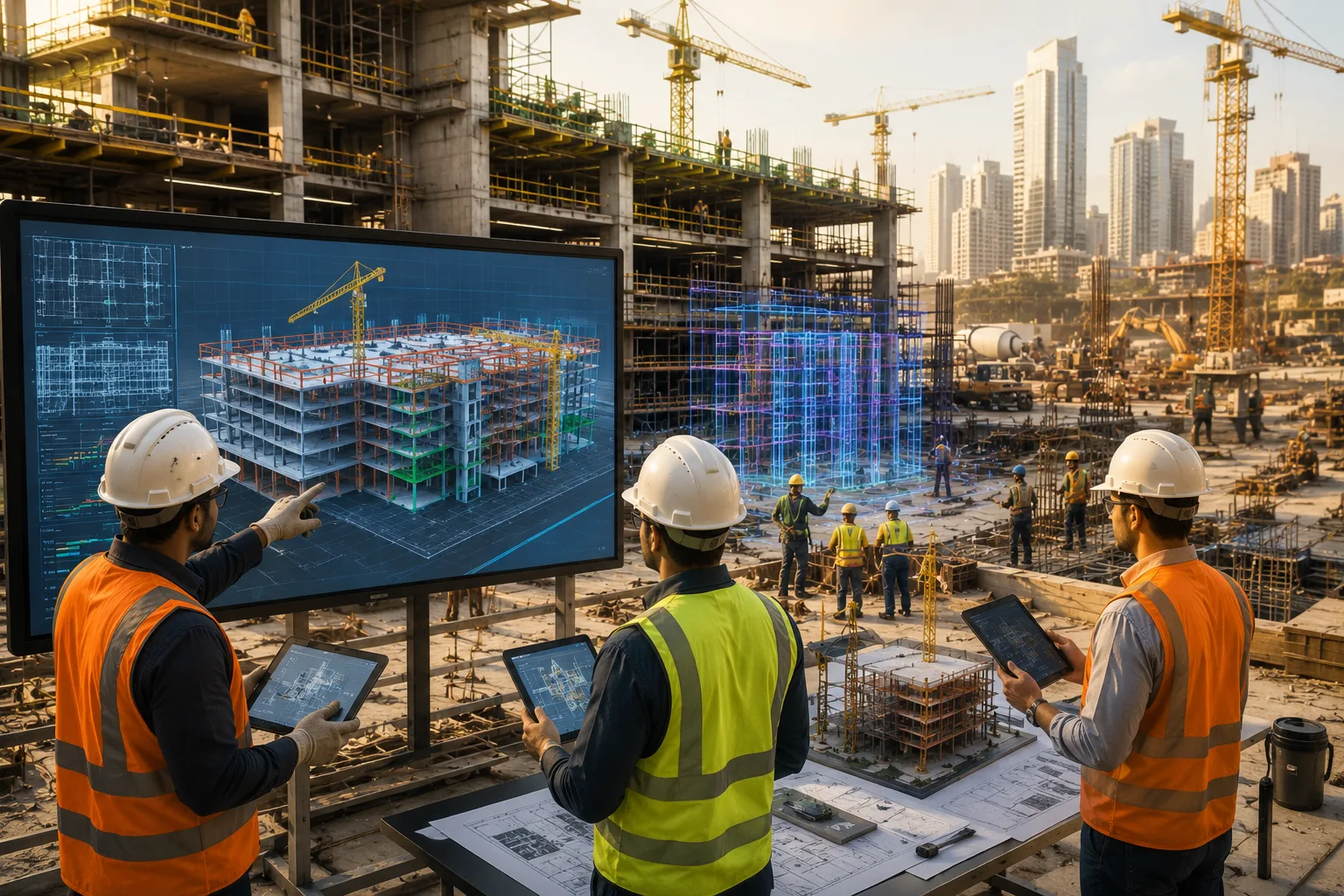
It is primarily about uncertainty.
When uncertainty increases, investors become more cautious.
Developers may take longer to approve new projects.
Companies may delay expansion decisions.
Recruitment processes may become more selective.
But this does not automatically mean that construction activity stops.
In most cases, projects already under construction continue because substantial investments have already been committed.
The impact is usually felt more in:
- New project launches
- Investment timing
- Expansion strategies
- Hiring speed
Rather than complete project shutdowns.
3. Why the Gulf Construction Market Remains Strong
The Middle East is not dependent on a single project or a single sector.
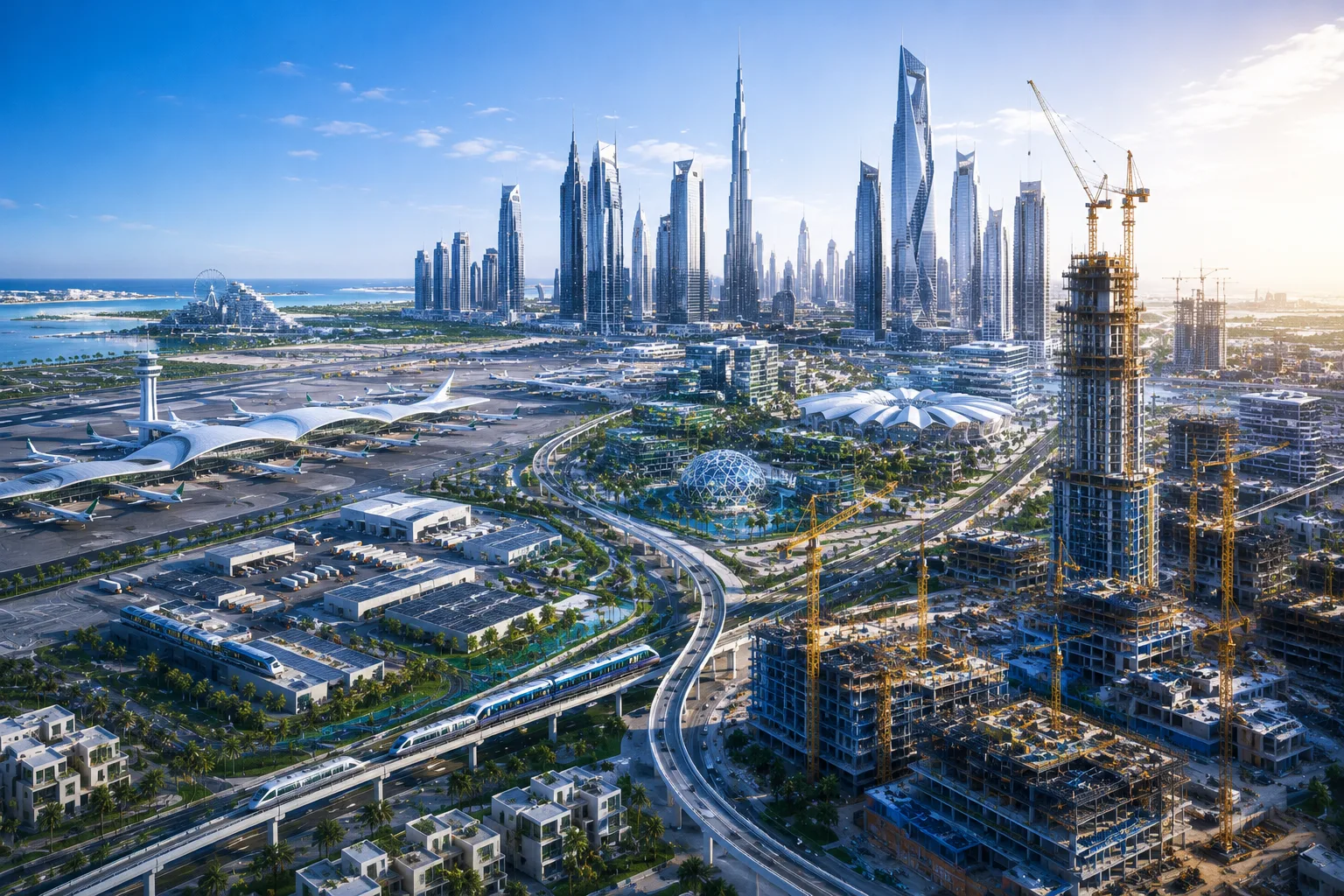
Countries across the region continue investing heavily in:
- Transportation infrastructure
- Tourism developments
- Logistics hubs
- Healthcare facilities
- Data centres
- Industrial zones
- Residential communities
These investments are tied to long-term national development strategies.
Saudi Arabia's Vision 2030, the UAE's diversification plans, and major infrastructure programs across the region were designed with decades-long objectives in mind.
Temporary uncertainty may affect timelines.
But it rarely changes the overall direction.
4. What This Means for Saudi Arabia's Mega Projects
Projects such as:
- NEOM
- Qiddiya
- Diriyah Gate
- The Red Sea Development
continue to represent some of the largest construction investments globally.
While individual phases may be adjusted, redesigned, or rescheduled, these projects remain central to Saudi Arabia's long-term economic plans.
For BIM professionals and engineers, this distinction is important.
A project revision is not the same as a project cancellation.
And large-scale developments often evolve throughout their lifecycle.
5. Digital Construction Is Becoming Even More Important
Periods of uncertainty often create pressure to improve efficiency.
This is one reason BIM adoption continues growing across the region.
Owners and developers increasingly focus on:
- Cost control
- Coordination efficiency
- Reduced rework
- Better project visibility
- Faster decision-making
BIM helps support all of these objectives.
As a result, demand continues for professionals who understand:
- Revit workflows
- MEP Coordination
- Navisworks Clash Detection
- BIM Standards
- Autodesk Construction Cloud
- Information Management
Companies are increasingly looking beyond software knowledge and focusing on professionals who can contribute to project delivery and coordination.
6. What Professionals Should Focus On Right Now
Instead of worrying about headlines, construction professionals should focus on areas that remain valuable regardless of market conditions.
These include:
Markets may fluctuate.
But professionals who continue building relevant skills tend to remain competitive even during uncertain periods.
One trend has remained consistent across the global construction industry:
Technology adoption tends to accelerate during periods when companies need greater efficiency.
Whether during economic slowdowns, project pressures, or changing market conditions, firms continue looking for ways to deliver projects with better coordination and fewer errors.
This is why BIM, digital construction workflows, and project information management continue becoming more important across the Middle East.
The industry's direction remains clear:
Projects are becoming increasingly digital, collaborative, and data-driven.
7. Looking Ahead
No one can predict geopolitical events with certainty.
But history offers an important perspective.
The construction industry has successfully navigated:
- Financial crises
- Oil market fluctuations
- Global recessions
- Pandemics
- Regional conflicts
Each time, projects adapted, markets adjusted, and growth eventually resumed.
The current situation may create caution.
It may slow certain decisions.
But it does not eliminate the need for:
- Housing
- Infrastructure
- Transportation
- Healthcare facilities
- Smart cities
- Economic development
And those needs will continue driving construction activity across the Middle East for years to come.
For BIM professionals, engineers, and project teams, the focus should remain on long-term capability rather than short-term uncertainty.
Because while headlines change quickly, infrastructure development is always a long-term game.
Professional BIM Course
Master BIM Course
Structural Design Concepts and BIM
Certified MEPF BIM Master Course
Electrical BIM Professional Program
RenderLab – Master 3D Modeling & Photorealistic Rendering
Multi-Tool Mastery for Architects & Engineers
BIM Coordinator Workflow Program
BIM FastTrack – 30 Day Intensive Training
Global Architectural & Structural BIM Project Program