Author: Devika R
July 24, 2026
8 min read
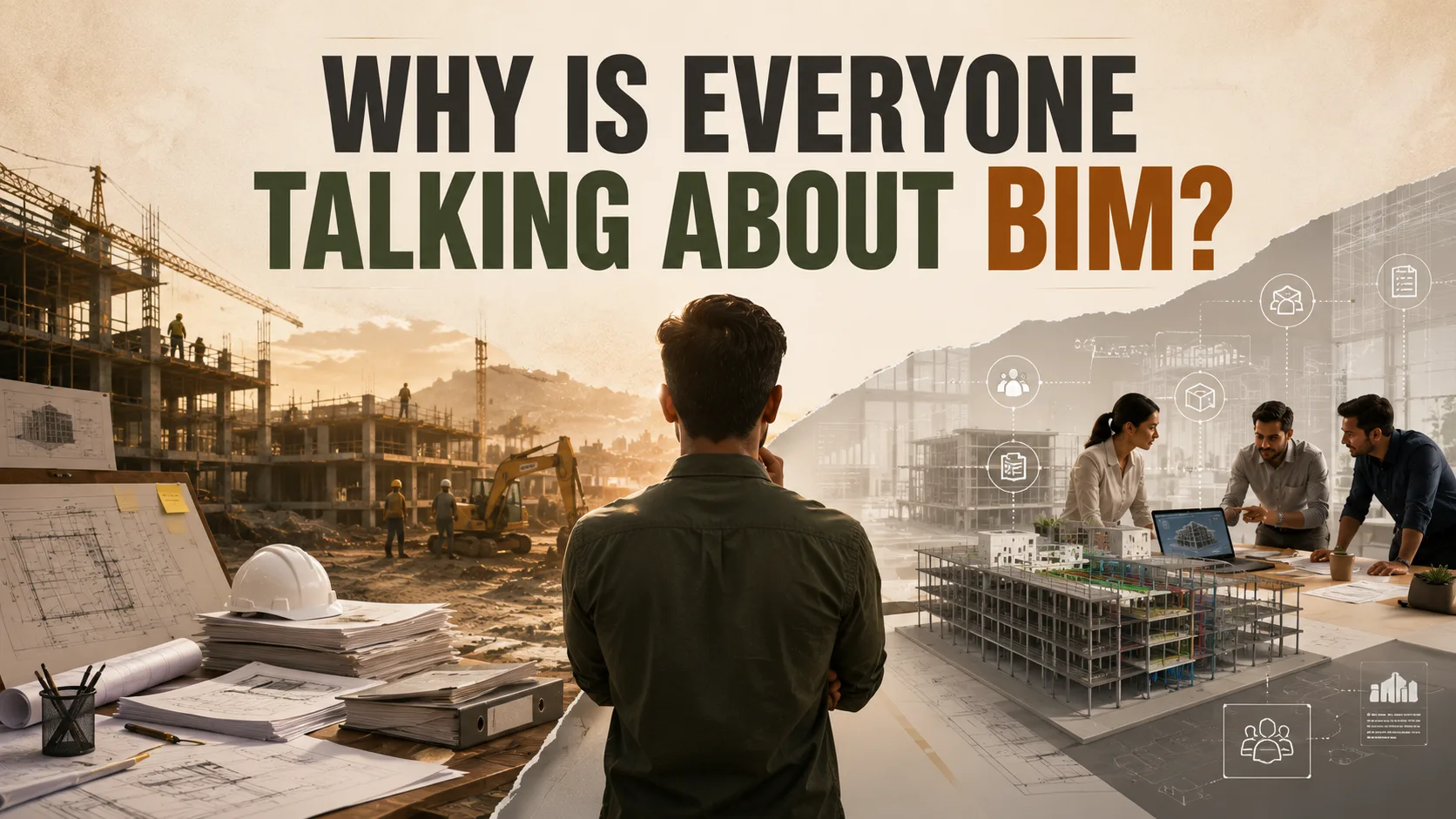
1. If You're a Civil Engineering Student, You've Probably Noticed Something…
Open Instagram.

Browse LinkedIn.
Watch construction videos on YouTube.
Attend a college seminar.
Or simply scroll through your WhatsApp groups.
You'll probably come across the word BIM more than ever before.
Naturally, many students start asking:
"Why is everyone suddenly talking about BIM?"
"Is it just another trend?"
The short answer is no.
The growing attention around BIM isn't driven only by training institutes or social media.
It's largely a reflection of how the construction industry itself is evolving.
Let's look at why.
2. The Construction Industry Is Going Digital
For decades, construction projects depended mainly on 2D CAD drawings.

Each discipline worked separately, and coordination often happened during construction—sometimes leading to delays, rework, and unexpected site issues.
Today, many projects are shifting toward Building Information Modeling (BIM), where architects, structural engineers, MEP engineers, and contractors collaborate using connected digital models.
Instead of simply creating drawings, BIM helps teams:
- Improve collaboration
- Reduce design conflicts
- Manage project information
- Coordinate multiple disciplines
- Support better project planning
This digital transformation is one of the biggest reasons BIM has become part of modern construction workflows.
3. Governments Are Encouraging BIM Adoption
The growing use of BIM isn't happening by chance.
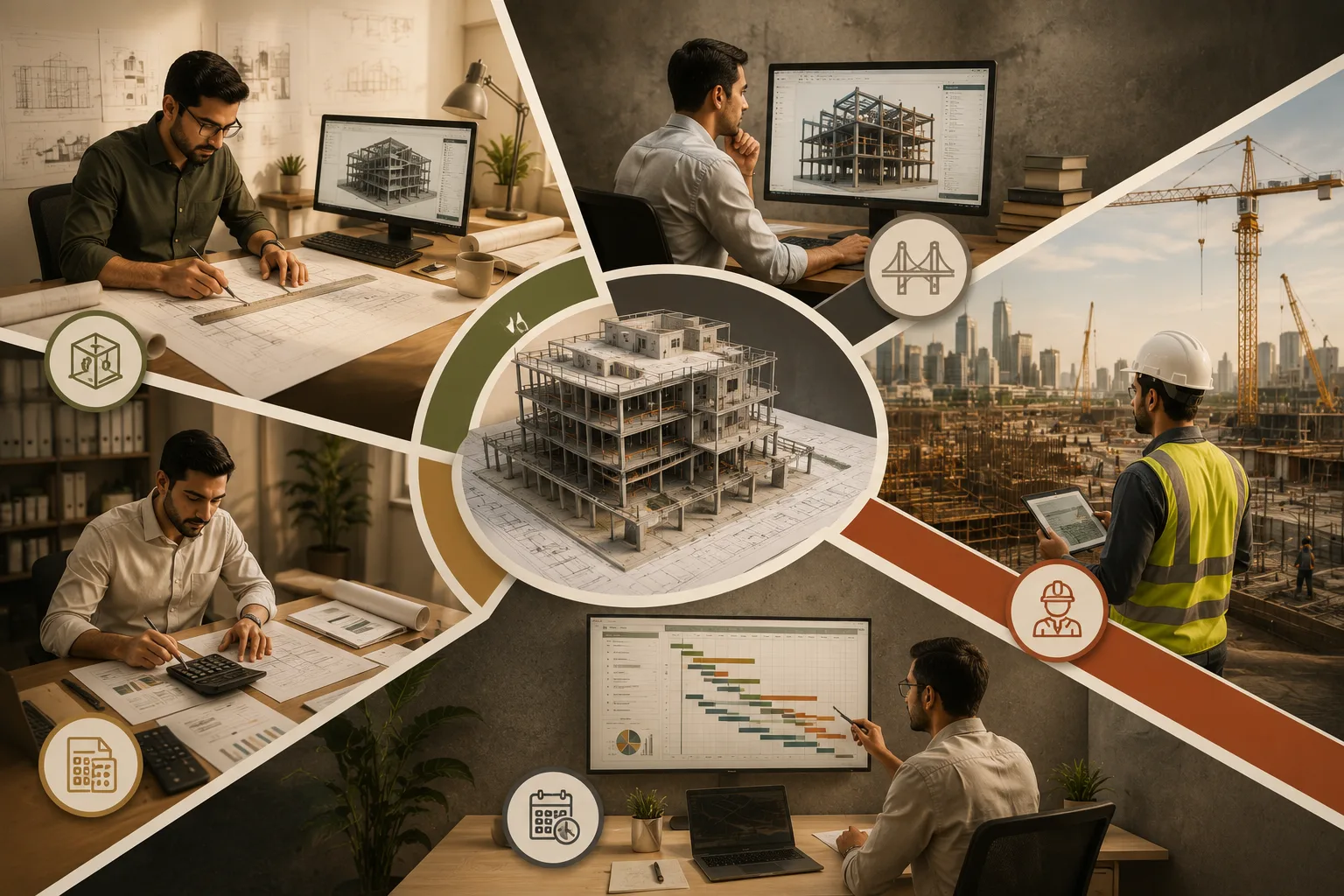
Many governments and public agencies around the world are encouraging—or in some cases requiring—the use of BIM for infrastructure and public construction projects.
Countries across Europe, Asia, the Middle East, and other regions are increasingly adopting BIM standards to improve project quality, collaboration, and lifecycle management.
As BIM adoption expands, companies naturally look for professionals who understand these digital workflows.
4. Reality Check
The demand for BIM isn't driven only by software.
It's driven by how projects are now being planned, coordinated, and delivered.
5. Modern Construction Projects Need Better Coordination
Think about projects like:
- Airports
- Metro rail systems
- Hospitals
- Commercial towers
- Data centres
- Industrial facilities
- Smart city developments
These projects involve hundreds of professionals working across multiple disciplines.
Architects.
Structural Engineers.
Mechanical Engineers.
Electrical Engineers.
Plumbing Engineers.
Contractors.
Consultants.
Without proper coordination, even small design conflicts can become costly during construction.
BIM helps project teams identify many of these issues before work begins on site.
6. BIM Doesn't Replace Civil Engineers
One of the biggest misconceptions among students is that BIM is replacing traditional engineering roles.
It isn't.
BIM doesn't replace:
- Site Engineers
- Structural Engineers
- Quantity Surveyors
- Architects
- Planning Engineers
- MEP Engineers
Instead, BIM helps these professionals work together more efficiently by providing a shared digital environment for coordination, documentation, and information management.
Think of BIM as a collaborative process—not a replacement for engineering.
7. So Why Do You See So Many BIM Advertisements?
If you've searched for construction careers recently, you've probably noticed that BIM training appears almost everywhere.
That's because many training providers have recognised the industry's increasing demand for BIM skills.
However, advertising alone shouldn't determine your career choice.
Before choosing any specialization, ask yourself:
- Do I enjoy technology and digital workflows?
- Am I interested in coordination and problem-solving?
- Do I prefer design, site execution, planning, or commercial management?
- Does this career align with my long-term goals?
Choosing a career based on genuine interest is far more valuable than simply following the latest trend.
8. Is BIM the Right Career for Everyone?
Not necessarily.
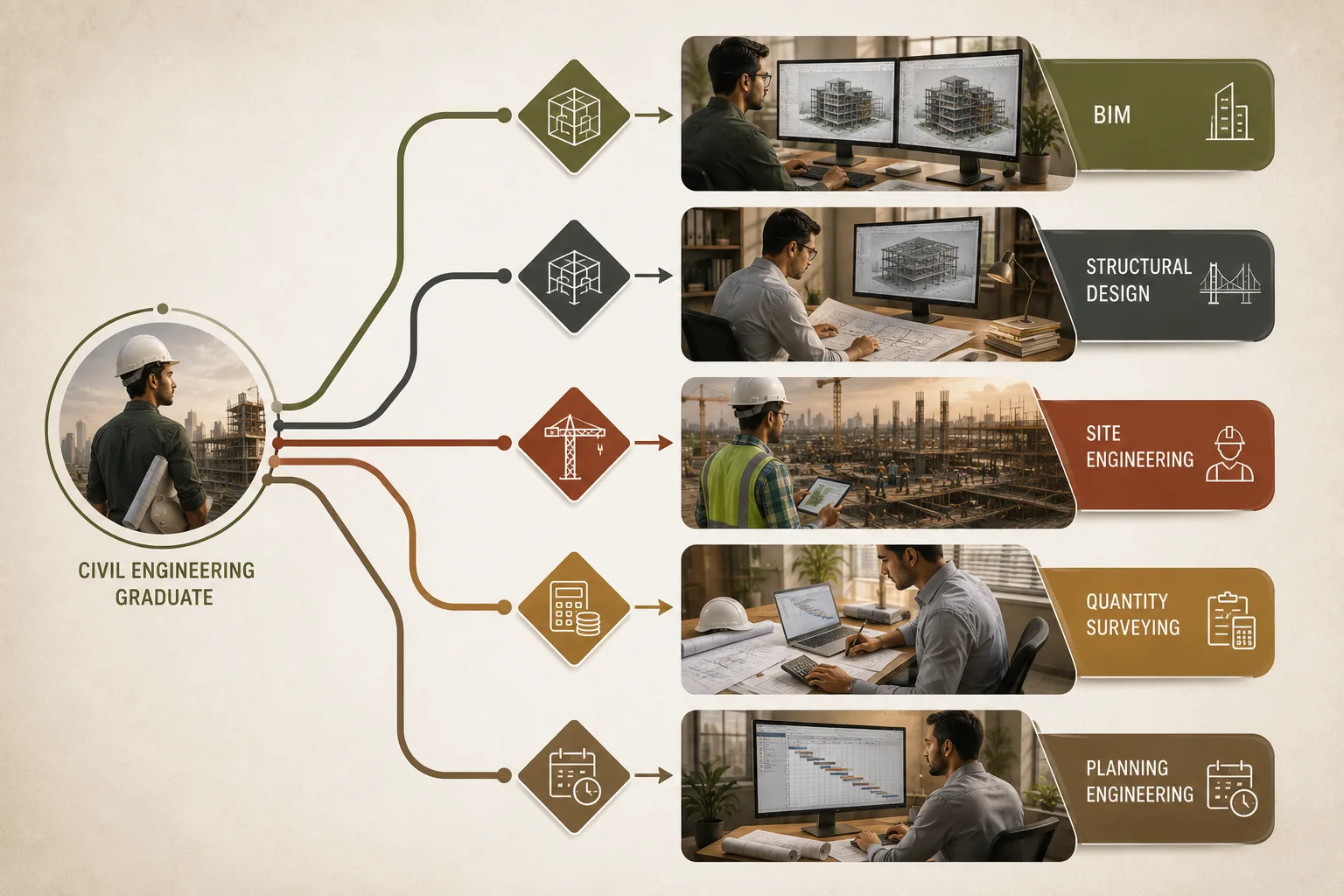
The construction industry offers many rewarding career paths, including:
| Career Path | Primary Focus |
|---|---|
| BIM | Digital construction, coordination, and information management |
| Structural Design | Engineering analysis and structural design |
| Site Engineering | Construction execution and site supervision |
| Quantity Surveying | Cost estimation, contracts, and commercial management |
| Planning Engineering | Scheduling, resource planning, and project control |
Each specialization contributes to successful construction projects in different ways.
The best choice depends on your interests—not on what's currently trending.
9. Why BIM Continues to Gain Attention
BIM is receiving more attention today because it aligns with the direction in which the construction industry is moving.
The industry increasingly values:
- Digital collaboration
- Connected project information
- Better coordination
- Improved documentation
- Smarter project delivery
These changes have made BIM an important part of many modern construction projects—but it remains one of several valuable career paths within Civil Engineering.
Final Thoughts
If it feels like everyone is talking about BIM, it's because the construction industry itself is changing.
The conversation isn't really about software.
It's about how buildings are designed, coordinated, documented, and delivered in a more connected way.
Whether you choose BIM, Structural Design, Site Engineering, Quantity Surveying, or Planning Engineering, the most important decision is to choose a path that matches your interests, strengths, and long-term career goals.
Because the best career isn't the one everyone else is choosing.
It's the one you'll enjoy building for years to come.
Frequently Asked Questions
Why is BIM becoming so popular?
BIM is becoming more popular because it improves collaboration, coordination, and project information management across modern construction projects.
Is BIM replacing Civil Engineering jobs?
No. BIM supports Civil Engineers, Architects, Structural Engineers, MEP Engineers, and other professionals by improving how they work together.
Why are companies hiring more BIM professionals?
As more organizations adopt digital construction workflows, they need professionals who understand BIM modeling, coordination, and information management.
Should every Civil Engineering student learn BIM?
Not necessarily. BIM is an excellent option for students interested in digital construction and coordination, but the right career path depends on individual interests and goals.
Is BIM only useful for large construction projects?
While BIM is widely used on complex projects like airports, hospitals, and metro systems, its principles can also benefit many medium-sized and commercial projects.
Professional BIM Course
Master BIM Course
Structural Design Concepts and BIM
Certified MEPF BIM Master Course
Electrical BIM Professional Program
RenderLab – Master 3D Modeling & Photorealistic Rendering
Multi-Tool Mastery for Architects & Engineers
BIM Coordinator Workflow Program
BIM FastTrack – 30 Day Intensive Training
Global Architectural & Structural BIM Project Program