Author: Devika R
May 11, 2026
9 min read
The BIM industry has changed significantly over the last few years. Earlier, companies mainly looked for professionals who could create 3D models in tools like Revit. Today, the expectation is much broader—modern BIM workflows involve coordination, collaboration, data management, cloud platforms, standards, and digital construction processes.
This shift is creating a common question among students and young professionals: how do you actually grow in a BIM career—from beginner level to BIM Manager? Many learners stay stuck at the modeling stage because they focus only on software shortcuts rather than real project workflows—the same workflow logic we break down in how a real BIM project works from design model to construction site.
This guide explains how BIM careers typically progress in the global AEC industry and what skills become important at each stage—because BIM today is no longer just about software, it is about how projects are coordinated and delivered digitally.

Understanding the BIM career journey
A BIM career usually develops in stages. Most professionals begin with modeling and documentation work, then move into coordination, collaboration, and information management, and eventually into leadership roles. A common progression looks like BIM Fresher → BIM Author/Modeler → BIM Coordinator → BIM Lead → BIM Manager. The transition between these stages depends less on how many commands you know—and more on how well you understand workflows, communication, and project coordination.
1. The starting point: BIM Fresher
Every BIM career begins with the fundamentals. At fresher level, the focus is on Revit fundamentals, BIM workflow basics, documentation standards, views, sheets, families, and discipline understanding across architecture, structure, or MEP. This is where many learners make their first mistake: they focus on speed and shortcuts, assuming faster modeling automatically means better BIM skills. In real projects, accuracy and consistency matter far more than speed.
Companies usually evaluate freshers on model quality, understanding of standards, ability to follow workflows, and communication mindset. Professionals who build strong foundations at this stage grow much faster later—which is also why a “Revit level 99” certificate with no real project exposure rarely impresses recruiters on its own.
2. BIM is more than just Revit
One of the biggest misconceptions in the industry is believing that learning Revit alone makes someone a BIM professional. Revit is important—but BIM itself is a process. A real BIM workflow involves coordination between disciplines, clash management, standards compliance, information organisation, communication across teams, and data management.
This is why companies now look beyond software knowledge during interviews. They want professionals who understand how projects actually function—a point we cover in detail in what BIM recruiters will actually hire you for in 2026.
3. Moving beyond modeling
As professionals gain experience, they gradually move from pure modeling into more responsibility-driven roles. This stage involves developing coordination-ready models, understanding Level of Development (LOD), maintaining model quality, following naming conventions and standards, and managing documentation consistency.
At this point, professionals begin understanding something important: poor BIM models create real construction problems. Incorrect levels, duplicated elements, missing information, or coordination errors can lead to site clashes, rework, delays, and material wastage. This is why model quality becomes a major part of BIM implementation—if LOD is still fuzzy for you, start with our guide to understanding LOD & LOI in BIM.
A model that looks finished in 3D can still be unbuildable if levels, shared coordinates, and discipline information were never reconciled. Tools change, but discipline around standards is what actually moves a model from “looks done” to “build-ready.”
4. The shift into BIM coordination
One of the biggest career transitions happens when professionals move into coordination workflows. This is where BIM stops being just modeling and becomes project collaboration. BIM Coordinators typically handle clash detection, model reviews, coordination meetings, multi-disciplinary collaboration, BIM 360 and ACC workflows, and issue tracking.
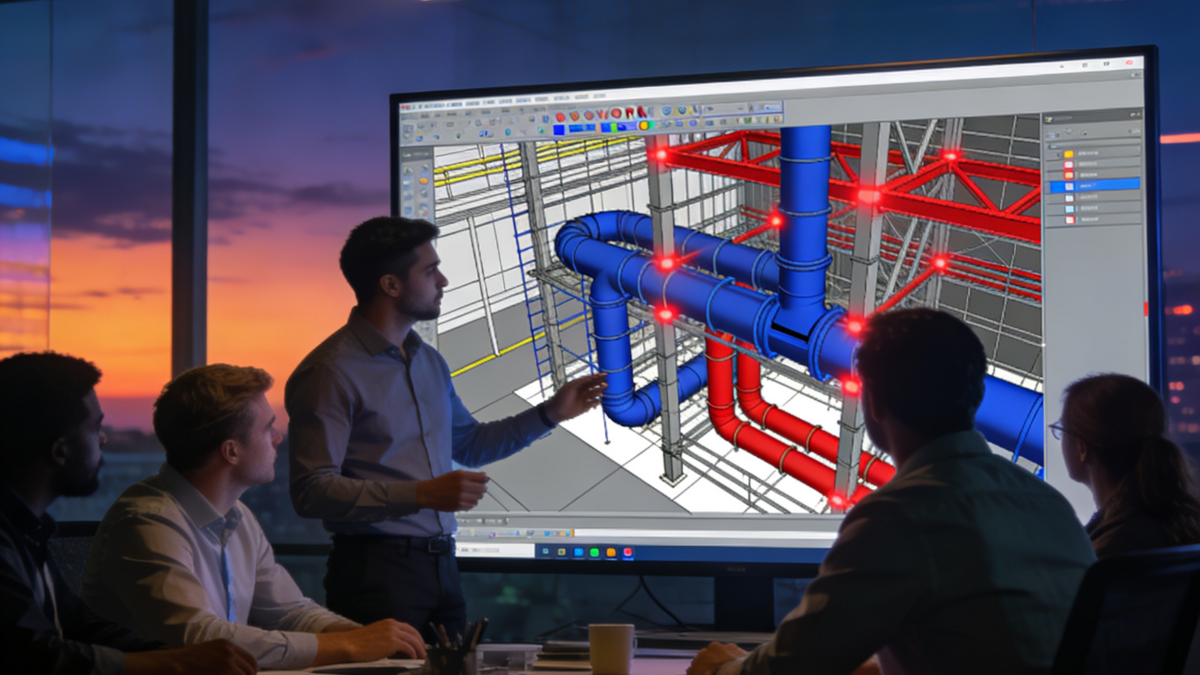
Using tools like Navisworks Manage, coordination teams identify problems before construction begins—for example, an HVAC duct intersecting a structural beam may not be visible in 2D drawings but is caught during design coordination. Our step-by-step Navisworks clash detection guide walks through this in practice, and whether a fresher can really become a BIM coordinator covers the realistic timeline.
5. BIM Manager: more than a technical role
The BIM Manager role is often misunderstood. Many assume it is simply a senior modeling position. In reality, BIM Managers are responsible for workflow strategy, team coordination, BIM Execution Plans, standards implementation, client communication, quality control, and digital project delivery. At this stage, communication and leadership become just as important as technical skills—a BIM Manager is not just managing models, they are managing how information flows across an entire project ecosystem.
Why global BIM projects demand workflow understanding
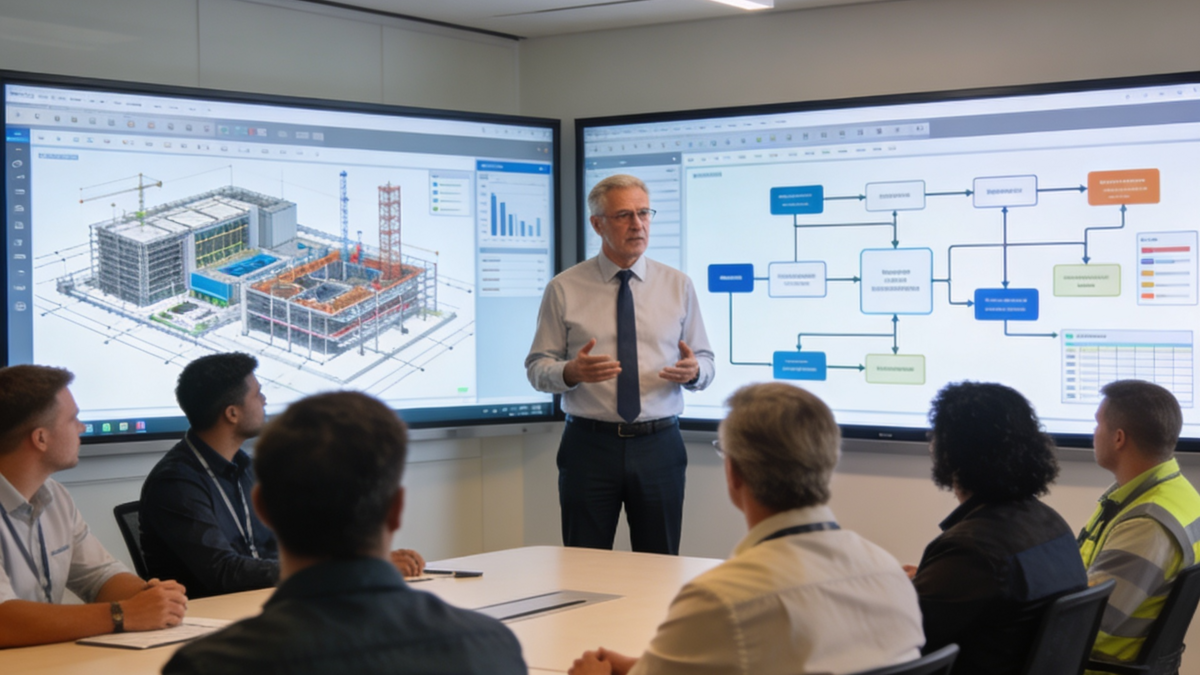
Countries like the UAE, Saudi Arabia, Qatar, and the UK increasingly rely on structured BIM implementation for infrastructure and commercial projects. This means professionals are expected to understand Common Data Environments (CDE), ISO 19650 workflows, collaboration standards, revision control, and information management. As projects become more cloud-based and globally coordinated, BIM professionals are expected to work within organised digital systems—not isolated software environments. That is why roles in BIM data management and digital delivery are growing rapidly across the AEC industry, as we explored in cloud-based BIM and the AEC industry and best practices for data management in BIM.
Common reasons BIM careers slow down
Many professionals struggle to grow because they remain focused only on software operation. The common growth barriers are: learning tools without understanding workflows (knowing commands is useful, but projects depend on coordination); ignoring standards (without structured workflows, professionals struggle in international projects); avoiding coordination (staying limited to modeling because clash detection and collaboration were never learned); lack of real project exposure (project-oriented learning is one reason live BIM projects often beat generic internships); and staying inside a comfort zone in an industry that keeps evolving.
The future of BIM careers
The BIM industry is gradually becoming more lifecycle-oriented and data-driven. Future BIM roles will increasingly involve information management, digital delivery, cloud collaboration, workflow integration, sustainability coordination, and asset information systems. The focus is shifting from “who can model fastest?” to “who can manage digital project workflows effectively?”—and even with AI entering BIM workflows, the human edge stays in coordination and judgement, not raw modeling speed.
The BIM Cafe perspective
At BIM Cafe Learning Hub, one thing has become increasingly visible: professionals who grow long-term are not the ones who only know software commands. They are the ones who understand coordination logic, collaboration workflows, standards and documentation, and real project environments. This is why BIM learning today needs to move beyond isolated software training and become more workflow-oriented and project-focused. If you are still picking a path, our guide on how to choose the right BIM course in 2026 goes deeper.
Conclusion
The BIM industry continues to create strong career opportunities across architecture, engineering, infrastructure, and MEP sectors—but long-term growth depends on much more than software knowledge alone. The journey from BIM Fresher to BIM Manager is built on technical foundations, workflow understanding, coordination skills, communication, project exposure, and leadership development. Because in today’s BIM industry the real value is no longer just creating models—it is understanding how projects work digitally from start to finish.
Frequently Asked Questions
What is the typical BIM career path from fresher to BIM Manager?
A common progression is BIM Fresher → BIM Author/Modeler → BIM Coordinator → BIM Lead → BIM Manager. Each step adds more workflow, coordination, and communication responsibility rather than just more software commands.
Is learning Revit enough to become a BIM professional?
No. Revit is an important tool, but BIM is a process built on coordination, clash management, standards, information management, and communication. Employers increasingly screen for workflow understanding, not only software skills.
What does a BIM Coordinator actually do?
A BIM Coordinator handles clash detection, model reviews, coordination meetings, multi-disciplinary collaboration, BIM 360/ACC workflows, and issue tracking—catching problems like a duct clashing with a beam during design instead of on site.
Is a BIM Manager just a senior modeler?
No. A BIM Manager focuses on workflow strategy, team coordination, BIM Execution Plans, standards implementation, client communication, and quality control—managing how information flows across the whole project, not just building models.
Professional BIM Course
Master BIM Course
Structural Design Concepts and BIM
Certified MEPF BIM Master Course
Electrical BIM Professional Program
RenderLab – Master 3D Modeling & Photorealistic Rendering
Multi-Tool Mastery for Architects & Engineers
BIM Coordinator Workflow Program
BIM FastTrack – 30 Day Intensive Training
Global Architectural & Structural BIM Project Program