Author: Devika R
May 6, 2026
7 min read
There was a time when BIM discussions were mostly about software—which version of Revit to use, how to model faster, how to run clash detection. But if you look closely at where the industry is heading in 2026, something bigger is happening.
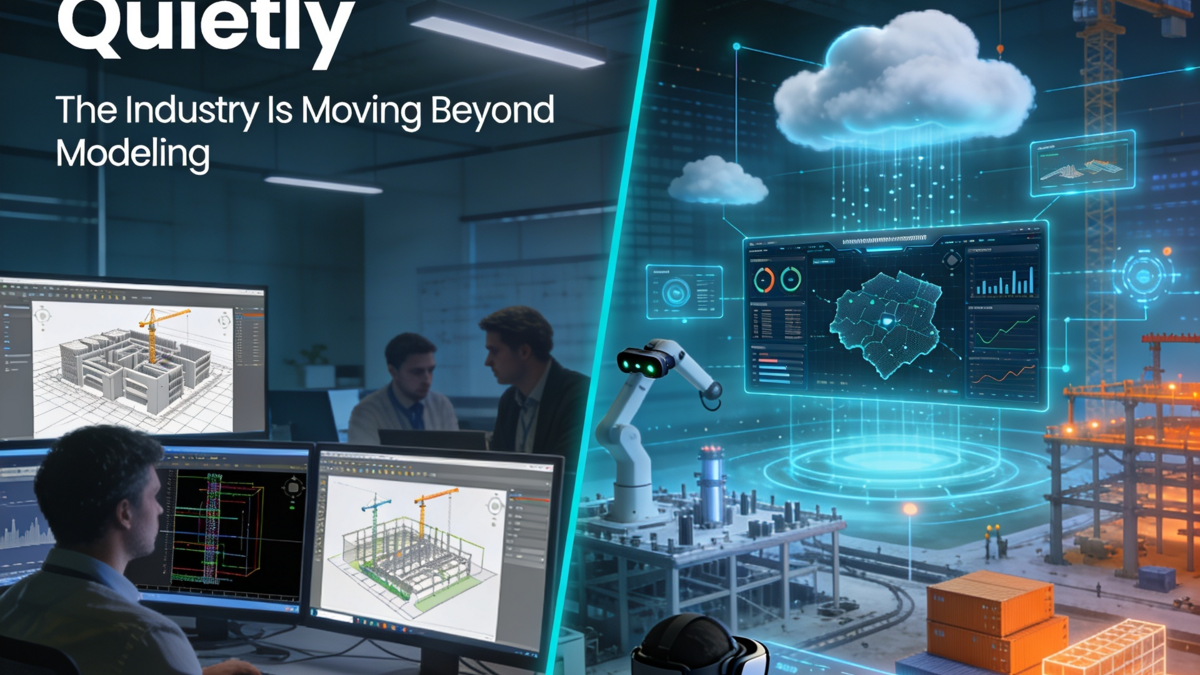
The BIM industry is slowly shifting away from being purely model-focused and moving toward something far more connected: data-driven project ecosystems. Cloud collaboration is expanding, cybersecurity concerns are growing, factories are becoming part of construction workflows, sustainability analysis is entering early-stage BIM decisions, and entirely new BIM roles are emerging around information management rather than just modeling.
Individually, these may look like separate trends. Together, they point toward a much larger transformation in the AEC industry—one that mirrors the wider career shift covered in the BIM career roadmap for 2026.
1. BIM models are no longer just design files
One of the clearest changes happening today is how BIM models are treated inside projects. Earlier, a BIM model was mostly considered a design or coordination tool. Now, it is becoming the central source of project information across construction coordination, fabrication workflows, sustainability data, facility information, cloud collaboration, and lifecycle management. As this dependence on shared digital information grows, firms are realising something important: BIM workflows are now deeply tied to data security. The same point shows up when you look at how cloud-based delivery is reshaping projects in our piece on cloud-based BIM and the AEC industry.
2. Why cybersecurity is suddenly becoming a BIM discussion
A few years ago, cybersecurity rarely appeared in BIM conversations. Now it is becoming impossible to ignore. Large projects increasingly rely on cloud-hosted BIM models, Common Data Environments, remote collaboration across countries, and digitally shared infrastructure information—and that creates a new layer of risk. Modern BIM projects don’t just contain geometry; they contain highly sensitive project information.
That is why many firms are now implementing multi-factor authentication, access-controlled project environments, and structured data governance as part of the BIM workflow itself. What used to be handled only by IT teams is becoming part of BIM delivery, and BIM professionals are increasingly expected to understand digital environments—not just software tools. Strong data management practices in BIM are now as load-bearing as model quality itself.
A leaked federated model is no longer just a coordination problem—it can be a contractual, IP, and infrastructure-security problem. Access control belongs inside your BIM workflow, not just inside IT policy.
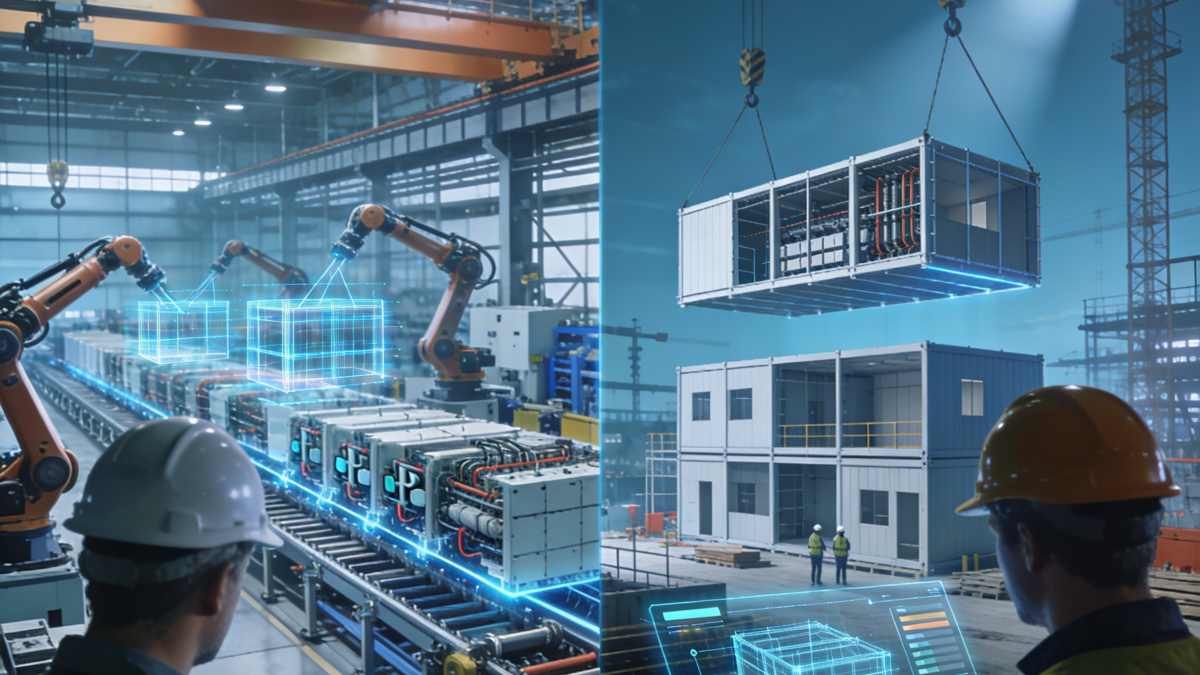
3. Construction is starting to behave more like manufacturing
Another quiet transformation is happening through modular construction. Across many global projects, more building components are now manufactured off-site instead of built entirely on location—prefabricated MEP systems, modular room assemblies, and factory-produced structural components are becoming routine. BIM sits directly at the centre of these workflows. Models are no longer used only for visualisation or coordination; they now guide manufacturing, sequencing, logistics, and installation. This is the same coordination logic we discuss in our Navisworks clash detection guide, just extended into fabrication.
This changes the nature of construction itself. Instead of purely site-driven workflows, projects are becoming more process-driven and production-oriented, with BIM acting as the coordination backbone connecting design, factory, and site.
4. Sustainability is moving earlier into the BIM process
One of the most noticeable changes in modern BIM workflows is that sustainability analysis is no longer happening after design decisions are made—it is happening during design development itself. Teams can now evaluate daylight performance, material efficiency, embodied carbon, and energy performance while the BIM model is still evolving. This is increasingly important as global pressure grows around net-zero buildings, ESG-focused development, and sustainable infrastructure planning.
The result is a mindset shift: BIM is no longer just helping teams design buildings—it is helping them evaluate the long-term impact of those decisions.
5. Mixed reality is becoming more practical than experimental
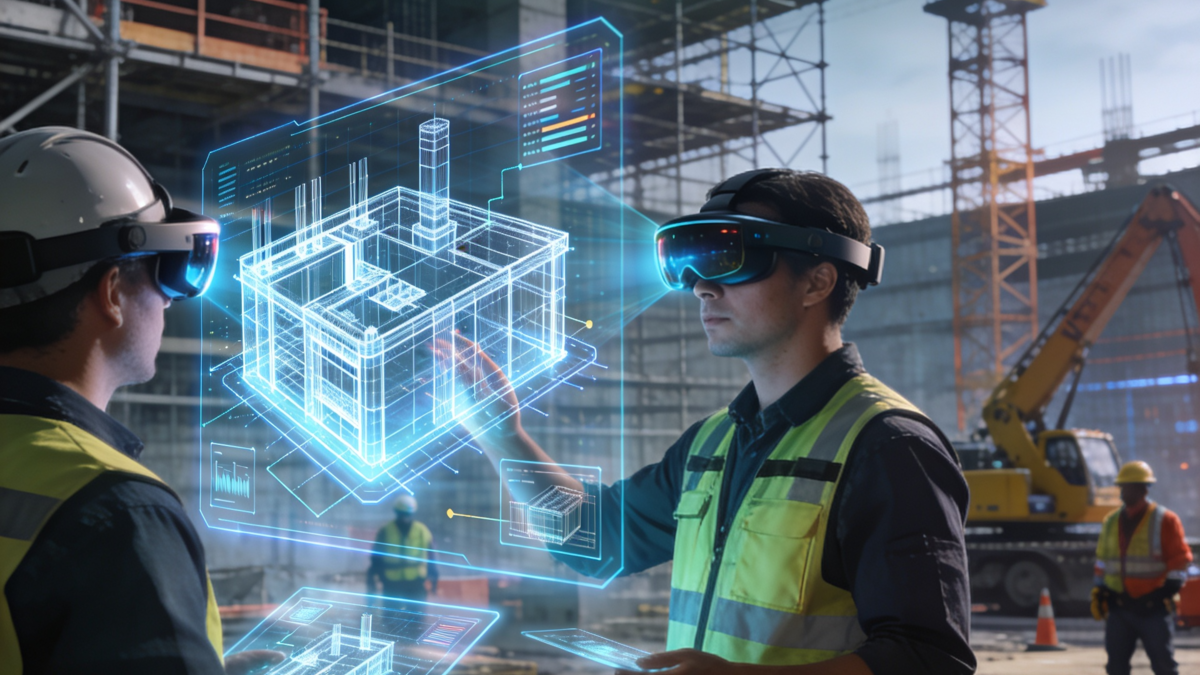
For years, technologies like AR and Mixed Reality felt futuristic. On many projects today, immersive BIM visualisation is becoming genuinely useful. Project teams are starting to use Mixed Reality for on-site model reviews, installation guidance, spatial coordination checks, and immersive project walkthroughs. Instead of interpreting models only through screens, teams can interact with BIM information directly inside physical spaces—improving understanding in ways traditional coordination meetings often cannot. Adoption is still growing, but the direction is clear: BIM visualisation is gradually moving beyond desktops.
6. The most important shift is happening in BIM careers
Perhaps the biggest transformation isn’t technological at all—it is professional. AEC firms are increasingly searching for people who can manage information, not just create models. New BIM-related roles are emerging around digital delivery, information coordination, BIM data standards, asset information management, and workflow integration. Understanding workflows, data quality, and coordination logic is becoming just as valuable as modeling itself—one reason AI is unlikely to replace BIM engineers any time soon. The judgement work is precisely where humans stay valuable.
What this means for BIM professionals
Many professionals get stuck because they focus only on learning tools. The industry is gradually expecting something broader: understanding collaboration systems, working within cloud environments, managing coordinated information, and adapting to integrated digital workflows. Software knowledge still matters, but workflow understanding is becoming the bigger differentiator—a recurring theme across our breakdowns of Forma, ACC, and BIM 360 and why BIM fails in large projects.
BIM Cafe perspective
At BIM Cafe Learning Hub, one pattern is increasingly visible across the industry: the professionals who adapt fastest are not the ones who only know commands. They are the ones who understand how coordination actually works, how information flows between teams, and how BIM connects design, execution, and project management together. This is why BIM learning today needs to go beyond isolated software training and move closer to real workflow understanding. You can explore more industry-focused discussions across the BIM Cafe Blog.
Conclusion
The BIM industry in 2026 feels very different from what it looked like even a few years ago. Construction is becoming more data-driven, more collaborative, more cloud-dependent, more sustainability-focused, and more lifecycle-oriented—and BIM is increasingly the system that connects all these layers together. The professionals who stay relevant in this environment will not simply be the ones who can create models quickly; they will be the ones who understand how digital construction ecosystems actually function.
Frequently Asked Questions
How is BIM changing in 2026 compared to earlier years?
BIM is shifting from a pure modeling discipline to a connected, data-driven project ecosystem. Cloud collaboration, cybersecurity, modular construction, early-stage sustainability analysis, and information-management roles are reshaping what “BIM” actually means on real projects.
Why is cybersecurity now part of BIM workflows?
Modern BIM projects live in cloud-hosted CDEs and span teams across countries, so the model carries sensitive project, infrastructure, and IP information. Multi-factor authentication, access-controlled environments, and structured data governance are becoming standard parts of the BIM workflow, not just IT policy.
How is modular construction changing the role of BIM?
With more prefabricated MEP, modular rooms, and factory-built structural components, BIM models now guide manufacturing, sequencing, logistics, and installation—not just visualization. Construction starts behaving more like manufacturing, and BIM acts as the coordination backbone across factory and site.
Where does sustainability fit into modern BIM?
Sustainability has moved earlier in the process. Daylight, energy, embodied carbon, and material efficiency are now evaluated while the model is still evolving—aligned with net-zero, ESG, and sustainable infrastructure goals—so design decisions are judged on long-term impact, not just buildability.
Professional BIM Course
Master BIM Course
Structural Design Concepts and BIM
Certified MEPF BIM Master Course
Electrical BIM Professional Program
RenderLab – Master 3D Modeling & Photorealistic Rendering
Multi-Tool Mastery for Architects & Engineers
BIM Coordinator Workflow Program
BIM FastTrack – 30 Day Intensive Training
Global Architectural & Structural BIM Project Program