Author: Devika R
September 18, 2026
5 min read
Why cybersecurity is becoming part of BIM—not just an IT concern
A BIM model can take hundreds of hours to build.
It contains more than walls, doors, ducts and structural elements. Depending on the project, it can also contain equipment data, specifications, asset information, linked models and other project information.
Now consider how that information moves.
It may pass between architects, engineers, contractors, fabricators and facility teams through cloud platforms and Common Data Environments (CDEs).
The more connected BIM becomes, the more important one question becomes:
Who is protecting the information inside the model?
1. A BIM Model Is More Than a File
It is easy to think of a BIM model as simply a digital representation of a building.
In practice, it can connect geometry with a large amount of project information.
Depending on the project, that could include:
- design information
- equipment and asset data
- specifications
- coordination information
- project documents
- linked models
- operational information
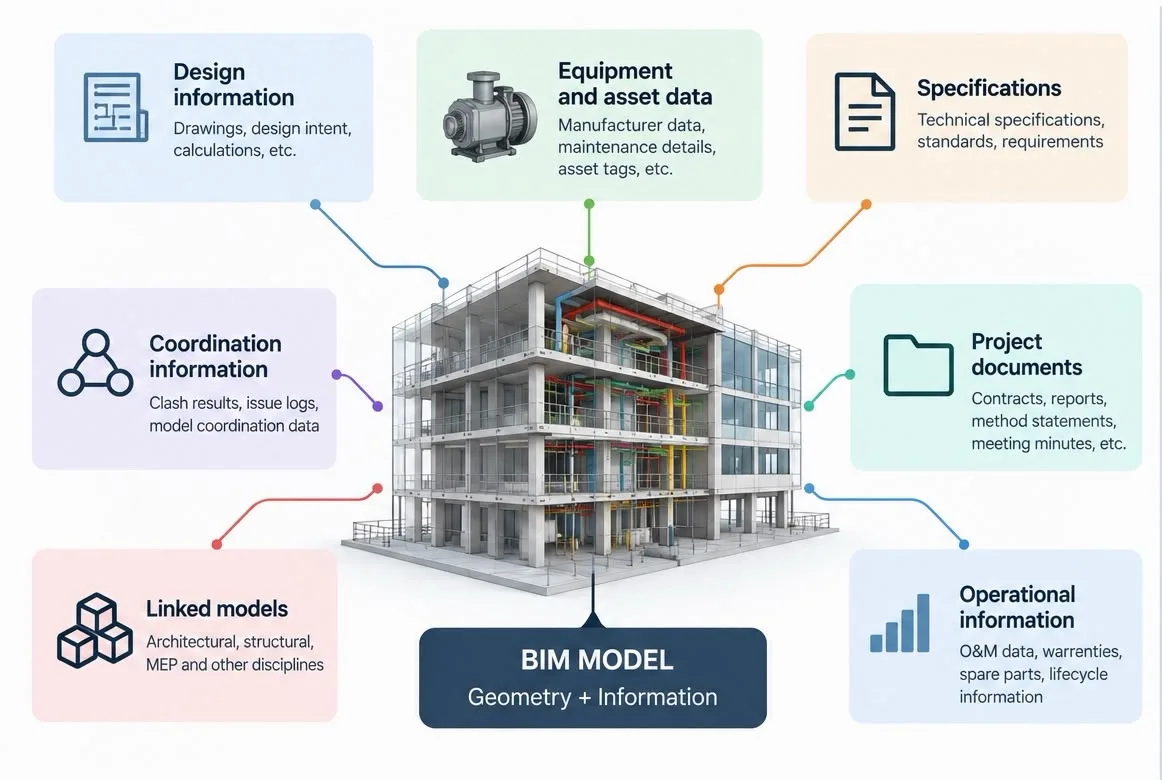
Some of this information may be commercially sensitive or important to the future operation of the asset.
So BIM security is not just about protecting a .rvt, .ifc or other model file.
It is about protecting the information and workflows connected to it.
2. The Risk Isn’t Always a Cyberattack
Security problems do not always begin with someone trying to break into a system.
They can start with ordinary project activities.
For example:
A consultant receives access to a project environment and keeps that access after their involvement ends.
A project file is downloaded to an uncontrolled personal device.
A model is shared with someone who does not need the full dataset.
An outdated version is accidentally uploaded.
An unauthorised user modifies project information.
None of these situations sounds dramatic.
But each can affect the reliability and security of project information.
That is why BIM teams need to think about security during everyday information exchange—not only after something goes wrong.
3. What If Someone Changes the Model?
This is where the issue becomes particularly serious.
Imagine a structural model has already been reviewed and issued.
An unauthorised change is made to one element.
The updated model is then shared with another discipline.
The change is not immediately noticed.
Later, a drawing is produced from that model.
Now the project needs to know:
What changed?
When did it change?
Was the change authorised?
Which version was approved?
Who reviewed the updated information?
This is why version control, permissions and audit trails matter.
Security is not only about preventing access.
It is also about maintaining confidence that important information has not been changed without proper control.
4. The CDE Changes the Question
Cloud-based BIM and CDEs have made collaboration much easier.
Teams no longer need to rely on endless email attachments and scattered local copies.
But shared environments introduce an important question:
Does everyone need access to everything?
Usually, the answer is no.
Different project participants have different responsibilities and therefore different information requirements.
A consultant may need to review information.
A contractor may need to work with it.
A manufacturer may need only the information relevant to fabrication.
A facility team may eventually need selected asset information.
Access should therefore reflect what someone needs to do their job.
ISO 19650-5 promotes this kind of risk-based approach to security, rather than treating every piece of information in exactly the same way.
5. BIM Professionals Are Part of the Security Chain
This does not mean BIM coordinators suddenly need to become cybersecurity specialists.
But BIM professionals are already involved in the movement of project information.
They may:
- upload and download models
- manage project permissions
- exchange information with external teams
- coordinate linked models
- issue project deliverables
- work with cloud platforms
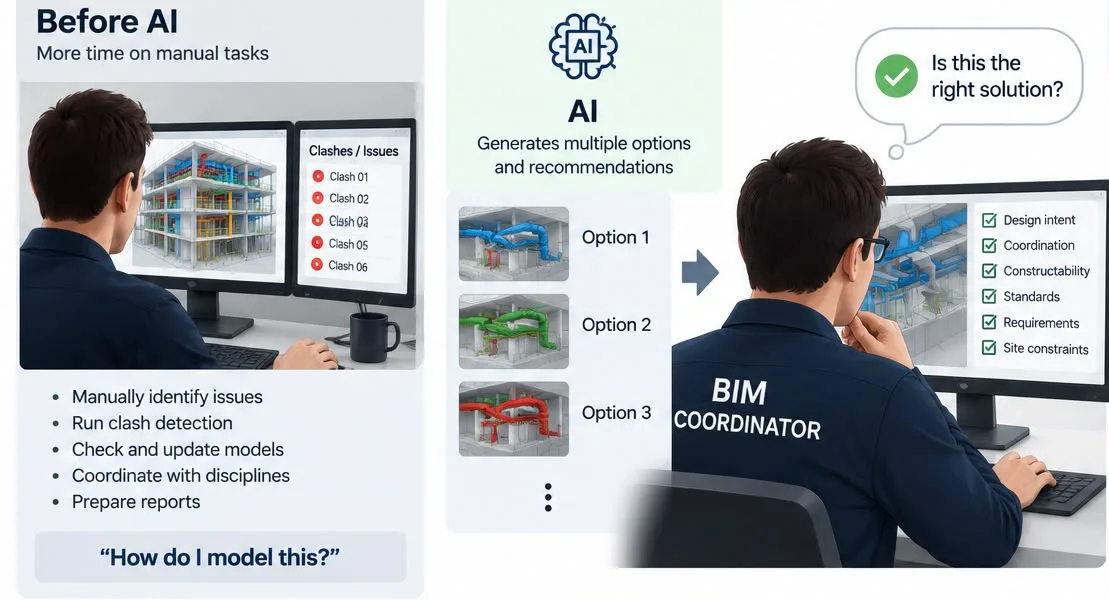
Small decisions in these workflows can have consequences.
For example, before sharing a model, a BIM professional should know:
Who needs it?
What information do they actually need?
Are they allowed to modify it?
Is this the correct version?
These are simple questions, but they are part of responsible BIM information management.
6. Digital Twins Make Security Even More Important
The BIM security conversation will become more significant as models become connected to operational systems.
A digital twin can bring together information from BIM, sensors, building systems and other sources.
That creates new possibilities for monitoring and managing assets.
It also means there can be more digital connections to protect.
A model used only during design has one type of security requirement.
A connected digital environment influencing the operation of a building can have much greater consequences if its information is compromised.
Security therefore needs to be considered across the lifecycle of the asset, not only while the BIM team is producing the model.
7. Five Simple Habits for Safer BIM Workflows
BIM professionals do not need to become cybersecurity experts to develop better security habits.
Give access based on need
Don’t provide unrestricted access simply because it is convenient.
Protect project accounts
Individual accounts, strong authentication and proper access management matter.
Control important model changes
Make sure significant changes can be identified, reviewed and traced.
Be careful where project information is stored
Personal devices, uncontrolled cloud storage and informal file-sharing can create unnecessary risks.
Remove access when roles change
When someone leaves a project or no longer needs access, their permissions should be reviewed.
These are basic practices, but BIM security often depends on getting the basics right.
8. The Real Goal: Trustworthy Information
The purpose of BIM security is not to prevent people from sharing information.
BIM depends on collaboration.
The goal is to make that collaboration controlled and trustworthy.
A contractor needs confidence that the model they receive is the approved version.
A consultant needs confidence that reference information has not been changed without their knowledge.
An owner needs confidence in the information eventually handed over for the asset.
That confidence depends not only on model accuracy, but also on how the information has been managed.
9. Is Cybersecurity Becoming a BIM Skill?
Probably—but not in the sense that every BIM professional needs to become an IT security expert.
The more relevant skill is security awareness.
Future BIM professionals will need to understand that their work involves more than modelling and coordination.
They are also handling valuable project information.
Knowing what can be shared, who should receive it, how changes are controlled and how information remains trustworthy will become increasingly important as BIM environments become more connected.
Final Thoughts
BIM has moved far beyond a model stored on a single computer.
It is now part of a connected information environment involving multiple organisations, cloud platforms and increasingly, operational systems.
That creates enormous opportunities.
It also creates responsibility.
So the next time a BIM team asks:
“Is the model accurate?”
there is another question worth asking:
“Can we trust the information environment around it?”
Because a valuable BIM model is not just one that is well modelled.
It is one that is accurate, controlled and secure.
Frequently Asked Questions
Is BIM cybersecurity different from normal cybersecurity?
Yes. General cybersecurity protects digital systems broadly, while BIM security focuses on protecting project information, models, collaboration environments and information exchanges throughout the asset lifecycle.
Who is responsible for BIM security?
It is a shared responsibility. IT teams manage technical security, while BIM managers, coordinators, consultants, contractors and other project participants must follow appropriate information-management and access practices.
Does BIM security matter after construction?
Yes. BIM information can continue into handover, facility management and digital-twin environments, so appropriate security can remain important throughout the asset lifecycle.
Professional BIM Course
Master BIM Course
Structural Design Concepts and BIM
Certified MEPF BIM Master Course
Electrical BIM Professional Program
RenderLab – Master 3D Modeling & Photorealistic Rendering
Multi-Tool Mastery for Architects & Engineers
BIM Coordinator Workflow Program
BIM FastTrack – 30 Day Intensive Training
Global Architectural & Structural BIM Project Program