Author: Devika R
September 22, 2026
8 min read
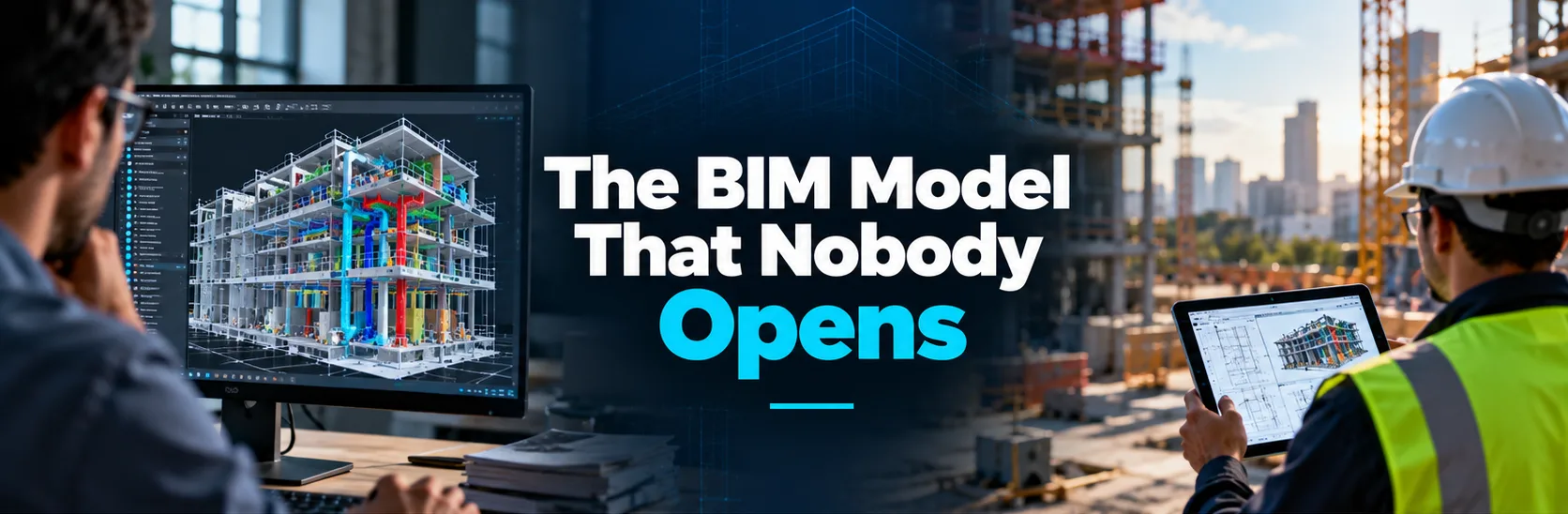
Is the BIM model ready to become part of the construction process itself?
What happens when the BIM model stops being a design reference and becomes the information source people actually build from?
For most construction projects, the final journey still looks familiar:
- Model
- Drawings
- Site
- Construction
BIM has transformed how buildings are designed and coordinated, but the drawing has remained an important bridge between the digital model and the people building the project.
Now that bridge is being questioned.
In August 2026, Hong Kong’s Construction Industry Council hosted a webinar on end-to-end model-based, drawing-free construction, reflecting growing interest in moving from document-centred workflows toward model-centred construction.
But there is an important distinction.
Drawing-free construction does not simply mean putting a BIM model on a tablet and throwing away the drawings.
It means changing where construction information comes from, how it is approved, how it reaches the site and how people use it.
So the real question is:
Why Drawings Have Been So Difficult to Replace
It is tempting to think of drawings as an outdated part of construction.
They are not.
Drawings are successful because they are simple.
A site engineer can open one quickly. A subcontractor can mark it up. A supervisor can refer to a specific detail without navigating an entire model.
There are also established approval, contractual and regulatory processes built around drawings.
That means replacing them is not simply a software decision.
A model may contain more information than a drawing, but that does not automatically make it easier for everyone to use.
The real test is much simpler:
Can the person doing the work get the information they need, when they need it?
What Changes When the Model Goes to Site?
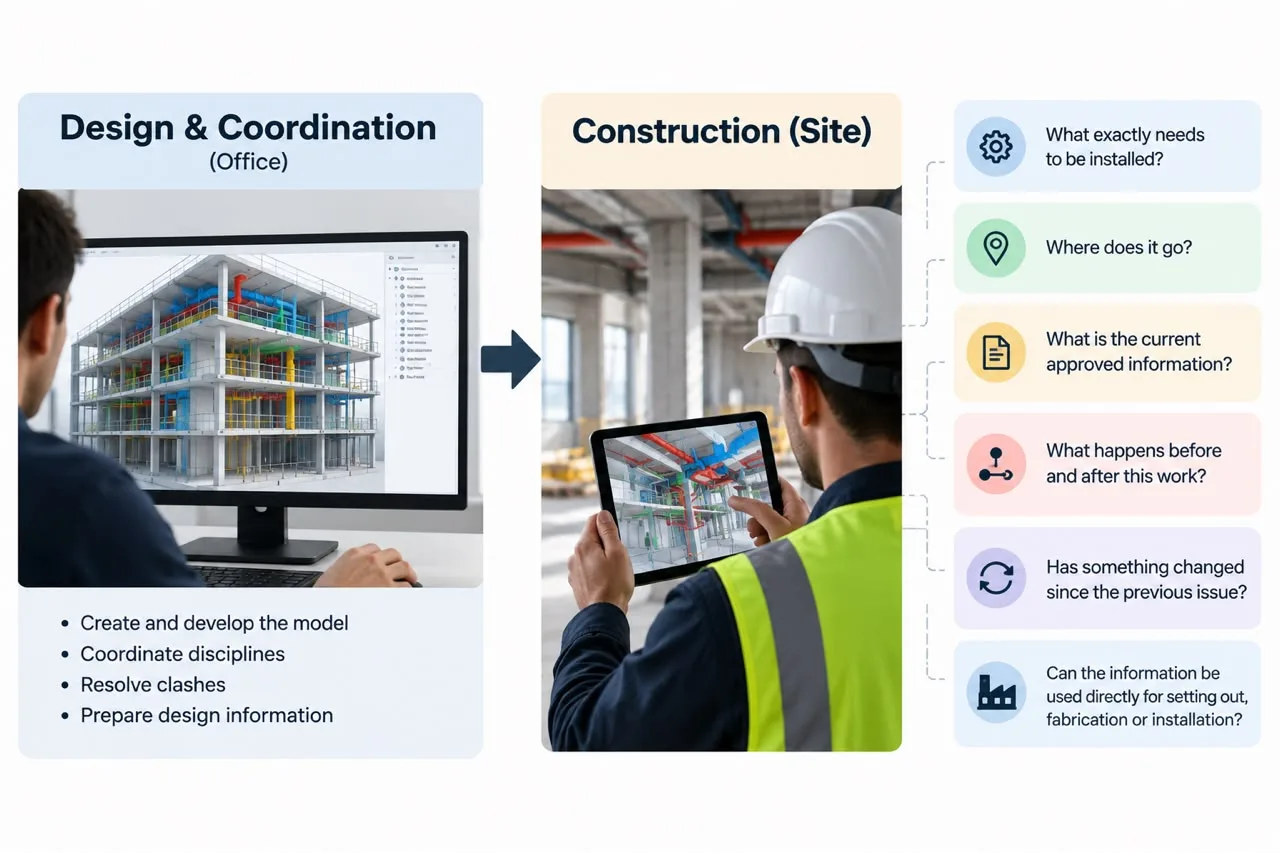
A BIM model is usually created with design and coordination in mind.
Construction asks different questions.
The site team may need to know:
- What exactly needs to be installed?
- Where does it go?
- What is the current approved information?
- What happens before and after this work?
- Has something changed since the previous issue?
- Can the information be used directly for setting out, fabrication or installation?
This is where model-based construction becomes more demanding.
A model cannot simply be visually impressive.
It needs to contain information that is useful for the work being carried out.
And that information needs to be reliable.
A Real Example: When the Model Becomes the Worksite Reference
This is no longer just a theoretical idea.
The Randselva Bridge project in Norway is one of the best-known examples of drawing-free construction. The project used a detailed information model as the primary documentation at the worksite.
The model was not simply viewed for coordination. It was used to communicate project information, support measurement and connect information with construction activities.
Chalmers researchers have also documented how model-based construction can move BIM beyond design and into actual production, reporting benefits including improved communication, safety and reduced waste in their case studies.
So the concept is real.
But successful examples also reveal something important:
The model has to be designed around construction needs from the beginning.
A Construction Model Is Not Just a Bigger Design Model
This is one of the most important points.
A model created for architectural coordination is not automatically ready to become the sole source of construction information.
The information required by a fabricator may differ from what a designer needs.
The information required by a site supervisor may differ from what a BIM coordinator uses.
A model-based workflow therefore requires the project team to think backwards from the construction task:
What does the person on site actually need to know?
That answer should influence what information is created, structured and delivered.
In other words:
Model development needs to follow the information needs of construction—not simply the capabilities of the software.
What Happens to Drawings?
This is where the debate often becomes unnecessarily extreme.
The future does not have to be:
Drawings OR BIM
It could be:
BIM as the primary information source + drawings where they remain useful or necessary.
Some information may be easier to consume directly from the model.
Other information may still be clearer as a 2D detail, specialist document or approved drawing.
Research into model-based approval has also identified barriers around contractual processes, information exchange and stakeholder confidence—showing that removing drawings involves much more than changing the file format.
So the more realistic future is probably not a construction site with zero drawings.
It is a site where drawings are no longer automatically the default way of delivering every piece of information.
The Bigger Change Is Not the Tablet
It is easy to imagine drawing-free construction as:
“Everyone on site gets a tablet instead of a drawing.”
That misses the bigger change.
The real transformation happens when the model becomes connected to the way work is planned, approved, and executed.
For example:
- Model
- Work package
- Site activity
- Verification
- Updated information
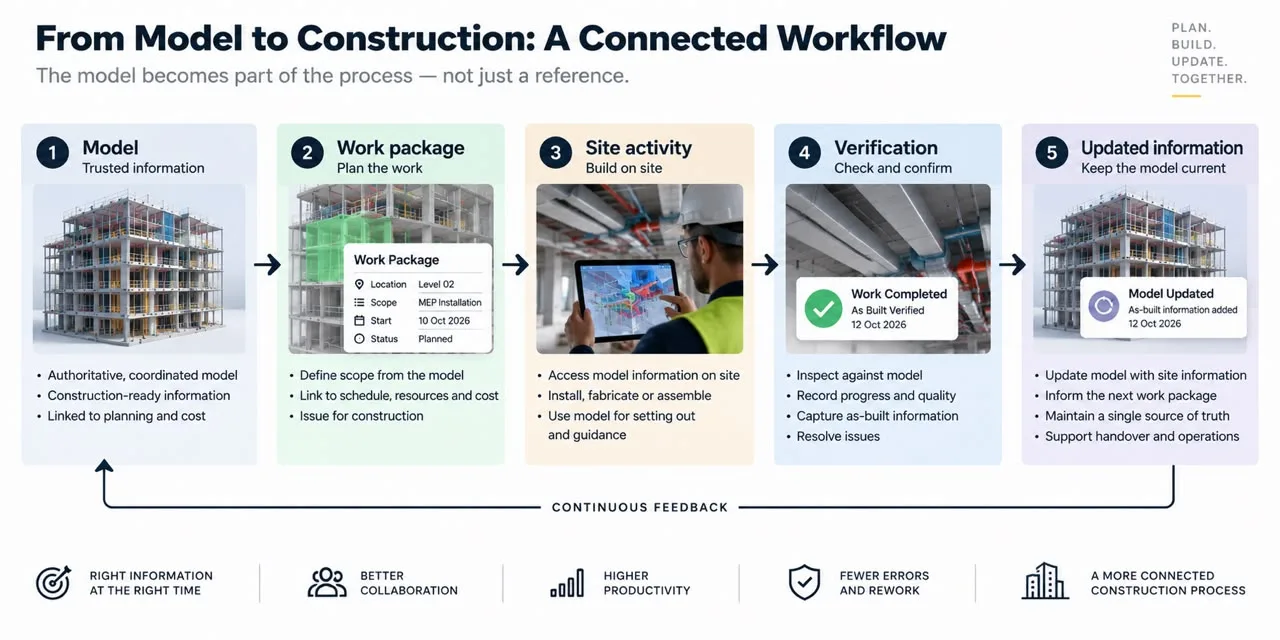
Now the model is not just showing what should exist.
It is becoming part of the process through which the project is delivered.
That is a much bigger shift.
What Needs to Be in Place?
For this approach to work, several things have to be right.
Reliable information
The site cannot build confidently from information that is incomplete or outdated.
Clear approval
Everyone needs to know which information is authorised for construction.
Practical access
The people doing the work need reliable access to the information without unnecessary complexity.
Construction-focused modelling
The model needs to contain information that supports actual construction activities.
A workflow for change
When something changes on site, there needs to be a clear way to update and communicate that information.
These are not simply software requirements.
They are project-management and information-management requirements.
The Hardest Part May Be Changing the People, Not the Technology
The technology is increasingly capable.
The harder question is whether everyone involved is ready to change the way they work.
A drawing-based workflow is familiar.
A model-based workflow requires people to trust digital information, understand how to navigate it and accept a different way of communicating decisions.
That means the transition affects:
- designers
- BIM teams
- contractors
- subcontractors
- site engineers
- supervisors
- inspectors
If the site team does not trust the model, the project will simply recreate the old workflow around it.
The model becomes another reference rather than the actual construction interface.
What Does This Mean for BIM Professionals?
It changes the question a BIM professional should ask.
Not:
“Have I completed the model?”
But:
“Can someone use this information to build from it?”
That requires a broader understanding of construction.
A strong BIM professional needs to understand how information is consumed after it leaves the modelling environment.
The model is not the final deliverable simply because the BIM team has finished modelling.
Its value is measured by what happens next.
So, Is BIM Ready to Run the Construction Site?
In some projects, it already is.
Examples from model-based construction demonstrate that a BIM model can become a primary construction information source when the project has the right processes, information structure, technology and people.
But that does not mean every construction project is ready to abandon drawings.
The more realistic transition is gradual:
First, use the model alongside drawings.
Then, let the model replace drawings where it provides better information.
Eventually, make the model the primary source wherever the project can reliably support it.
That is a much more credible path than declaring that drawings are about to disappear.
The Real Question Isn’t About Drawings
The construction industry has spent years asking:
“How do we create better BIM models?”
The next question may be:
“How do we make those models useful enough that people can actually build from them?”
That is where BIM moves from being a design and coordination technology to becoming part of the construction process itself.
The drawing may not disappear completely.
But its role could change.
And perhaps that is the more important shift.
The future of BIM may not be drawing-free construction. It may be construction where the model becomes the primary source of truth—and drawings become just one way of viewing that information.
Professional BIM Course
Master BIM Course
Structural Design Concepts and BIM
Certified MEPF BIM Master Course
Electrical BIM Professional Program
RenderLab – Master 3D Modeling & Photorealistic Rendering
Multi-Tool Mastery for Architects & Engineers
BIM Coordinator Workflow Program
BIM FastTrack – 30 Day Intensive Training
Global Architectural & Structural BIM Project Program