Author: Devika R
June 20, 2026
6 min read
1. The Hidden Reality Behind Every “Simple” Change
If you've ever attended a BIM coordination meeting, you've probably heard a comment like this:
"Can we just move that pipe?"
The request sounds simple.
Move the pipe.Resolve the clash.Continue the project.
But for a BIM Modeler, that one sentence often creates a chain reaction of questions that nobody else in the room immediately sees.
And that's exactly why BIM coordination is one of the most misunderstood parts of the construction industry.
Many students learn Revit.
Some learn Navisworks.
But very few understand what actually happens during real BIM coordination until they work on a live project.
2. Why BIM Coordination Is Different from Traditional Drafting
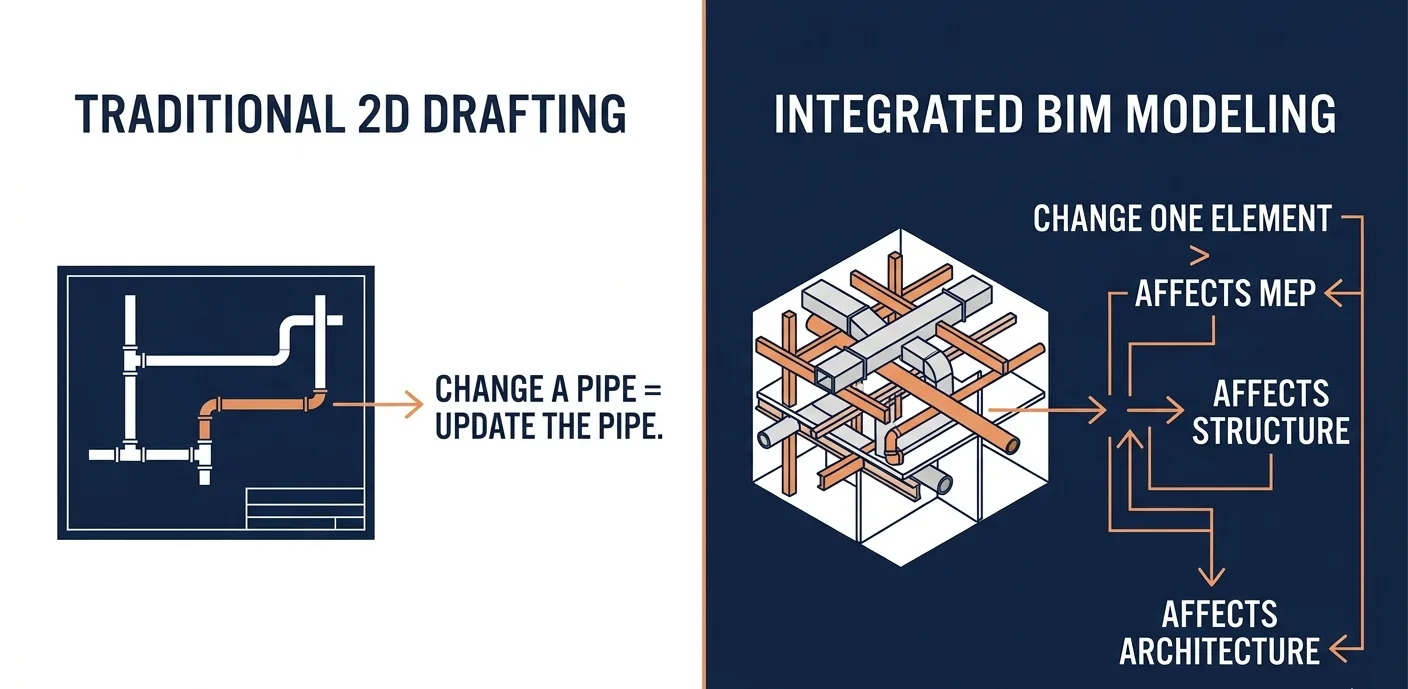
In traditional 2D drafting, moving an element often appears straightforward.
In BIM, every component exists inside a connected digital environment.
A pipe is not just a pipe.
It interacts with:
- HVAC ducts
- Cable trays
- Structural beams
- Ceilings
- Firefighting systems
- Equipment clearances
- Maintenance access zones
This is why experienced BIM professionals often joke:
"Fix one clash. Create three more."
And surprisingly, that's often true.
Because every change creates consequences elsewhere in the model.
3. A Real BIM Coordination Scenario
Imagine an HVAC duct clashes with a structural beam.
During the coordination meeting, the team agrees:
"Let's lower the duct by 100 mm."
Simple?
Not really.
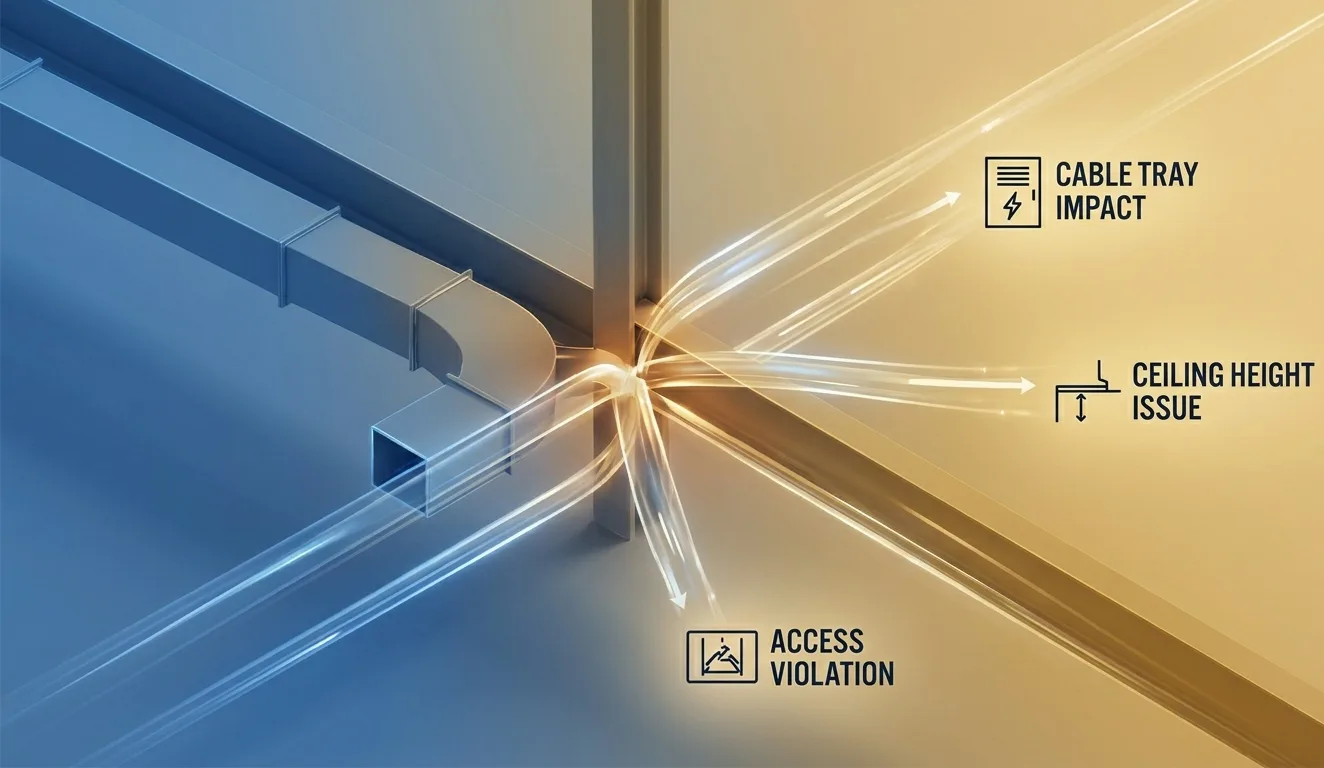
After lowering the duct:
- The duct clashes with an electrical cable tray.
- The cable tray interferes with sprinkler routing.
- The sprinkler pipe loses its required slope.
- Ceiling heights may need revision.
- Maintenance access requirements may no longer comply with standards.
What started as one clash can quickly become multiple coordination issues.
This is why BIM coordination requires much more than software knowledge.
4. What Different Project Teams See
One reason BIM coordination becomes challenging is that every discipline views the project differently.
| Discipline | Primary Focus |
|---|---|
| Architect | Space planning and aesthetics |
| Structural Engineer | Stability and constructability |
| MEP Engineer | System performance |
| Contractor | Installation and execution |
| BIM Modeler | Impact across all disciplines |
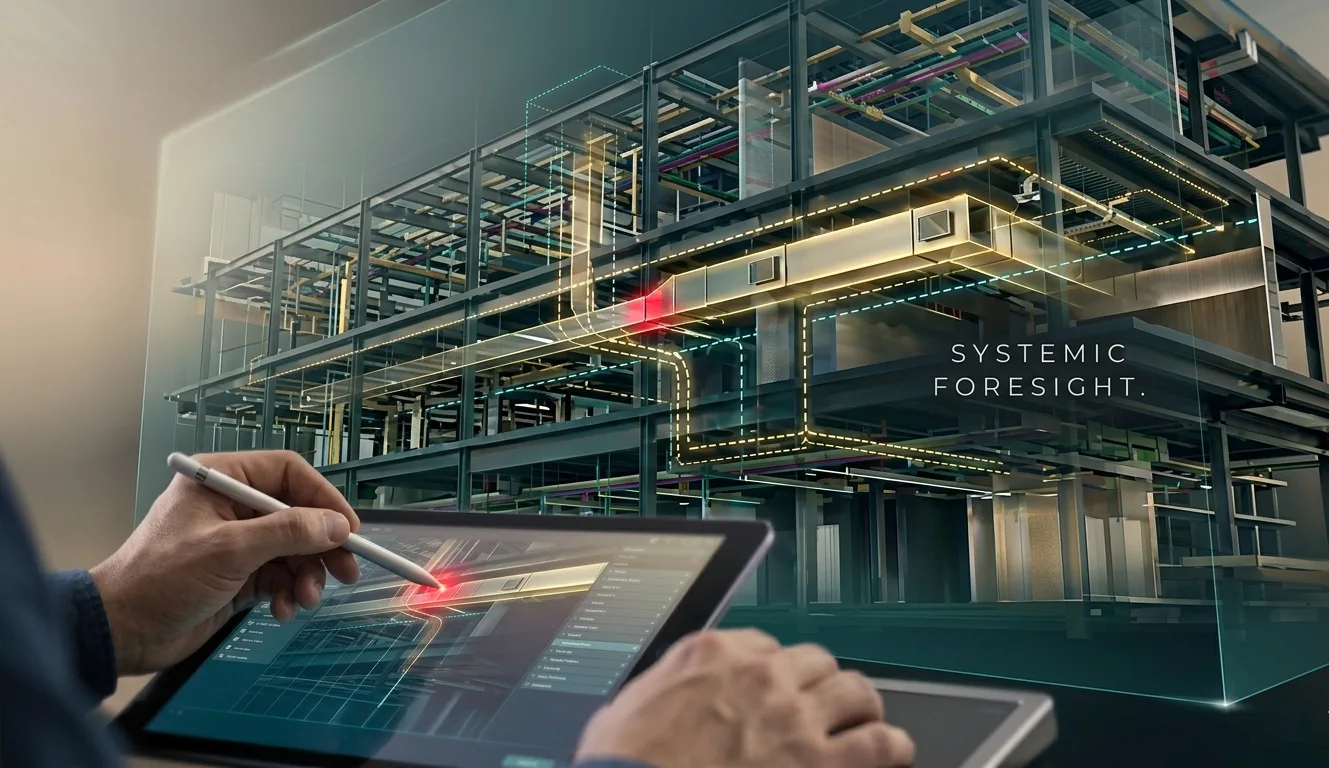
Most stakeholders focus on their own systems.
BIM professionals are expected to understand how changes affect the entire project.
That difference in perspective is what makes coordination meetings so important.
5. Why BIM Modelers Think Three Steps Ahead
When an element needs modification, BIM professionals rarely ask:
"Can we move it?"
Instead, they ask:
- What happens if it moves?
- Which disciplines will be affected?
- Will this create new clashes?
- Will maintenance access be compromised?
- Will installation become difficult?
- Will construction sequencing be affected?
This mindset is what separates project coordination from basic modeling.
The best BIM professionals don't just solve today's clash.
They try to prevent tomorrow's clash.
6. Clash Detection Is Not the Difficult Part
One of the biggest misconceptions among BIM learners is that BIM coordination revolves around running clash detection in Navisworks.
The reality is quite different.
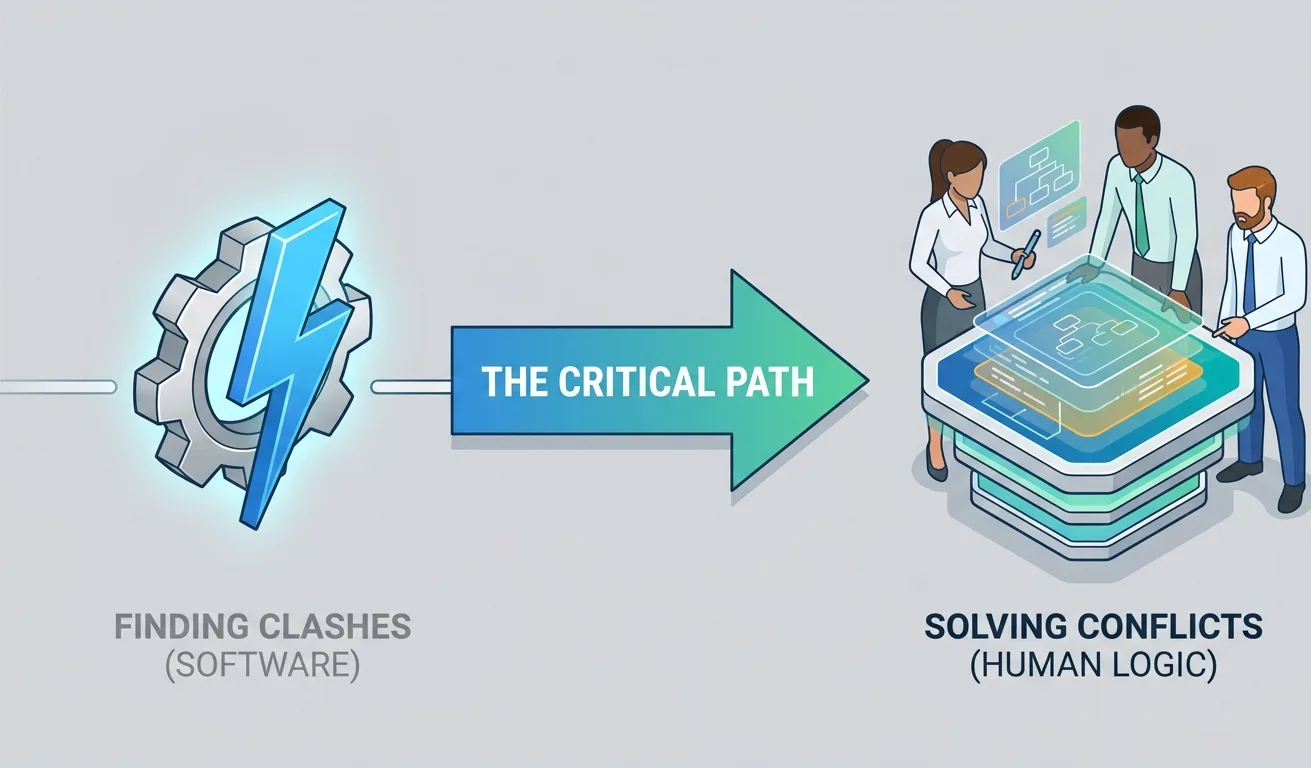
Finding clashes is relatively easy.
Modern software can identify thousands of conflicts within minutes.
The real challenge is deciding:
- Which system should move?
- Which discipline has priority?
- What is the most practical site solution?
- What creates the least impact on cost and schedule?
Software identifies problems.
People solve them.
And that's where experience becomes valuable.
7. BIM Modeler vs BIM Coordinator: What's the Difference?
Many students assume these roles are identical.
In reality, their responsibilities often differ significantly.
| BIM Modeler | BIM Coordinator |
|---|---|
| Creates BIM models | Reviews coordination issues |
| Develops drawings | Leads coordination discussions |
| Updates project models | Resolves interdisciplinary conflicts |
| Focuses on modeling accuracy | Focuses on project-wide impact |
| Works within a discipline | Works across multiple disciplines |
A BIM Modeler creates information.
A BIM Coordinator manages how that information works together.
Understanding this distinction is important for long-term career growth.
8. The Difference Between Learning Software and Learning BIM
Many learners focus on:
- Revit
- Navisworks
- AutoCAD
These tools are important.
But software alone doesn't create BIM professionals.
Real BIM understanding comes from learning:
- Coordination workflows
- Design intent
- Construction logic
- Discipline priorities
- Problem-solving strategies
Anyone can learn commands.
The challenge is learning how projects actually work.
9. The Lesson Every BIM Student Should Remember
The next time somebody says:
"Can we move this pipe?"
Remember that a BIM professional doesn't just see a pipe.
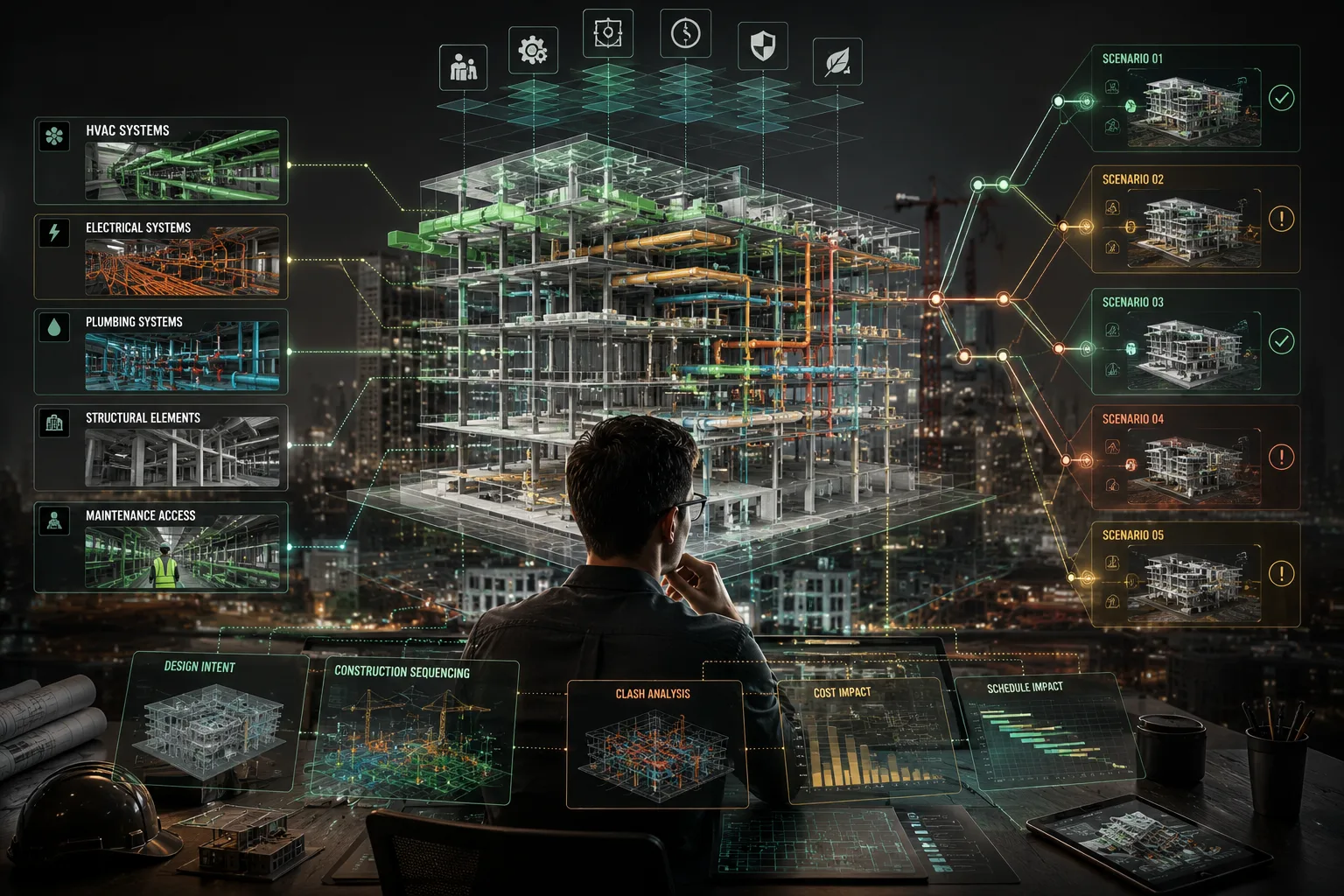
They see:
- The HVAC system
- The electrical system
- The sprinkler network
- The ceiling space
- The maintenance requirements
- The construction sequence
They see the building as a connected system.
And that's why BIM professionals often appear quiet during coordination meetings.
They're usually calculating the consequences before proposing a solution.
At BIM Cafe Learning Hub, one thing becomes clear when students first encounter coordination workflows:
Most learners understand software much earlier than they understand coordination.
But real BIM projects depend on:
- BIM Coordination
- MEP Coordination
- Clash Detection
- Interdisciplinary Communication
- Construction Workflow Understanding
These are the skills that transform someone from a software user into a BIM professional.
Because in real projects, success is rarely about creating the model.
It's about making sure the building can actually be built.
10. Final Thought
BIM Coordination is not about finding clashes.
It is about understanding consequences.
The best BIM professionals are not always the fastest modelers.
They are the people who can predict what happens after the model changes.
And that's why BIM Modelers often look different in coordination meetings.
While everyone else is looking at the clash in front of them…
They're already thinking three clashes ahead.
Read Next
- MEP Coordination in BIM: The Part Most BIM Learners Never Fully Understand
- Complete BIM Workflow Explained: From Design to Construction
- How Navisworks Clash Detection Works in Real Projects
- BIM Career Roadmap: From Fresher to BIM Manager
Professional BIM Course
Master BIM Course
Structural Design Concepts and BIM
Certified MEPF BIM Master Course
Electrical BIM Professional Program
RenderLab – Master 3D Modeling & Photorealistic Rendering
Multi-Tool Mastery for Architects & Engineers
BIM Coordinator Workflow Program
BIM FastTrack – 30 Day Intensive Training
Global Architectural & Structural BIM Project Program