Author: Devika R
June 24, 2026
8 min read
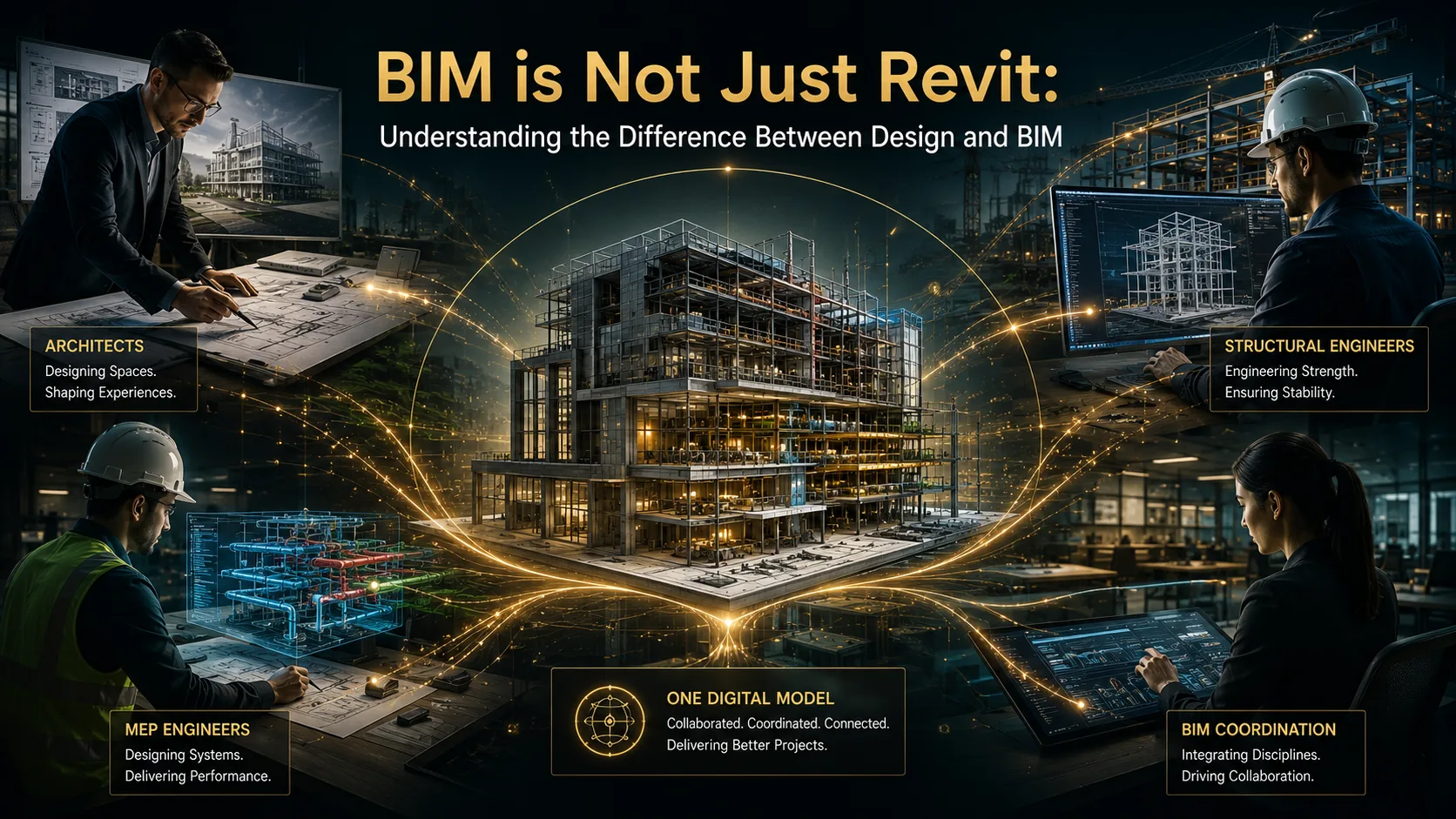
One of the most common misconceptions in the construction industry is that BIM (Building Information Modeling) simply means learning Revit or creating 3D models. Many students—especially Civil Engineers—often ask: To answer these questions, we first need to understand the difference between Design and BIM.
Many students—especially Civil Engineers—often ask:
- Why am I learning Architectural Modeling?
- Is BIM only for Architects?
- Can Civil Engineers build a career in BIM?
- What exactly does a BIM professional do?
To answer these questions, we first need to understand the difference between Design and BIM.
1. Understanding the Design Stage
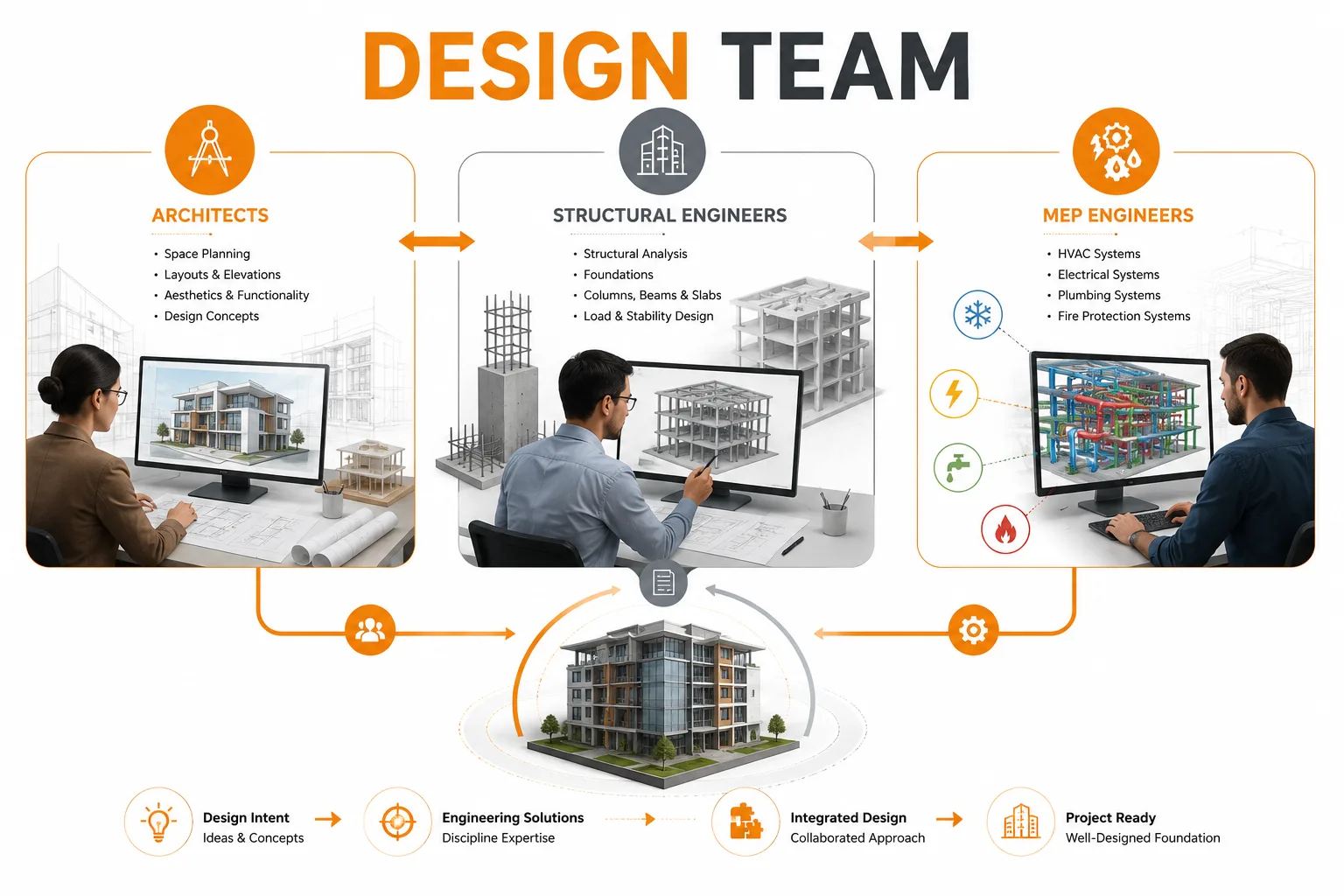
Every construction project begins with a design team.
2. Architects
Architects create the overall architectural design of a building. They decide:
- Space planning
- Room layouts
- Building elevations
- Functional requirements
- Aesthetic appearance
3. Structural Engineers
Structural Engineers perform calculations and design the structural framework of the building, including:
- Foundations
- Columns
- Beams
- Slabs
- Load-bearing systems
Their responsibility is to ensure that the building remains safe and structurally sound.
4. MEP Engineers
MEP (Mechanical, Electrical, and Plumbing) Engineers design:
- HVAC systems
- Electrical systems
- Plumbing systems
- Fire Fighting Systems
They determine how building services function efficiently throughout the project.
5. The Design Team's Responsibility
In simple terms:
The Design Team Decides What Should Be Built.
They create the engineering and architectural solutions required for the project.
6. What Happens During the BIM Stage?
Once the design is approved, BIM professionals develop intelligent digital models that support project execution.
BIM professionals do not replace Architects, Structural Engineers, or MEP Engineers.
Instead, they bring all disciplines together into a coordinated digital environment.
A BIM team typically:
- Develops Architectural, Structural, and MEP models
- Coordinates multiple disciplines
- Identifies clashes before construction
- Produces project documentation
- Generates schedules and quantities
- Supports construction teams
- Improves project collaboration
7. The BIM Team's Responsibility
In simple terms:
The BIM Team Develops, Coordinates, and Manages the Digital Representation of What Has Been Designed.
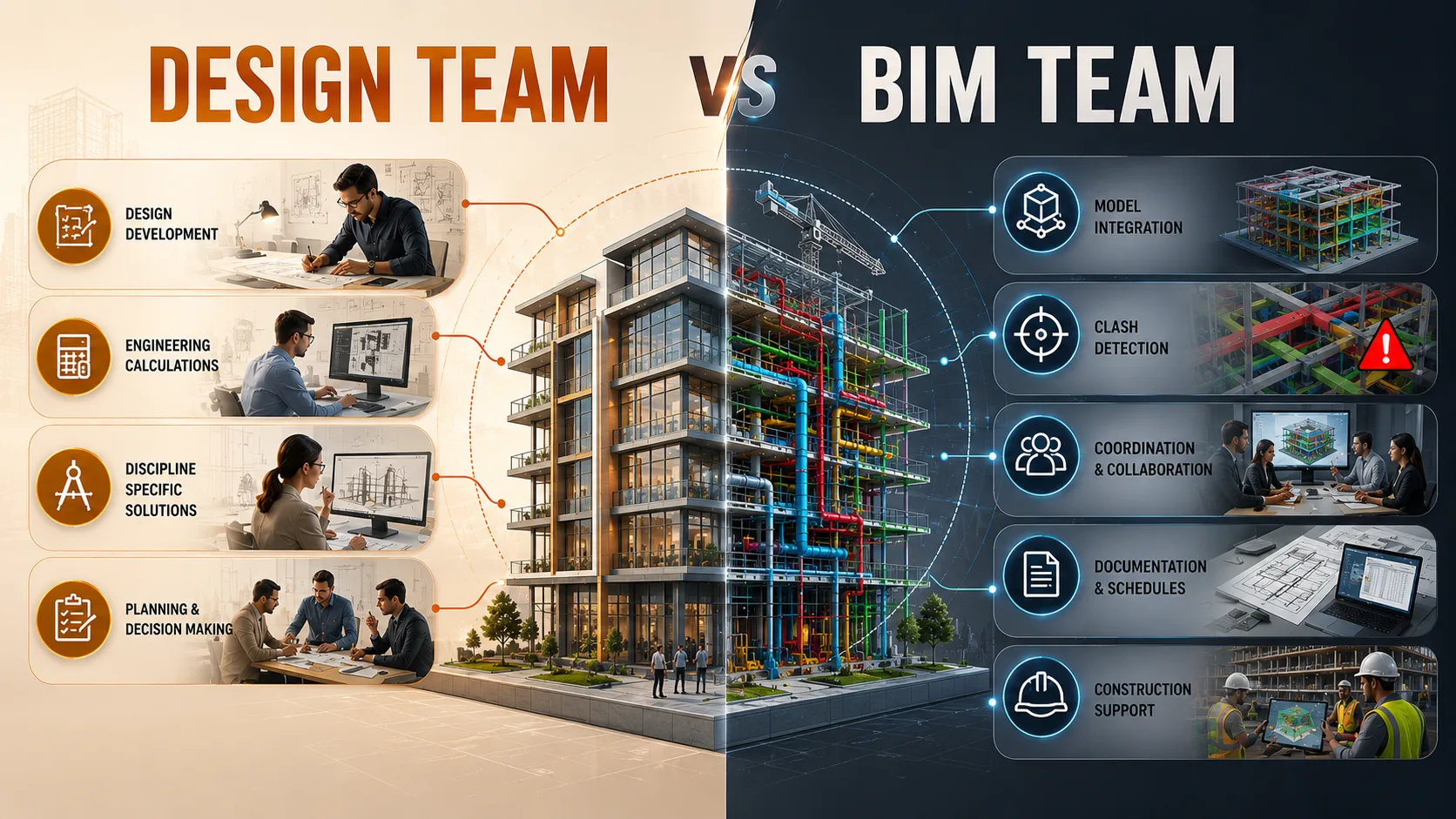
8. Design Team vs BIM Team
| Design Team | BIM Team |
|---|---|
| Decides what should be built | Develops digital representations of the design |
| Creates engineering solutions | Coordinates multiple disciplines |
| Produces design calculations | Identifies clashes before construction |
| Focuses on functionality and performance | Focuses on collaboration and constructability |
| Works discipline-wise | Works across disciplines |
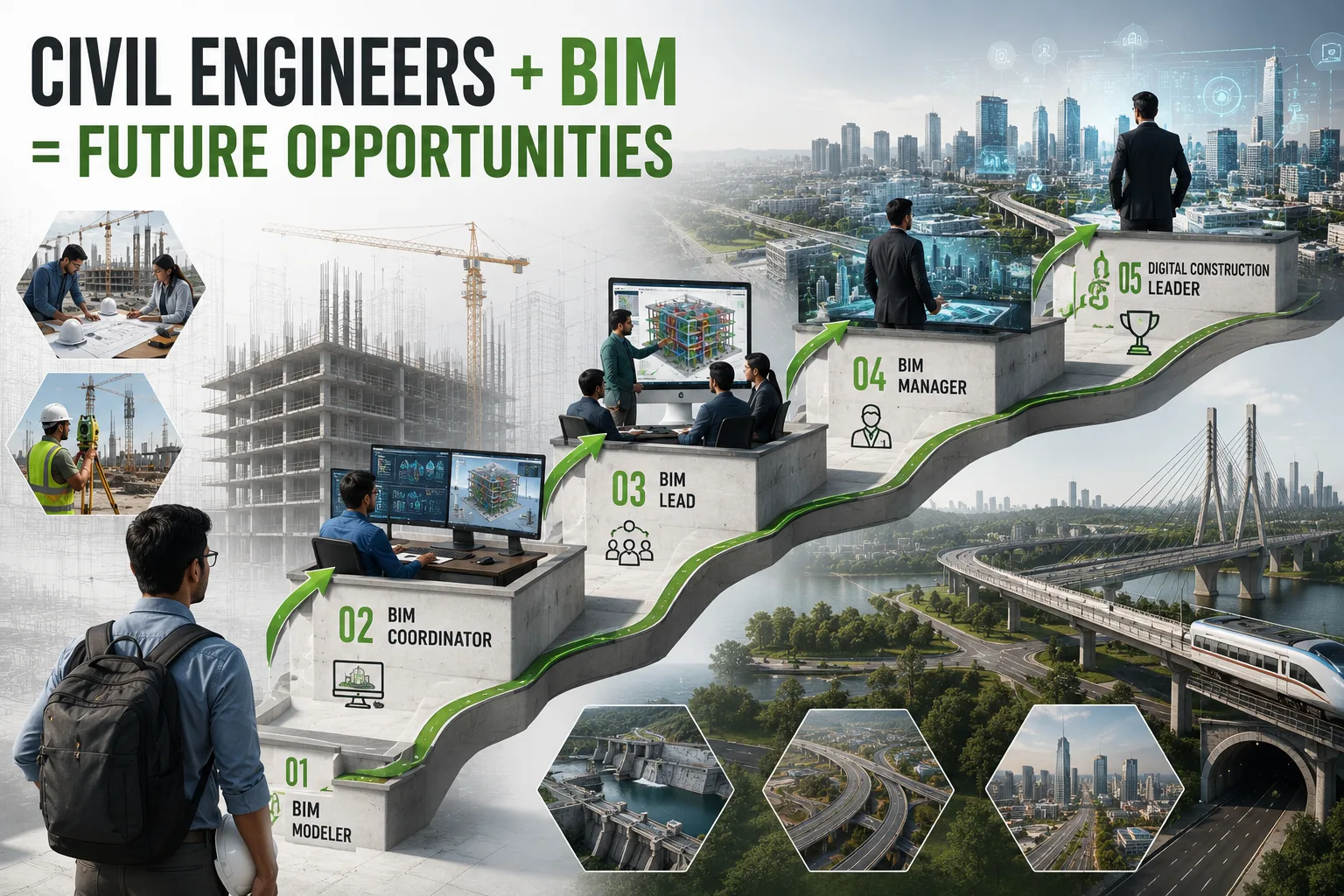
9. Why Should Civil Engineers Build a Career in BIM?
Many Civil Engineering graduates assume BIM is mainly related to architecture because their first exposure often comes through Architectural Modeling.
However, BIM is much broader than that.
Civil Engineers already possess valuable knowledge in:
- Construction methodologies
- Building systems
- Structural concepts
- Site execution processes
By learning BIM, Civil Engineers combine engineering fundamentals with digital project delivery skills, making them highly valuable in modern construction projects.
Today, many BIM Coordinators, BIM Leads, BIM Managers, and Digital Construction Professionals come from Civil Engineering backgrounds.
As BIM adoption continues to grow across India, the Middle East, and other global markets, Civil Engineers with BIM skills are increasingly finding opportunities in coordination, digital construction, and project delivery roles.
10. Is BIM Only for Architects?
Absolutely not.
BIM is a collaborative process involving multiple disciplines, including:
- Architecture
- Structure
- Mechanical
- Electrical
- Plumbing
- Fire Fighting
- Construction Management
- Facility Management
Architects, Civil Engineers, Structural Engineers, MEP Engineers, Diploma Holders, and Technical Professionals all contribute to the BIM workflow.
The goal of BIM is to ensure that all disciplines work together efficiently before construction begins.
11. Why Architectural Modeling Is Taught First
Many BIM courses begin with Architectural Modeling because it provides the easiest way to introduce building elements and modeling concepts.
This does not mean students are becoming Architects.
Architectural components simply help learners understand:
- BIM workflows
- Parametric modeling
- Building information
- Documentation standards
As students progress, they are introduced to Structural and MEP coordination workflows as part of a complete BIM process.
12. How BIM Adds Value to Construction Projects
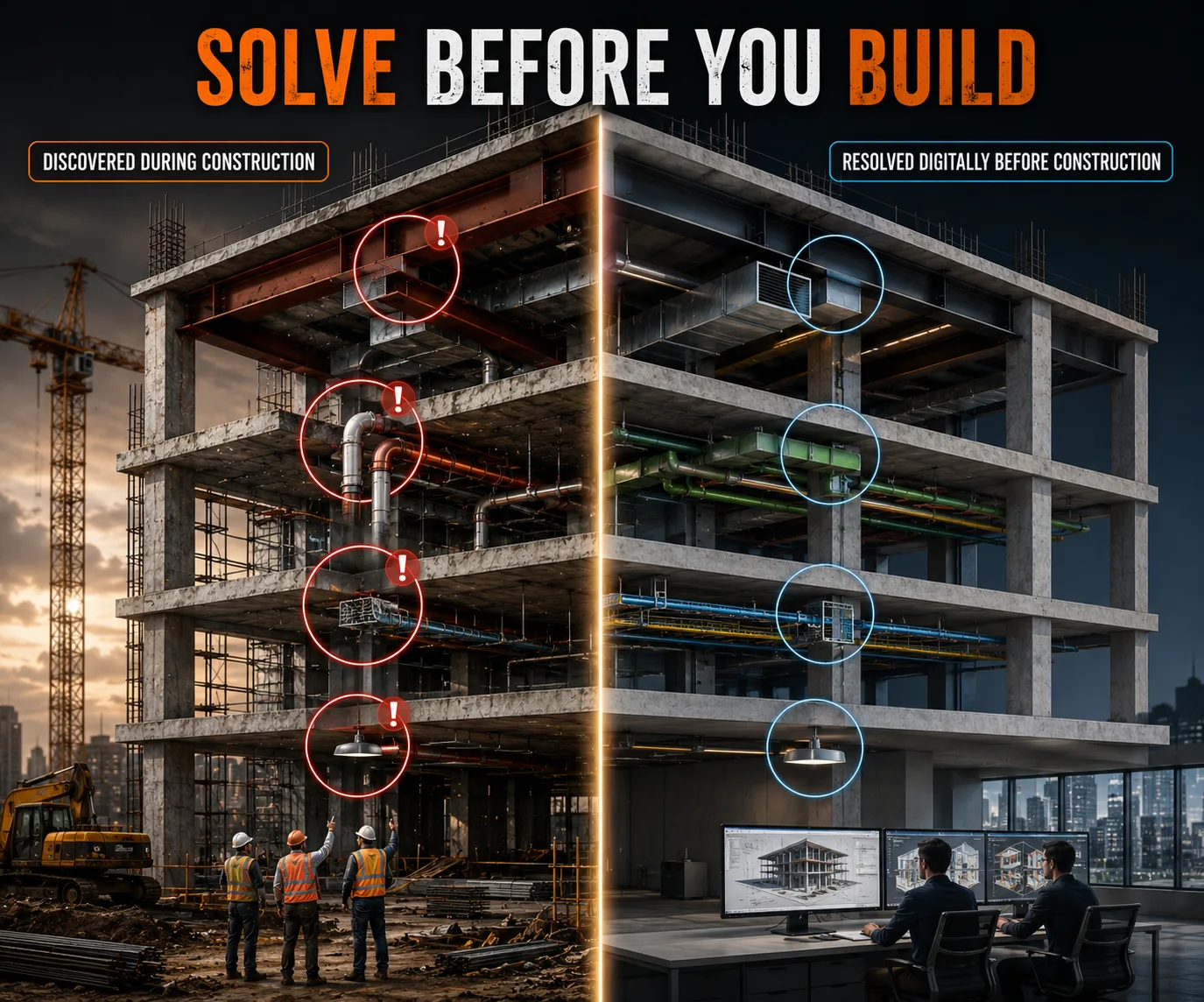
Imagine situations where:
- A structural beam clashes with an HVAC duct.
- A plumbing line intersects a structural element.
- An electrical tray conflicts with a ceiling system.
If these problems are discovered during construction, they can result in:
- Delays
- Rework
- Additional costs
- Project inefficiencies
BIM helps identify and resolve these issues before construction begins.
This is one of the major reasons BIM has become an industry standard across global construction projects.
13. BIM Is More Than Software—It's a Career Path
One of the biggest mistakes students make is believing that BIM simply means learning software.
Tools such as:
- Revit
- Navisworks
- Autodesk Construction Cloud
- BIM 360
are only part of the process.
The real value lies in understanding:
- Construction workflows
- Interdisciplinary coordination
- Information management
- Project collaboration
- Digital project delivery
Successful BIM professionals combine technical knowledge with construction understanding to improve project outcomes.
14. Why Companies Hire BIM Professionals
Modern construction companies increasingly look for professionals who understand:
- BIM workflows
- Revit and Navisworks
- MEP Coordination
- Documentation standards
- Clash detection
- Interdisciplinary collaboration
- Digital project delivery
This is why BIM has become much more than a software skill—it has become a long-term career pathway within the construction industry.
Final Thoughts
BIM is not an Architectural course.
BIM is not a Structural course.
BIM is not an MEP course.
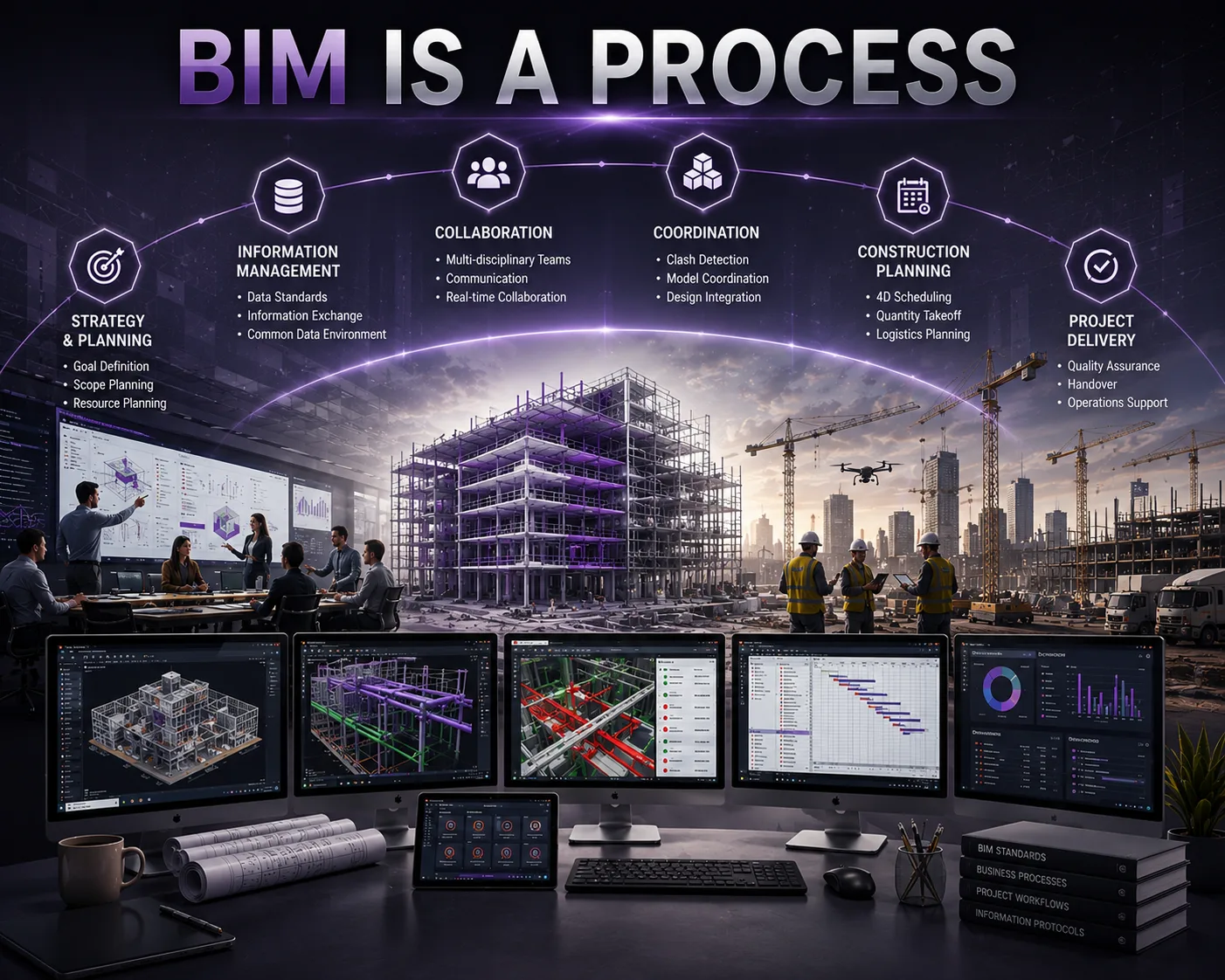
BIM is a collaborative process that connects all disciplines within a construction project.
Whether you are a Civil Engineer, Architect, Diploma Holder, or Technical Professional, BIM provides an opportunity to become part of the future of digital construction.
As the construction industry continues to adopt advanced technologies and collaborative workflows, BIM professionals will play an increasingly important role in delivering smarter, more efficient, and better coordinated projects worldwide.
15. Looking to Start a Career in BIM?
Whether you are a Civil Engineer, Architect, Diploma Holder, or working professional, understanding BIM workflows can open opportunities in design coordination, digital construction, and project delivery.
Explore the industry-focused BIM programs and practical learning pathways available at BIM Cafe Learning Hub and discover how digital construction is shaping the future of the AEC industry.
Professional BIM Course
Master BIM Course
Structural Design Concepts and BIM
Certified MEPF BIM Master Course
Electrical BIM Professional Program
RenderLab – Master 3D Modeling & Photorealistic Rendering
Multi-Tool Mastery for Architects & Engineers
BIM Coordinator Workflow Program
BIM FastTrack – 30 Day Intensive Training
Global Architectural & Structural BIM Project Program