Author: Devika R
August 1, 2026
7 min read
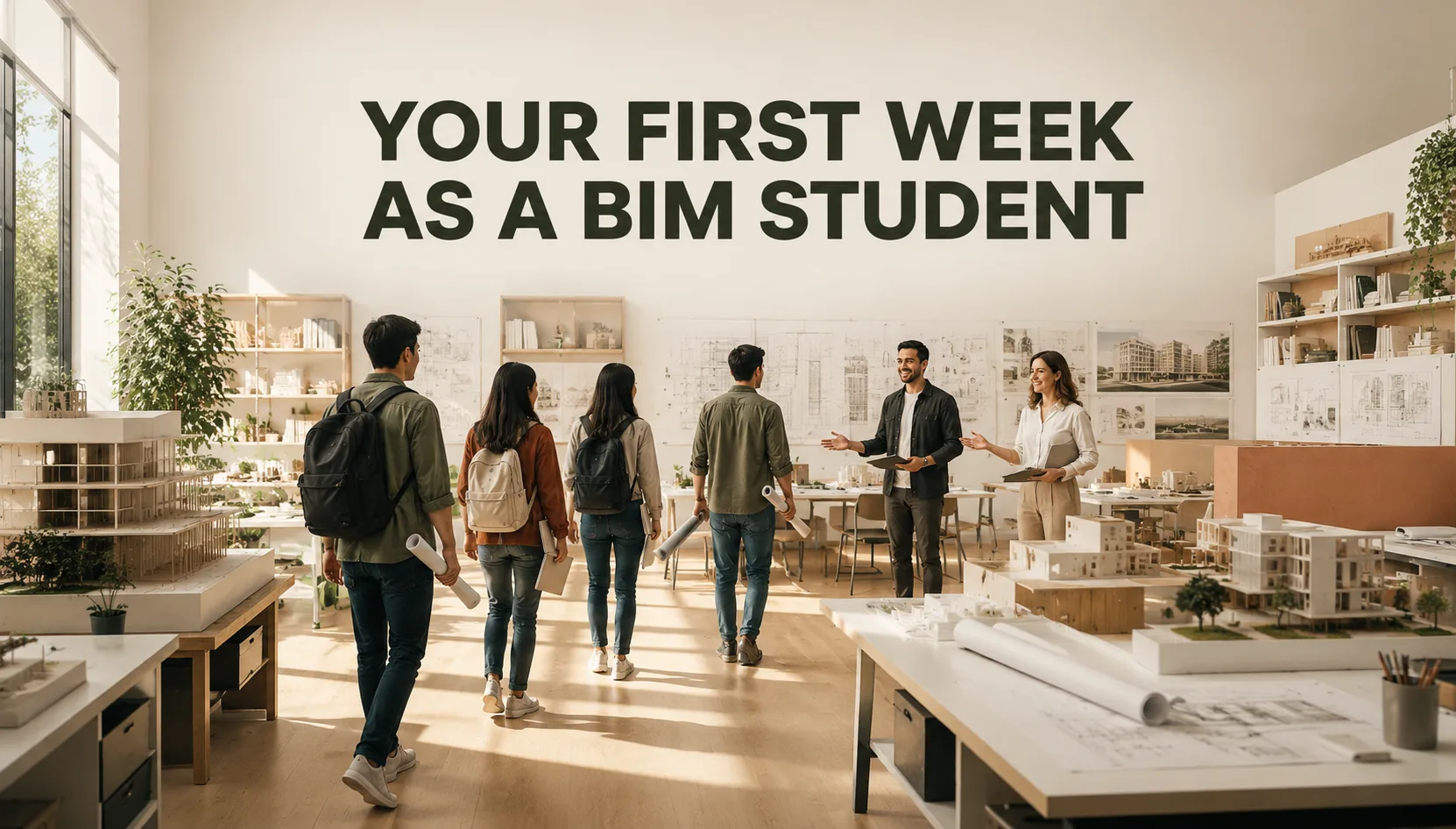
Your first week isn’t about mastering software. It’s about getting familiar with a new environment, building good habits, and accepting that confusion is part of the process. Every BIM professional started exactly where you are.
Starting a BIM course is exciting. Everything feels new — new software, new terminology, new workflows, and often a completely different way of thinking about construction.
For many beginners, the first week can also feel overwhelming. “Will I be able to learn this?” “Am I already behind?” “Everyone else seems to know more than I do.” If you’ve had these thoughts, you’re not alone. The truth is, almost every BIM professional started exactly where you are today.
This guide isn’t about mastering software in seven days. It’s about helping you understand what to expect during your first week, where to focus your energy, and what you shouldn’t worry about — before you get to bigger questions like how a real BIM project works.
Day one: don’t try to learn everything
Many students begin by trying to remember every tool, command, and shortcut. That’s understandable — but it’s also unnecessary.
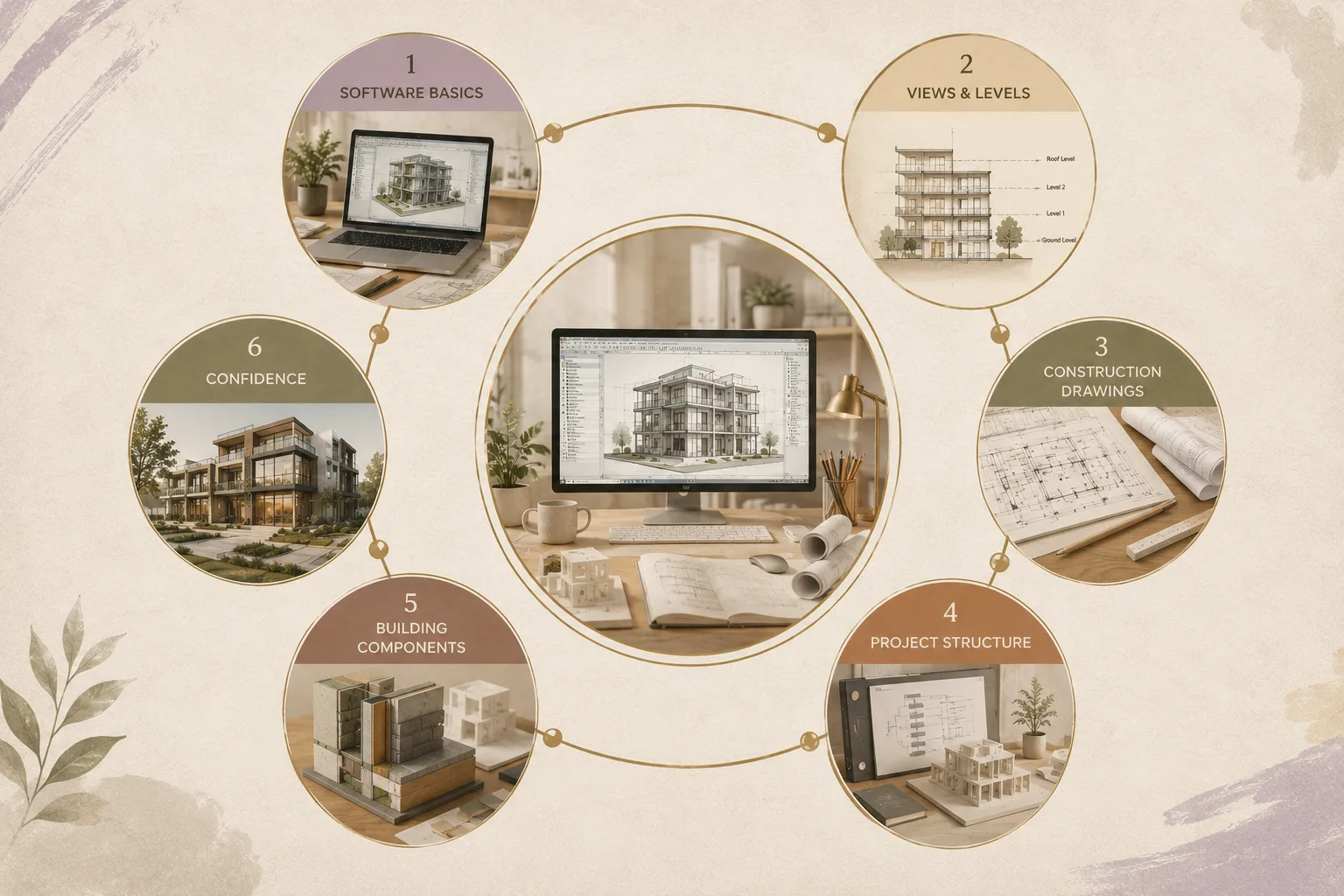
Your first day isn’t about becoming a BIM expert. It’s about becoming familiar with a new environment. Spend time understanding:
- How the software is organised
- How projects are structured
- How views, levels, and grids work
- Why BIM is different from traditional CAD drafting
The goal isn’t speed. It’s familiarity.
You’ll hear new terms everywhere
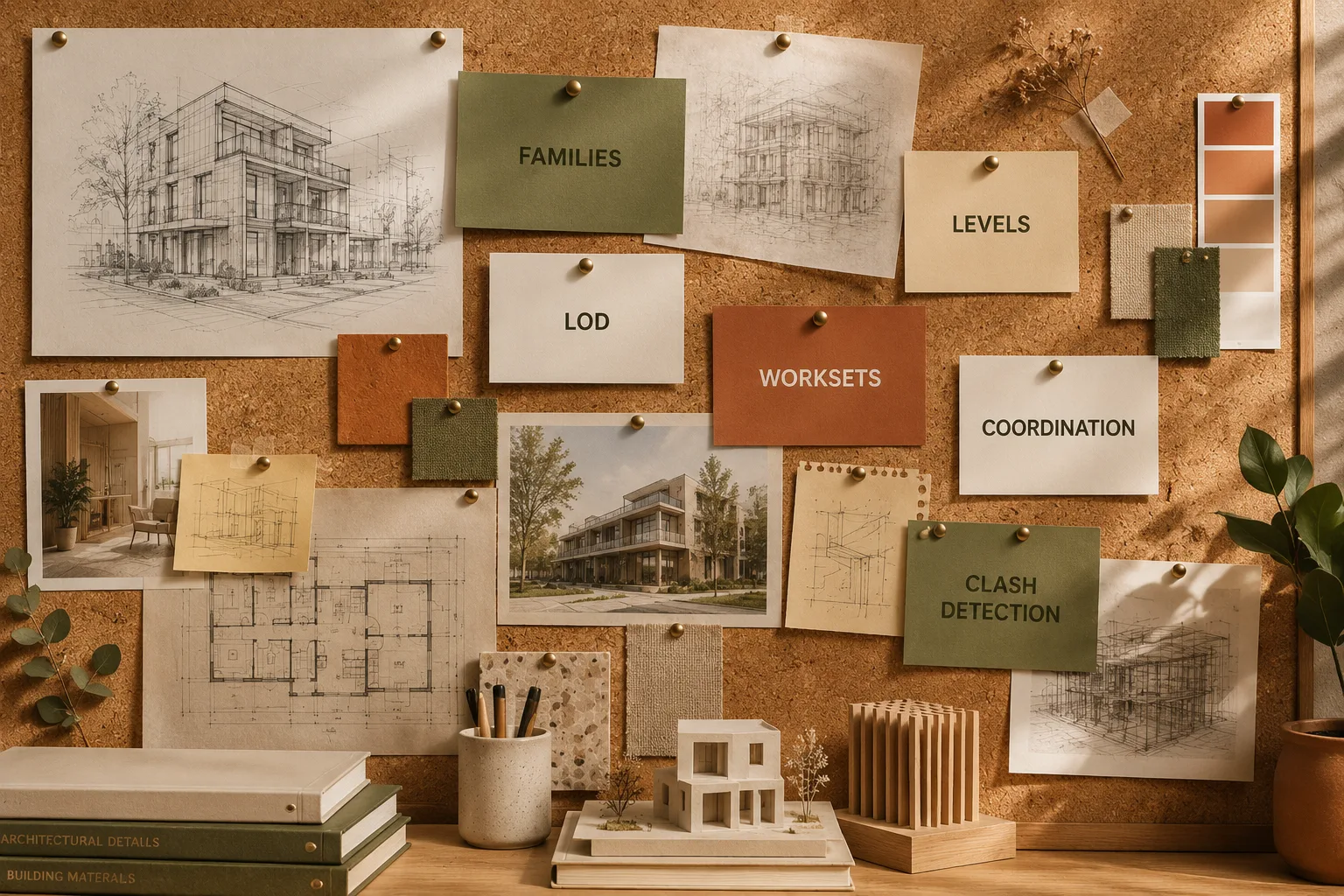
During your first week, you’ll come across words you’ve probably never used before. You’ll hear terms like Families, Levels, Worksets, Clash Detection, LOD, and Coordination.
Don’t panic if you don’t understand them immediately. Every professional once heard those words for the first time too.
Instead of memorising definitions, try to understand where and why they’re used. As you work on projects, these concepts will become much clearer.
Expect to spend more time understanding than modelling
Many students imagine they’ll start creating impressive 3D models on the first day. In reality, much of your learning will happen before you begin modelling.
You’ll spend time understanding:
- Construction drawings
- Project layouts
- Building components
- Naming conventions
- Project organisation
This foundation makes modelling easier later.
Making mistakes is part of the process
You might place a wall incorrectly. Create the wrong level. Delete something by accident. Or wonder why your model doesn’t look like your instructor’s.
That’s not failure. It’s learning.
Every mistake helps you understand how BIM works — and more importantly, why it works that way.
Progress isn’t measured by speed
It’s easy to compare yourself with classmates who seem to finish tasks faster. Don’t.
Some people learn software quickly. Others take more time but develop a stronger understanding of construction and project workflows.
BIM is a long-term skill. Focus on improving every day instead of comparing your progress with someone else’s.
Ask questions early
One of the fastest ways to improve is to ask questions. Not just “Which button should I click?” but questions like:
- Why is this model organised this way?
- Why do we use levels instead of drawing freely?
- Why is coordination important?
- How does this relate to a real building?
These questions build understanding — not just software knowledge.
Don’t worry if you forget commands
Every beginner worries about remembering every command. Here’s the reality: experienced BIM professionals still search for tools, explore new features, and continue learning.
What’s important isn’t memorising every command. It’s understanding how to solve a problem.
Software changes over time — there’s a new release almost every year, as anyone tracking Revit’s new features will tell you. The ability to think logically and work systematically stays with you throughout your career.
Your goal isn’t a perfect model
During your first week, don’t chase perfection. Instead, focus on developing good habits:
- Organise your work neatly
- Follow instructions carefully
- Read drawings before modelling
- Save your work regularly
- Pay attention to accuracy rather than speed
These habits will help you far more than finishing a model quickly.

Remember why you started
At some point during your first week, you may feel frustrated. That’s completely normal.
Learning BIM isn’t just about understanding software. It’s about learning how buildings are planned, coordinated, documented, and delivered.
Every small step you take now is preparing you for larger, more complex projects in the future. Stay patient. Keep practising. Trust the process.
Final thoughts
No BIM professional became confident in a single week. Your first week is simply the beginning of a much bigger journey.
Don’t measure success by how many tools you’ve learned or how quickly you’ve completed an exercise. Measure it by your willingness to learn, your curiosity to ask questions, and your commitment to improving every day.
One day, you’ll look back at your first project and realise how much you’ve grown — not because everything was easy, but because you kept going.
Every BIM expert was once a beginner. And every successful career starts with a first week.
Frequently Asked Questions
Is it normal to feel overwhelmed during the first week of a BIM course?
Yes. Learning BIM introduces new software, terminology, and workflows. Feeling overwhelmed at first is completely normal, and confidence builds with regular practice.
Should I focus on learning Revit commands first?
Rather than memorising commands, focus on understanding project structure, construction drawings, and why each tool is used. The commands become easier to remember through practice.
Do I need prior construction knowledge to learn BIM?
A basic understanding of construction concepts is helpful, but many students build this knowledge during their training through projects and practical exercises.
How much practice should I do outside class?
Even 30–60 minutes of consistent daily practice can help reinforce what you’ve learned and improve your confidence over time.
What should my goal be during the first week?
Your goal isn’t to become an expert. It’s to understand the basics, develop good learning habits, and build confidence for the weeks ahead.
Thinking about your own first week?
BIM Cafe’s beginner-friendly programs are built for exactly this stage — structured lessons, real construction drawings, and instructors who expect questions. Start with the fundamentals and build up to coordinated project work at a pace that actually sticks.