Author: Devika R
July 31, 2026
7 min read
A Letter to Every Future BIM Engineer
Dear Future BIM Engineer,
If you're reading this, there's a good chance you're thinking about learning BIM—or you've just enrolled in your first BIM course.
You might be excited. You might be nervous. You might even be wondering whether you're making the right career choice.
You've probably heard people say, "BIM is the future of construction." While that's true, there are a few things that don't usually make it into course brochures, social media posts, or promotional videos.
This isn't another article about software features or career statistics.
It's a conversation with the person you're about to become.
BIM Isn't Just About Learning Software
Many students begin their journey believing BIM is simply about mastering Revit.
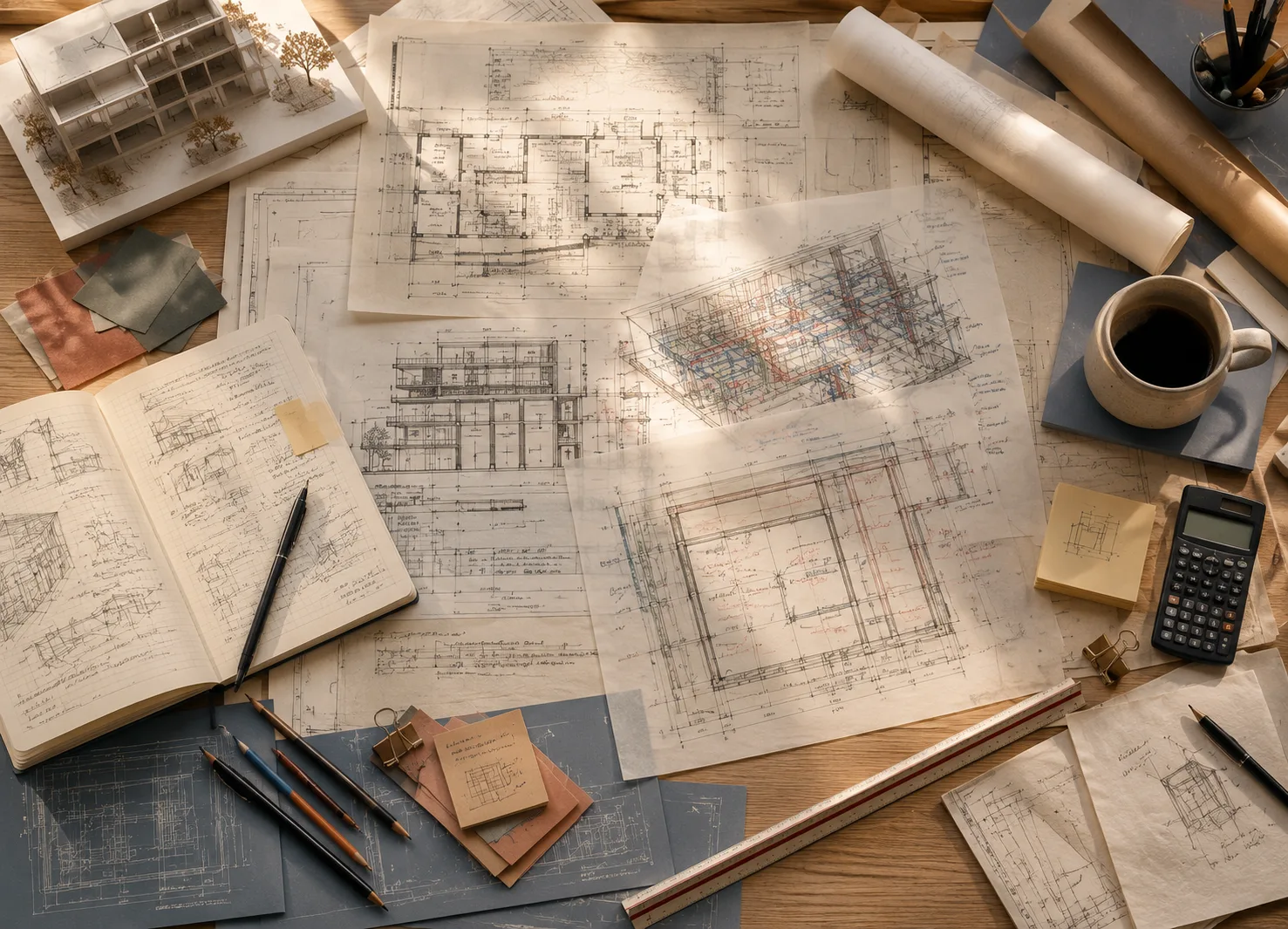
It isn't.
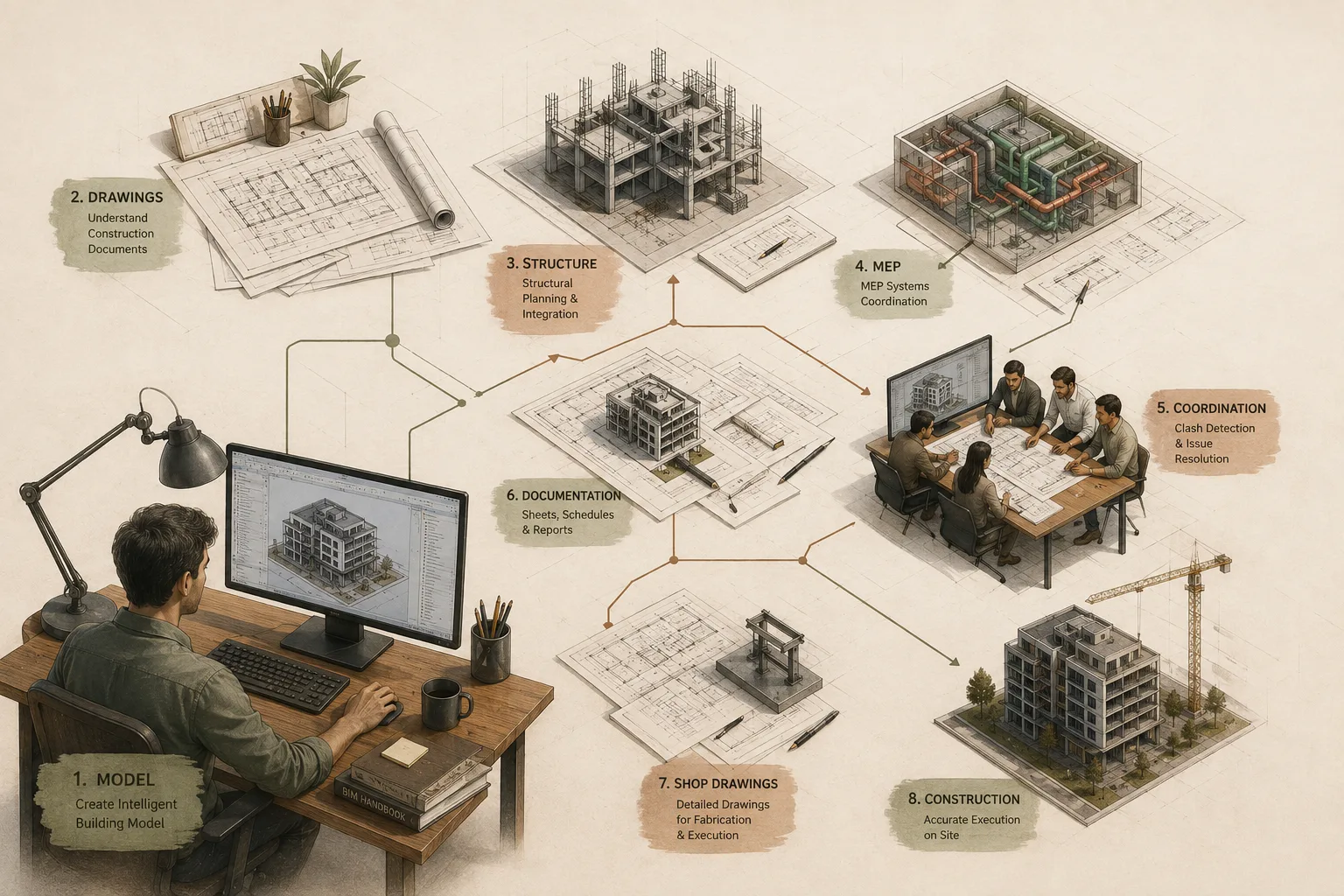
Software is only a tool. The real challenge is understanding how buildings are designed, coordinated, documented, and eventually constructed.
As you progress, you'll realise that BIM is less about clicking commands and more about solving problems. Every model represents real engineering decisions, and every change can affect multiple disciplines working on the same project.
The best BIM professionals don't just know the software—they understand how construction projects come together.
Your First Project Will Feel Overwhelming
When you open your first live project, you'll probably see hundreds of views, linked models, worksets, sheets, and thousands of building elements.
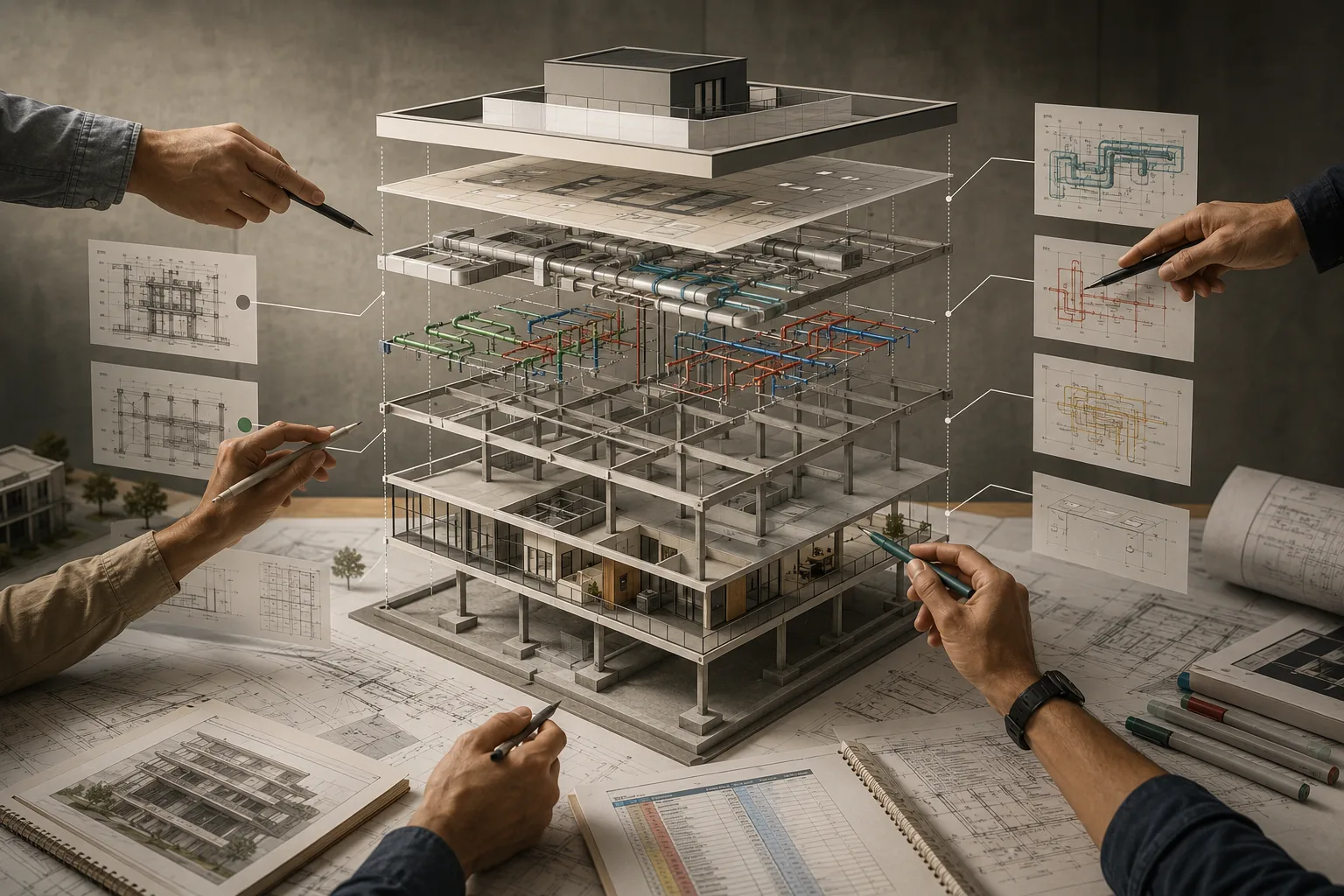
At first, it may feel confusing.
That's completely normal.
Every experienced BIM Engineer has had a moment where they wondered,
"How does all of this fit together?"
Confidence doesn't come from knowing every command.
It comes from working through real projects, asking questions, and learning one step at a time.
Construction Drawings Will Become Your Best Friend
One of the biggest surprises for many beginners is that BIM starts long before modelling.
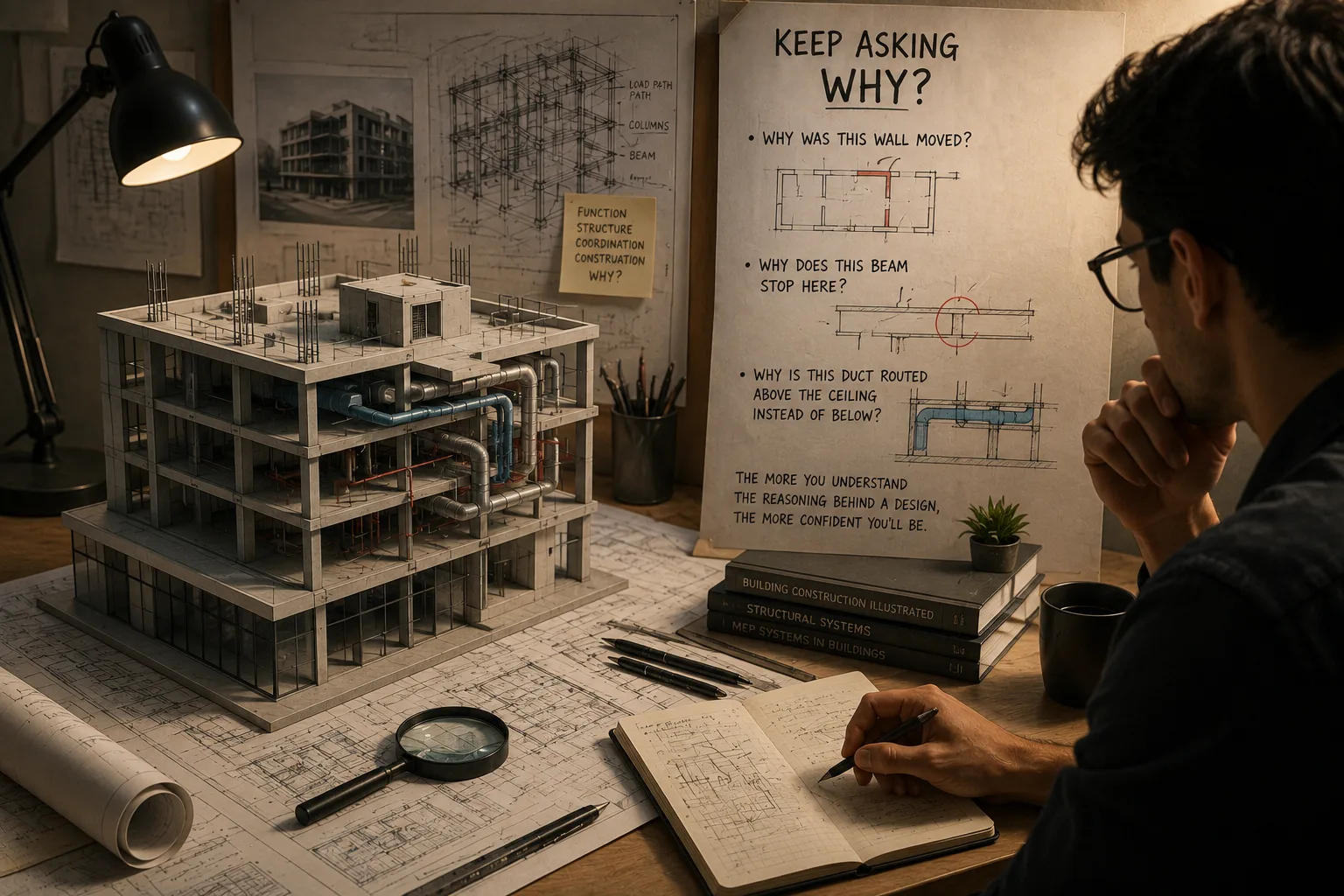
You'll spend a lot of time reading architectural, structural, and MEP drawings before creating anything in 3D.
Those drawings tell the story of the project.
The better you understand them, the better your models will be.
Learning to interpret construction drawings is one of the most valuable skills you can develop—far beyond memorising software shortcuts.
Coordination Is Where BIM Comes to Life
Working on a single model is only one part of the job.
Real projects involve architects, structural engineers, MEP engineers, contractors, and project managers—all working together.
A beam may interfere with a duct.
A pipe may clash with a cable tray.
A ceiling layout may need to change because of another discipline.
Finding and resolving these issues before construction begins is one of BIM's greatest strengths.
That's why communication and coordination are just as important as technical skills.
You Will Make Mistakes—and That's Part of Learning
Everyone does.
You'll model something incorrectly.
You'll miss a clash.
You'll place an element in the wrong location.
You'll receive review comments asking you to revise your work.
Don't see those moments as failures.
Every correction improves your understanding of both BIM and construction.
The engineers who grow the fastest aren't the ones who never make mistakes—they're the ones who learn from them.
Don't Chase Speed. Chase Understanding.
In the beginning, it's easy to compare yourself with others.
Someone will finish modelling faster.
Someone else will know more shortcuts.
Don't let that discourage you.
Accuracy, consistency, and understanding are far more valuable than speed.
As your experience grows, efficiency will naturally follow.
Focus on building a strong foundation first.
Keep Asking "Why?"
One habit separates good BIM professionals from great ones.
Curiosity.
Don't just learn how to model something.
Ask why it's designed that way.
- Why was this wall moved?
- Why does this beam stop here?
- Why is this duct routed above the ceiling instead of below?
The more you understand the reasoning behind a design, the more confident you'll become in solving real project challenges.
Your Learning Doesn't End After the Course
Technology evolves.
Software updates are released.
Industry standards improve.
Project requirements change.
The most successful BIM professionals understand that learning is a continuous process.
Every project teaches something new, and every challenge helps you become a better engineer.
Your course is the starting point—not the finish line.
Remember Why You Started
There will be days when projects feel difficult, revisions seem endless, or deadlines become stressful.
During those moments, remember why you chose this path.
Every coordinated model, every solved clash, and every completed project contributes to something much bigger—a building that people will live in, work in, or use every day.
That's the real impact of BIM.
Final Thoughts
One day, you'll open a project that feels impossible to understand.
Months later, you'll navigate it with confidence.
Years later, you'll help someone else who is just beginning their journey.
That's how every BIM professional grows.
So don't worry about knowing everything on day one.
Stay curious.
Keep learning.
Ask questions.
Build strong fundamentals.
The software will continue to evolve, but engineers who understand construction, communicate effectively, and enjoy solving problems will always be in demand.
Welcome to the world of BIM. Your journey is just beginning.
Frequently Asked Questions
Is BIM only about learning Revit?
No. Revit is one of the tools used in BIM, but BIM also involves coordination, documentation, collaboration, and project workflows.
Will I be job-ready after completing a BIM course?
A good BIM course provides the foundation, but practical project experience, continuous learning, and problem-solving skills are equally important.
What is the most important skill for a beginner?
Understanding construction drawings and developing the habit of asking questions are just as valuable as learning software.
Is it normal to struggle with the first project?
Yes. Almost every BIM professional finds their first live project challenging. Confidence develops with experience.
How can I continue improving after training?
Work on real projects, seek feedback, stay updated with industry practices, and treat every project as an opportunity to learn.
Professional BIM Course
Master BIM Course
Structural Design Concepts and BIM
Certified MEPF BIM Master Course
Electrical BIM Professional Program
RenderLab – Master 3D Modeling & Photorealistic Rendering
Multi-Tool Mastery for Architects & Engineers
BIM Coordinator Workflow Program
BIM FastTrack – 30 Day Intensive Training
Global Architectural & Structural BIM Project Program