Author: Devika R
September 30, 2026
5 min read
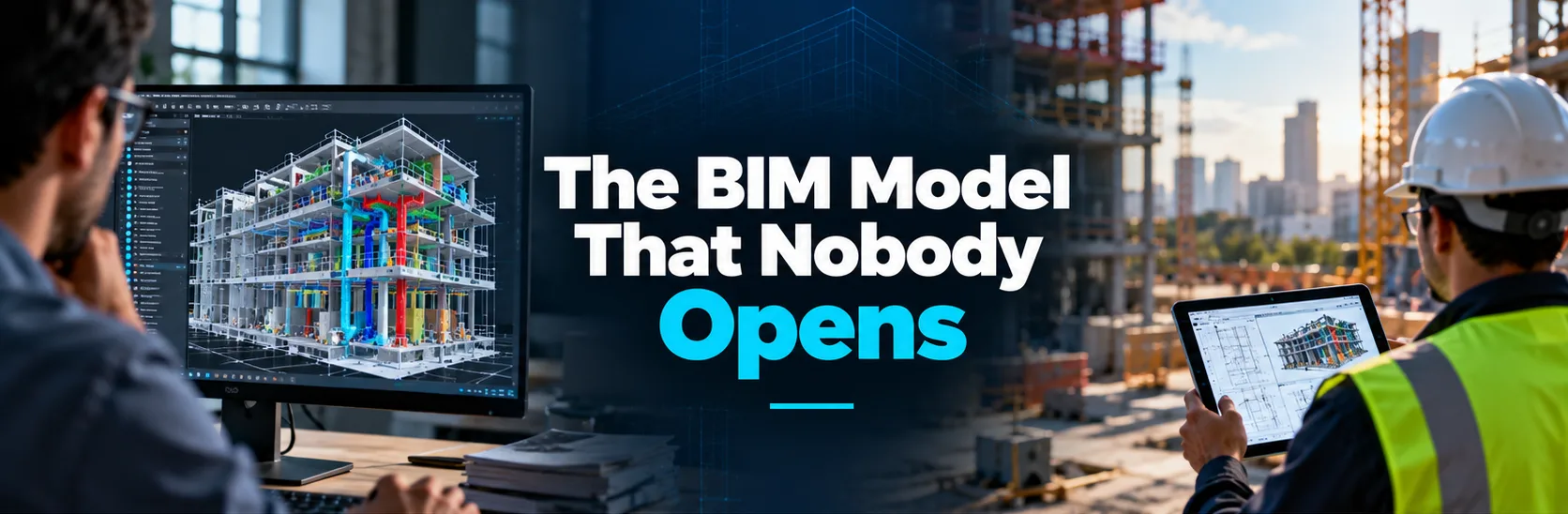
What happens when a perfectly good BIM model isn’t actually useful to the people who need it?
The model is complete.
The geometry looks right. The clashes have been checked. The sheets have been issued.
The BIM team is satisfied.
Then someone on site asks:
“Where do I find the information I need?”
Suddenly, there is a problem.
Not necessarily with the model itself.
But with what the model is supposed to do.
A Model Can Be Correct and Still Fail
This is one of the less obvious lessons in BIM.
A model can be technically accurate, well organised and properly coordinated—and still fail to support the people using it.
Why?
Because different people need different information.
A BIM modeller may focus on geometry.
A coordinator may focus on clashes.
A project manager may need reliable project information.
A site engineer may need a specific dimension or installation detail.
A fabricator may need precise information for production.
The model has to work for the next person in the workflow, not just the person who created it.
8:45 AM — The BIM Team
The model is ready.
Walls are modelled. Systems are coordinated. Parameters are populated. Views and sheets are prepared.
From the modelling team’s perspective, the job looks complete.
But completion is not necessarily usefulness.
The real test begins when someone else needs to use that information.
10:30 AM — The Coordinator
The coordinator opens the model and checks the latest changes.
Everything appears to be in order.
But coordination is only one part of the process.
A model can pass a clash check and still contain information that is difficult to understand, incomplete for its intended purpose, or unsuitable for the next stage of work.
No clashes doesn’t automatically mean no problems.
1:15 PM — The Site
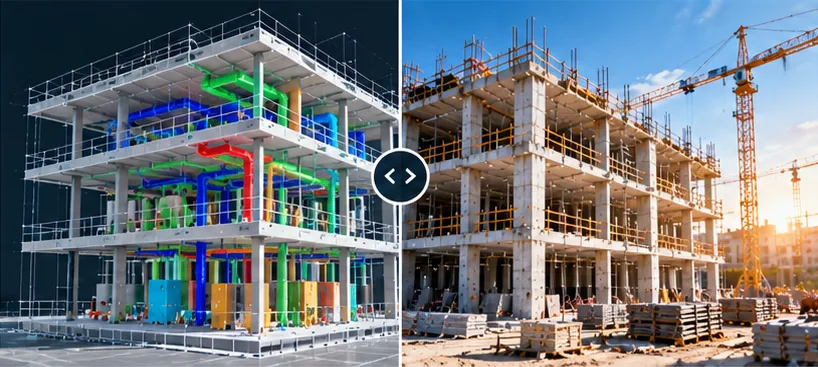
Now the model meets reality.
The site team doesn’t necessarily care how elegantly the model was built.
They need answers.
Where exactly is this element?
What is its required specification?
Which revision is current?
What needs to happen next?
If finding those answers takes too much time, the model becomes another source of information to navigate rather than a tool that helps the work.
And that is where BIM gets tested properly.
3:00 PM — The Question Nobody Asked
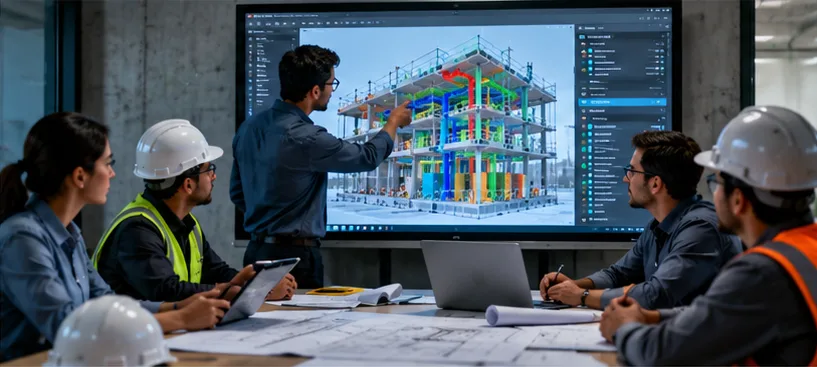
Someone finally asks:
“Who was this information created for?”
It is a simple question, but it changes the way we look at BIM.
A model isn’t created only for the BIM team.
Its information may eventually be used by:
- Designers
- Coordinators
- Contractors
- Fabricators
- Site teams
- Quantity surveyors
- Facility managers
Each person may need something different from the same project information.
If that need isn’t considered early, even a technically strong model can become difficult to use.
So What Went Wrong?
Perhaps nothing was technically wrong.
The model may have been created correctly.
The problem may have been the gap between creating information and using information.
Maybe the required information wasn’t structured for the next stage.
Maybe the deliverable didn’t match the user’s workflow.
Maybe the model was updated, but the people relying on it weren’t aware of the change.
Or perhaps everyone assumed that because the model was detailed, it would automatically be useful.
It doesn’t work that way.
The Model Is Not the End Product
This is where BIM differs from simply creating a detailed 3D model.
The real value of BIM isn’t how impressive the model looks on screen.
It is what people can do with the information inside it.
A model can be highly detailed and still be difficult to use.
Another model may look relatively simple but provide exactly the information a project team needs.
The difference is not always visible in a screenshot.
The Better Question to Ask
Instead of asking:
“Is the model complete?”
Ask:
“Who uses this information next?”
Then ask:
- What do they need?
- When do they need it?
- How will they access it?
- What decisions will they make from it?
- What happens when the information changes?
Those questions can influence how the model should be developed in the first place.
A BIM Model Should Have a Job
Every model exists for a reason.
Maybe it supports design.
Maybe it coordinates disciplines.
Maybe it supports fabrication.
Maybe it helps construction.
Maybe it carries information into handover and operations.
The important thing is to understand that purpose.
Because more detail isn’t automatically more value.
The right information, organised for the right person at the right stage, is what makes a BIM model useful.
The Real Test of a BIM Model
The best BIM model isn’t necessarily the one with the most geometry.
It isn’t necessarily the one that looks the most impressive.
And it isn’t simply the one that passes a clash check.
A useful BIM model is one that helps the next person understand, coordinate, decide or build.
That is when BIM moves beyond modelling.
The model may be finished.
But its real job starts when someone needs to use it.
Professional BIM Course
Master BIM Course
Structural Design Concepts and BIM
Certified MEPF BIM Master Course
Electrical BIM Professional Program
RenderLab – Master 3D Modeling & Photorealistic Rendering
Multi-Tool Mastery for Architects & Engineers
BIM Coordinator Workflow Program
BIM FastTrack – 30 Day Intensive Training
Global Architectural & Structural BIM Project Program