Author: Devika R
July 18, 2026
8 min read
1. Why Every Civil Engineering Graduate Asks This Question
Open Instagram, browse LinkedIn, attend a college seminar, or watch construction content on YouTube—you'll almost certainly come across the term BIM. For many Civil Engineering students, this raises an important question: Is BIM the future, and is it the only career worth pursuing? The answer is no. Civil Engineering remains one of the most diverse professions, offering multiple rewarding career paths. BIM has gained attention because the industry is rapidly moving towards digital construction, collaboration, and information-driven project delivery. The goal isn't to follow trends; it's to choose a specialization that matches your interests, strengths, and long-term aspirations.
2. Civil Engineering Offers More Career Options Than You Think
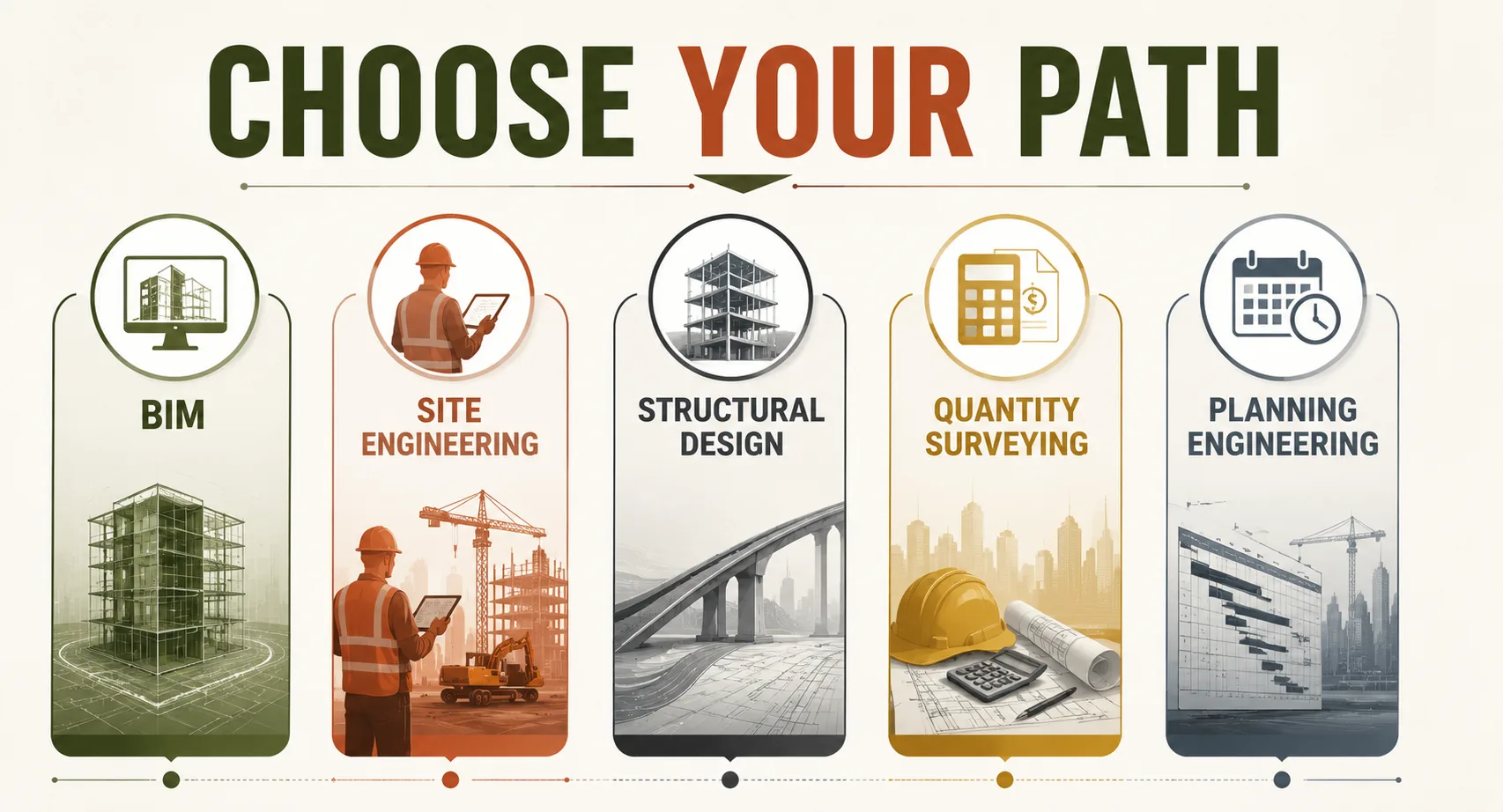
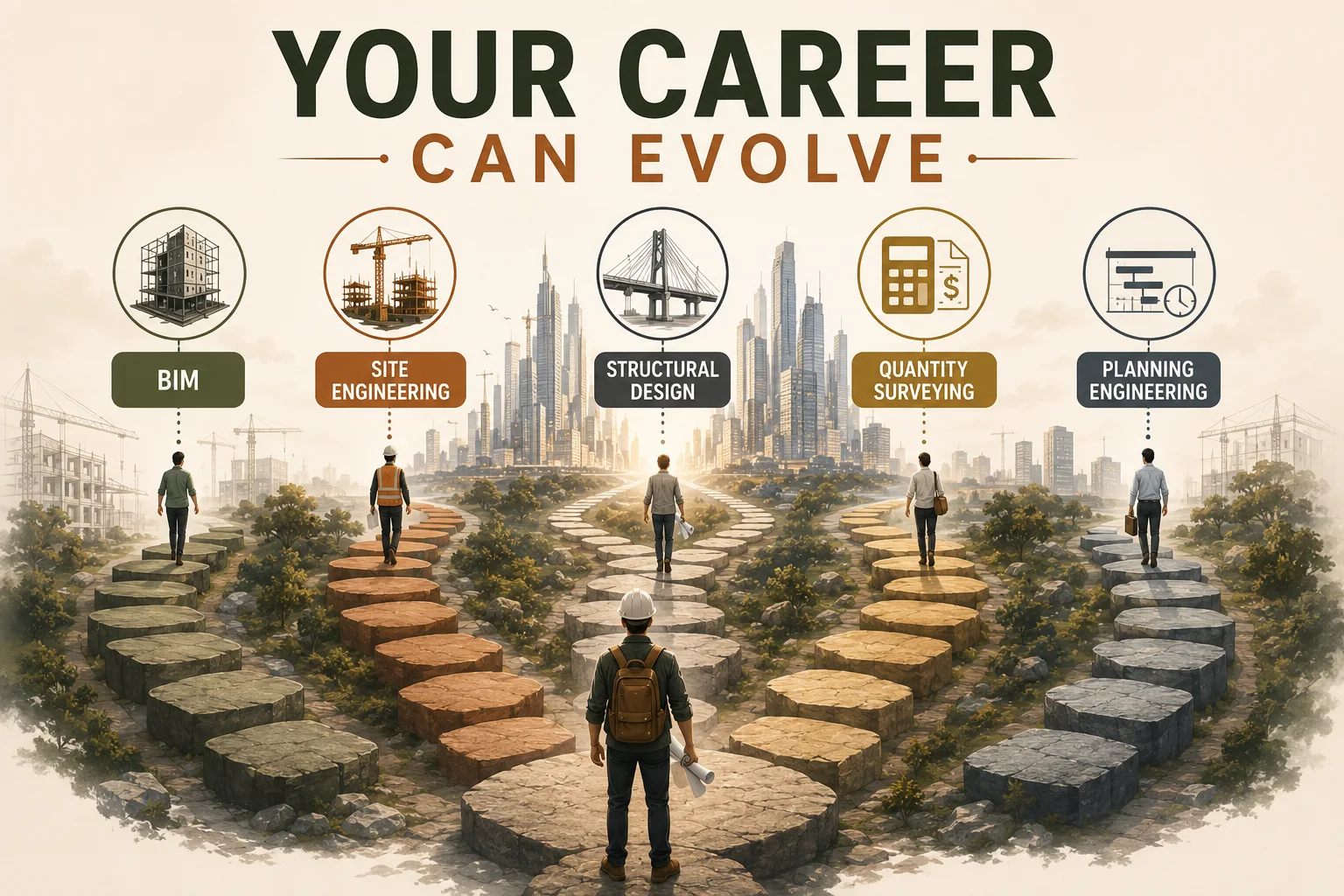
Rather than viewing Civil Engineering as a single profession, think of it as an industry with multiple specializations. You could work in design (Structural Design), execution (Site Engineering), commercial management (Quantity Surveying), planning (Planning Engineering), digital construction (BIM), transportation, geotechnical engineering, environmental engineering, project management, or public-sector engineering. Every specialization contributes to the successful delivery of construction projects.
3. Career Comparison at a Glance
| Career | Best For | Work Style | Typical Growth |
|---|---|---|---|
| BIM | Technology & coordination | Office / Hybrid | High |
| Site Engineering | Construction execution | Site | High |
| Structural Design | Analysis & design | Office | High |
| Quantity Surveying | Cost & contracts | Office / Site | High |
| Planning | Scheduling & monitoring | Office | High |
4. Which Career Fits Your Interests?
BIM
Choose BIM if you enjoy technology, 3D visualization, digital workflows, multidisciplinary coordination, construction documentation, and solving project challenges before they reach site.
Site Engineering
Ideal for those who enjoy outdoor work, supervising construction, coordinating contractors, and seeing projects take shape in the field.
Structural Design
Best suited for graduates who enjoy mathematics, engineering calculations, structural analysis, and designing safe, efficient structures.
Quantity Surveying
A great choice if you're interested in estimation, BOQs, contracts, procurement, billing, and commercial management.
Planning Engineering
Perfect for those who enjoy scheduling, Primavera P6, project tracking, resource planning, and keeping projects on time.
5. Why BIM Is Growing Faster Than Ever
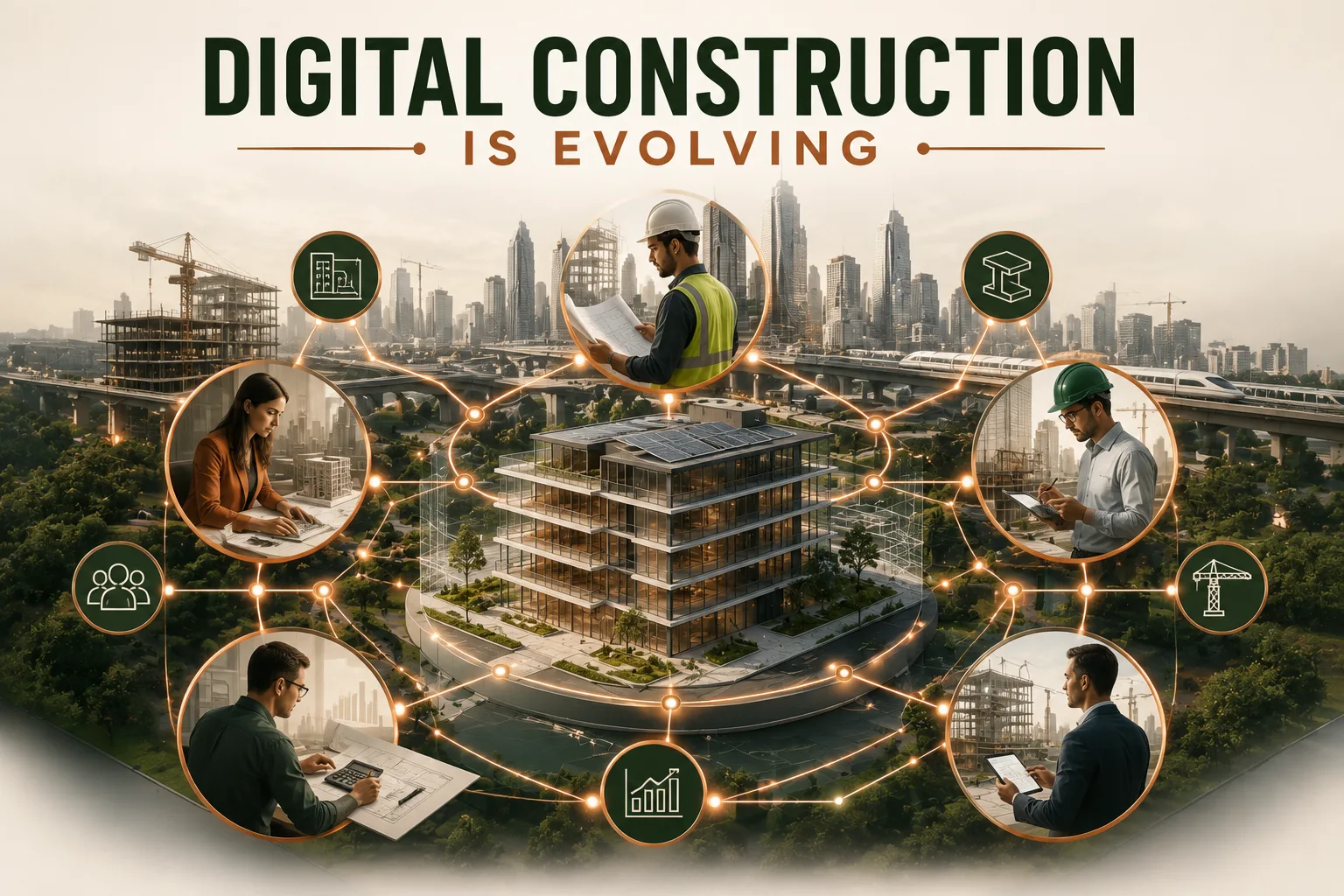
BIM's growth is driven by industry transformation rather than hype. Governments are encouraging BIM adoption, clients expect better coordination, cloud collaboration is becoming standard, and mega projects require multiple disciplines to work together efficiently. BIM supports digital construction by connecting architects, engineers, contractors, and project managers within a shared information environment.
6. Common Misconceptions
BIM is only Revit – Revit is one authoring tool; BIM is a complete collaborative process. • BIM replaces Civil Engineers – BIM supports engineering roles rather than replacing them. • BIM is only for Architects – Civil, Structural, MEP, QS, and Planning professionals all contribute to BIM workflows.
7. Before You Join Any BIM Course
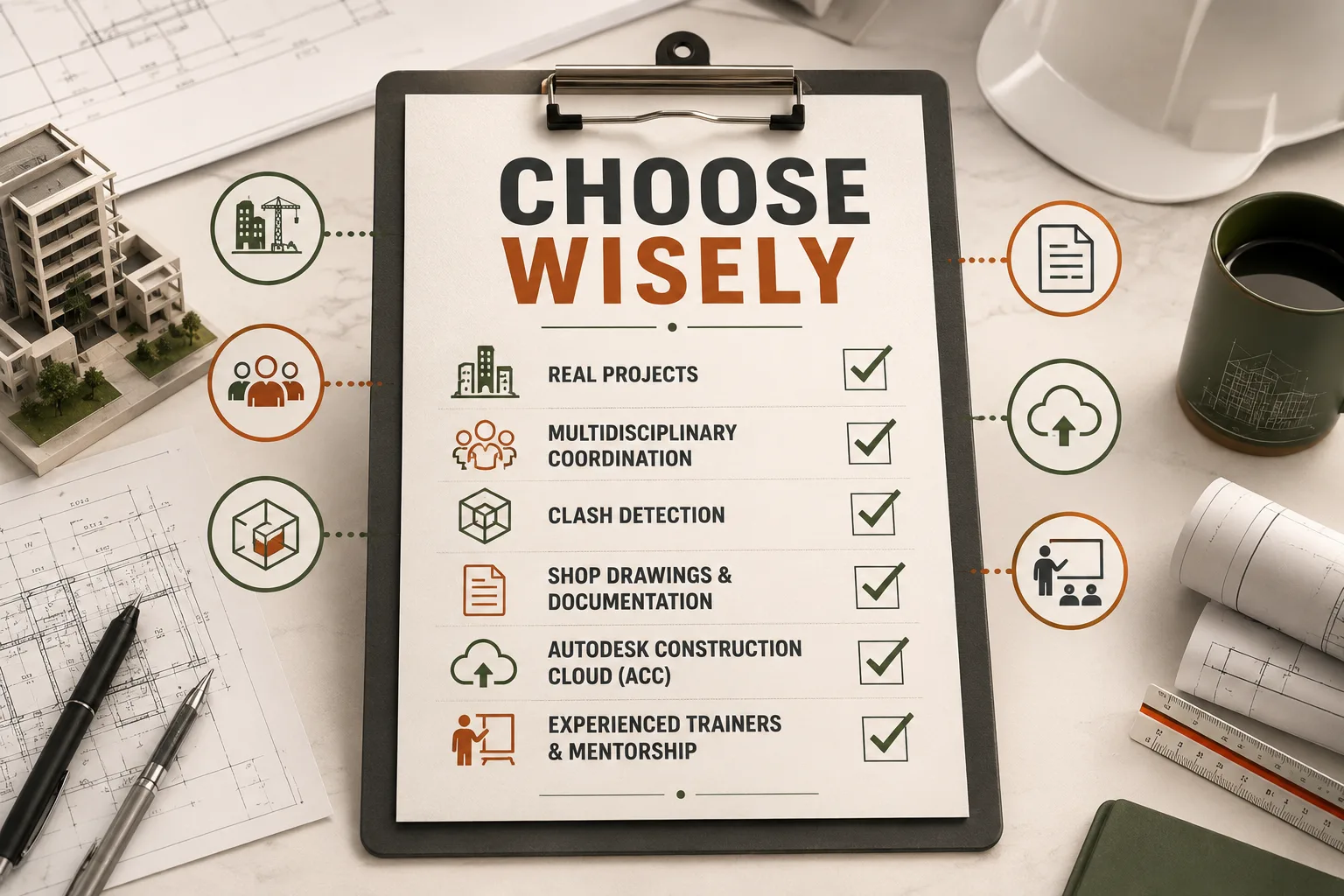
Ask practical questions before enrolling: • Does the course use real project drawings? • Will you learn multidisciplinary coordination and clash detection? • Are shop drawings and documentation included? • Does it cover Autodesk Construction Cloud (ACC)? • What is the trainers' project experience? • Can you review previous student projects?
8. Typical Career Progression
BIM: Modeler → Engineer → Coordinator → Lead → Manager Site: Graduate Engineer → Site Engineer → Senior Site Engineer → Construction Manager Structural: Junior Design Engineer → Structural Engineer → Senior Engineer → Design Lead Quantity Surveying: Junior QS → QS → Senior QS → Commercial Manager Planning: Planning Engineer → Senior Planning Engineer → Planning Manager
9. One Important Thing Nobody Tells You
Your first job does not define your entire career. Many professionals move between Site Engineering, BIM, Planning, Design, and Project Management as they gain experience. Continuous learning and practical exposure matter far more than your starting designation.
Final Thoughts
There is no universal 'best' career after Civil Engineering. The right path is the one that aligns with your interests and keeps you motivated to grow. BIM has become one of the fastest-growing specializations because it combines engineering with digital construction, but it is only one of several rewarding options. Explore different paths, understand the nature of the work, and build practical skills that prepare you for real projects rather than simply chasing trends.
Professional BIM Course
Master BIM Course
Structural Design Concepts and BIM
Certified MEPF BIM Master Course
Electrical BIM Professional Program
RenderLab – Master 3D Modeling & Photorealistic Rendering
Multi-Tool Mastery for Architects & Engineers
BIM Coordinator Workflow Program
BIM FastTrack – 30 Day Intensive Training
Global Architectural & Structural BIM Project Program