Author: Devika R
June 8, 2026
8 min read
Over the last few months, conversations across the AEC industry have started sounding familiar. Questions such as: These concerns are understandable.
Over the last few months, conversations across the AEC industry have started sounding familiar.
Questions such as:
- Is Dubai hiring slowing down?
- Are Saudi mega projects being delayed?
- Is the Gulf construction market cooling off?
- Should BIM professionals still target Middle East opportunities?
These concerns are understandable.
News around geopolitical tensions, project revisions, and changing investment priorities have created uncertainty across the construction sector.
But does this actually mean the Middle East construction boom is ending?
The short answer:
Not necessarily.
The reality is far more nuanced—and far more relevant for BIM professionals.
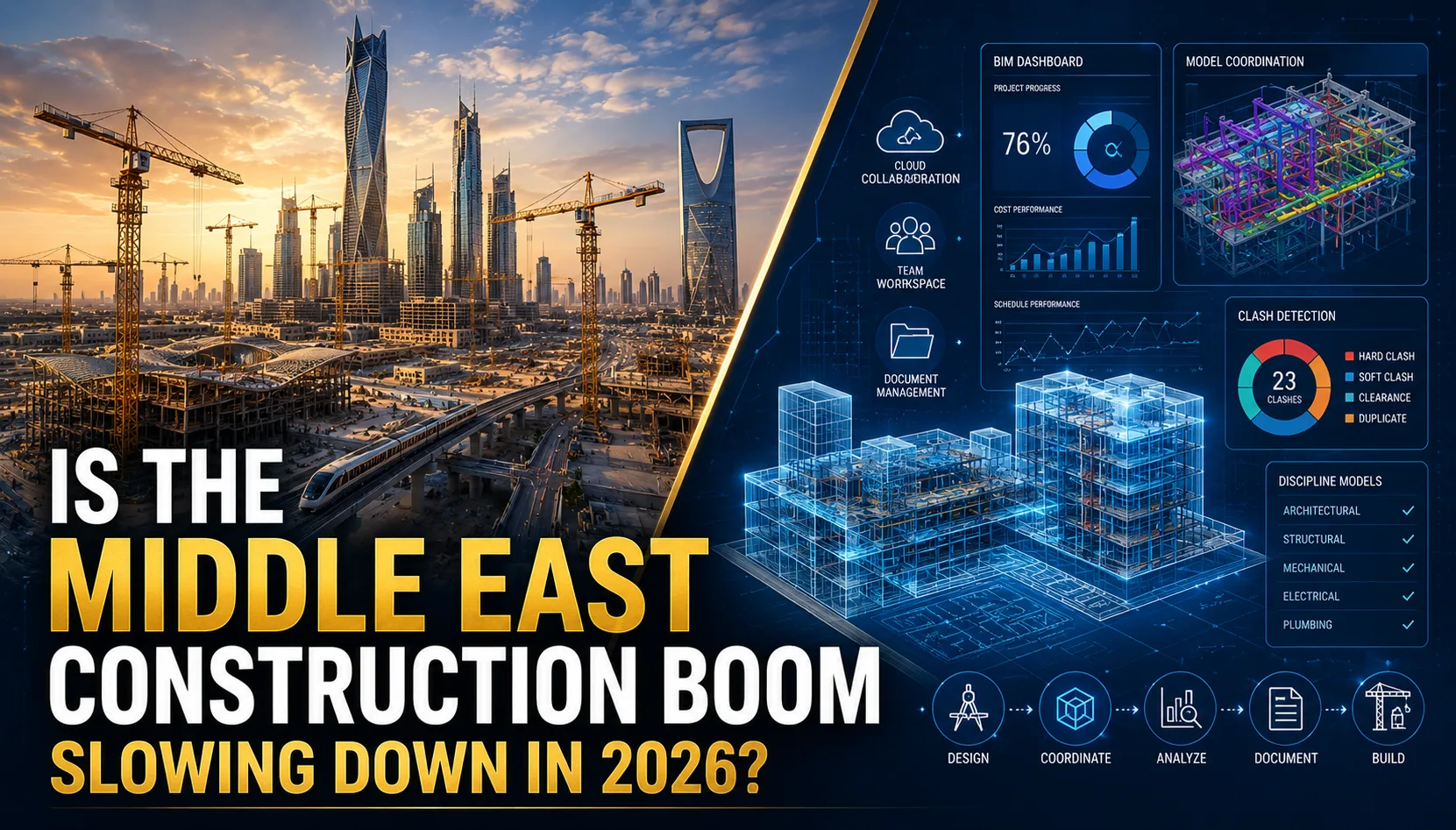
1. Why People Think the Construction Market Is Slowing Down
Several factors have contributed to the perception.
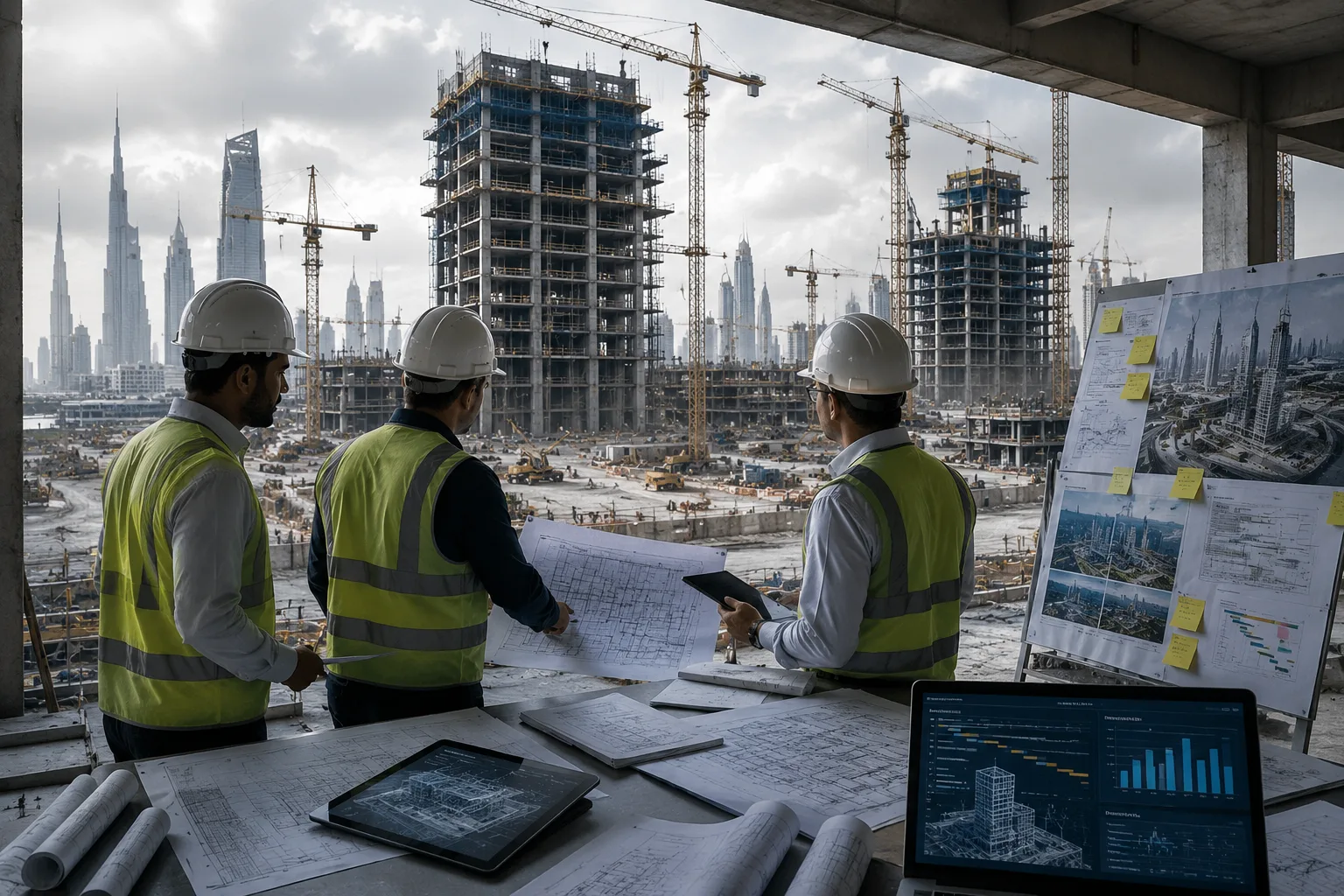
Mega Project Revisions
Projects such as NEOM have undergone planning revisions and phased development adjustments.
For many professionals, these announcements created the impression that large-scale construction activity was declining.
However, project rescoping is very different from project cancellation.
Global Economic Uncertainty
Rising costs, supply chain pressures, and regional geopolitical tensions continue to affect construction markets worldwide.
The Middle East is not completely insulated from these challenges.
Hiring Patterns Have Changed
One important change often gets overlooked.
Companies are still hiring.
But many firms are becoming more selective.
Instead of large-scale recruitment drives, employers increasingly seek professionals with:
- BIM Coordination experience
- Navisworks knowledge
- ACC/BIM 360 workflows
- MEP BIM exposure
- ISO 19650 awareness
This creates the perception of fewer opportunities when the actual change is a shift in hiring quality.
2. What the Data Actually Suggests
Despite concerns, the Middle East remains one of the world's most active construction regions.
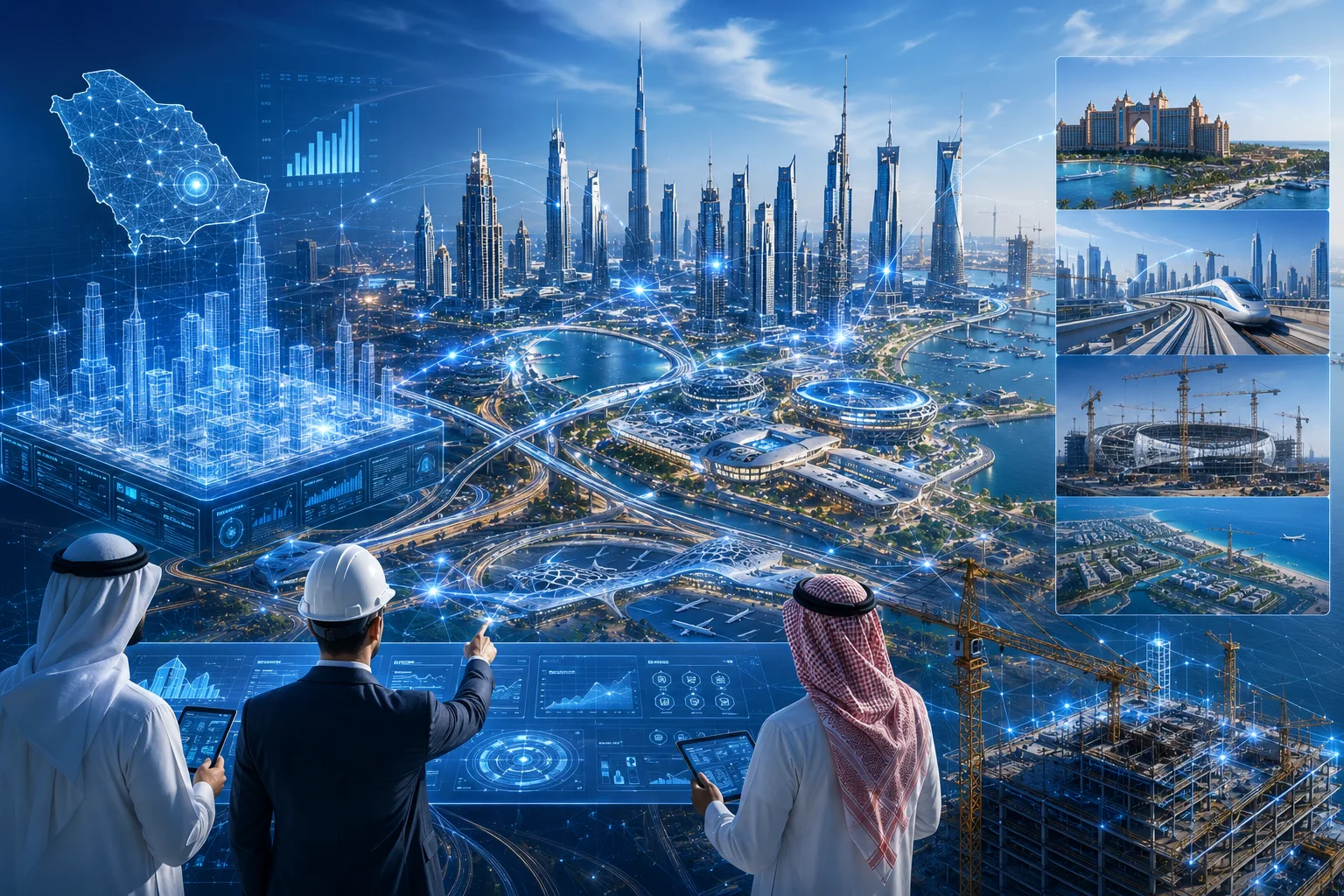
Major investments continue across:
Saudi Arabia
Projects continue in:
- Riyadh
- Qiddiya
- Diriyah Gate
- Red Sea Global
- Infrastructure expansion programs
Saudi Arabia's long-term Vision 2030 goals remain active.
United Arab Emirates
Dubai and Abu Dhabi continue investing in:
- commercial developments
- transportation infrastructure
- hospitality projects
- smart city initiatives
The UAE construction market remains strongly linked to technology-driven project delivery.
Qatar
Following FIFA World Cup infrastructure expansion, Qatar continues focusing on:
- facility upgrades
- mixed-use developments
- transportation systems
- asset management initiatives
3. The Bigger Shift Nobody Is Talking About
The market isn't necessarily shrinking.

It's evolving.
Five years ago, companies often hired professionals primarily for modeling tasks.
Today, firms increasingly seek people who understand:
- BIM Coordination
- Information Management
- Digital Construction Workflows
- Common Data Environments (CDE)
- Construction Technology Platforms
This is creating a different type of demand.
4. BIM Is Becoming More Important, Not Less
Ironically, economic pressure often increases BIM adoption.

Why?
Because clients want:
- fewer site errors
- reduced rework
- better cost control
- improved project visibility
BIM helps achieve all four.
This is one reason Gulf countries continue investing heavily in:
- Autodesk Revit
- Navisworks
- ACC
- Digital Twins
- Smart Construction Systems
5. What This Means for BIM Careers
For students and professionals, the question shouldn't be:
"Is the Middle East slowing down?"
The better question is:
"What skills are companies hiring for now?"
Current demand increasingly favors professionals who understand:
Professionals who adapt to these expectations remain highly competitive.
At BIM Cafe Learning Hub, we regularly interact with students targeting opportunities across:
- UAE
- Saudi Arabia
- Qatar
- Oman
One trend remains consistent:
Companies are becoming more workflow-focused and project-oriented.
The demand is gradually moving beyond software knowledge alone.
Professionals who understand:
- coordination
- standards
- documentation
- project execution
continue to stand out in the hiring process.
You can explore related industry topics through our BIM Blog section, including articles on:
- BIM Career Roadmaps
- MEP Coordination
- BIM Workflow Explained
- Future BIM Industry Trends
Final Thoughts
The Middle East construction industry is not entering a collapse.
What we're seeing is a transition.
Projects are becoming more selective.
Hiring is becoming more focused.
Digital construction expectations are increasing.
For BIM professionals, this means one thing:
The opportunity still exists—but the skill expectations are higher than before.
And for those willing to build coordination, workflow, and BIM execution skills, the Gulf market continues to offer some of the strongest opportunities in the global construction industry.
Professional BIM Course
Master BIM Course
Structural Design Concepts and BIM
Certified MEPF BIM Master Course
Electrical BIM Professional Program
RenderLab – Master 3D Modeling & Photorealistic Rendering
Multi-Tool Mastery for Architects & Engineers
BIM Coordinator Workflow Program
BIM FastTrack – 30 Day Intensive Training
Global Architectural & Structural BIM Project Program