Author: Devika R
July 1, 2026
8 min read
Here are ten lessons that usually aren't learned in classrooms—but become part of everyday project life.
"My Revit course is over. I'm ready for my first BIM job."
Almost every BIM student has this thought.
Then comes the first coordination meeting.
Suddenly, people are discussing RFIs, model audits, BEPs, shared coordinates, clash priorities, deadlines, and client comments—terms that were barely mentioned during training.
That's the moment many fresh graduates realize something important:
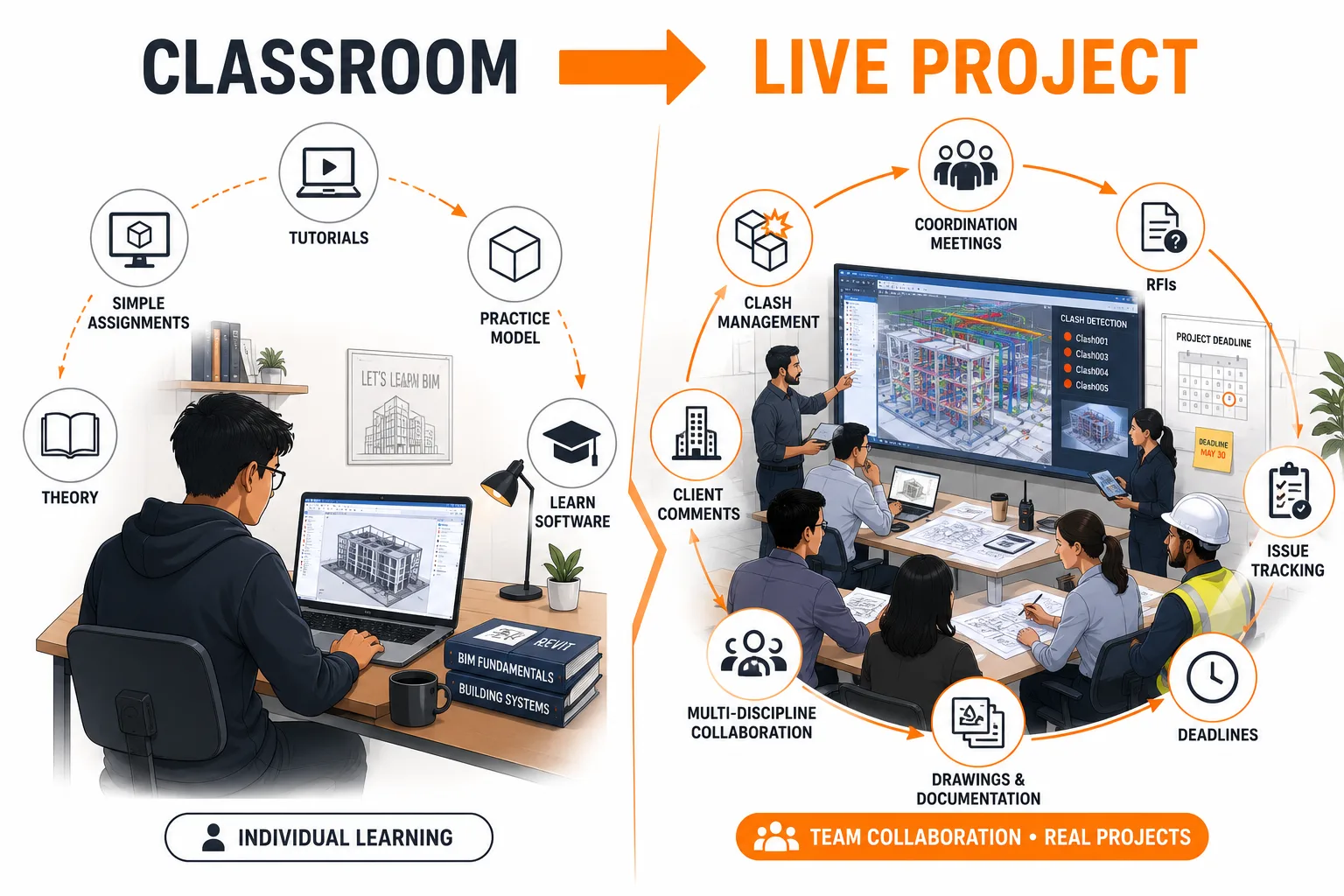
Learning software and working on a live BIM project are two completely different experiences.
The good news?
Almost every BIM professional goes through this transition.
1. Nobody Starts With a Blank Model
One of the biggest surprises for fresh BIM engineers is discovering that they rarely create an entire model from scratch.
Most projects already have:
- Linked architectural models
- Structural references
- Existing templates
- Company standards
- Shared coordinates
- Project naming conventions
Your first task is often understanding someone else's work before creating your own.
Reading an existing BIM model is often harder than creating one.
2. Revit Is Only One Part of the Workflow
Many students believe their work revolves around Revit.
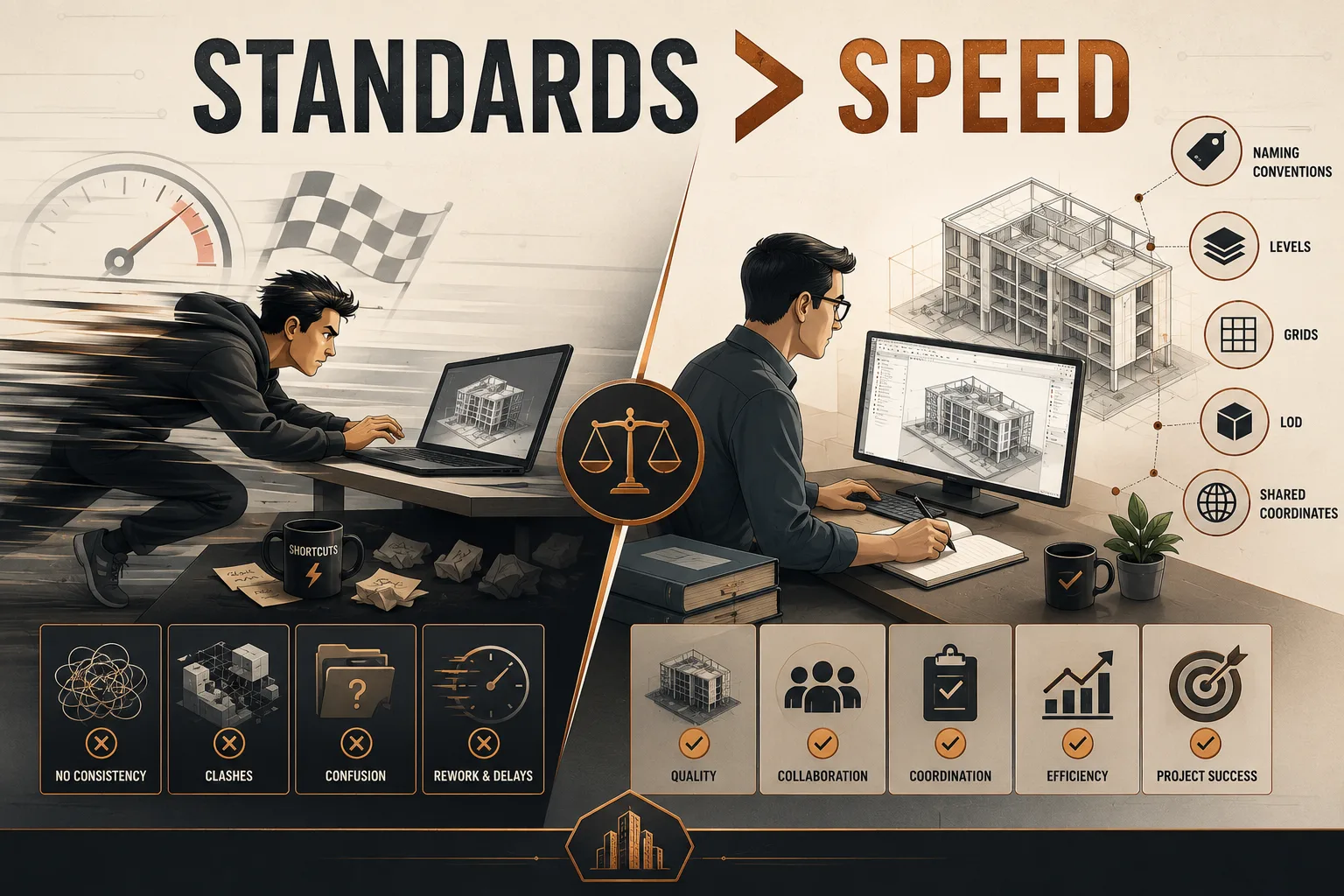
Real projects quickly prove otherwise.
A typical day might involve:
- Revit
- Navisworks
- Autodesk Construction Cloud (ACC)
- Excel schedules
- PDFs
- RFIs
- Coordination meetings
- Issue tracking
Modeling is only one part of BIM delivery.
3. Standards Matter More Than Shortcuts
During training, students often focus on:
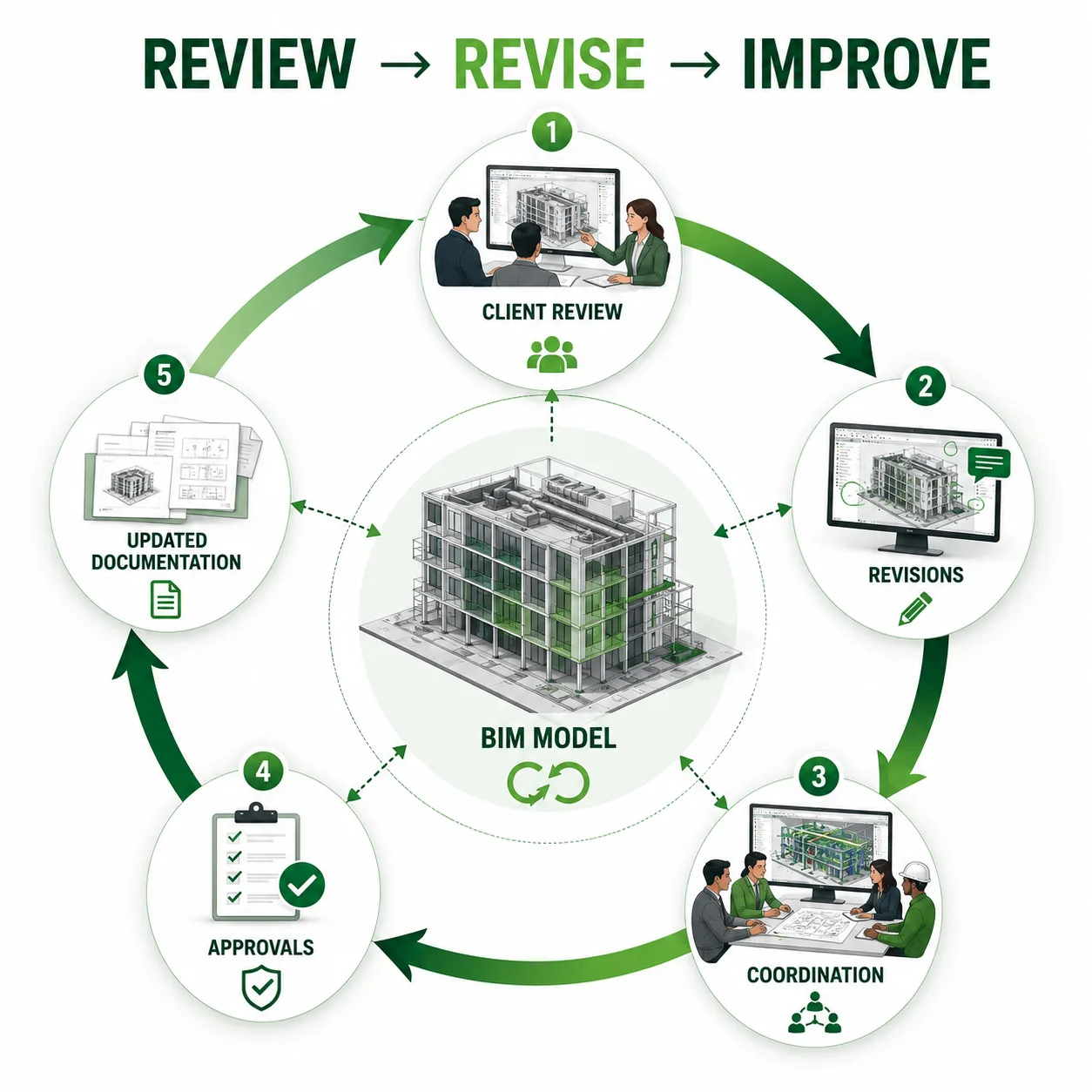
- Keyboard shortcuts
- Speed
- Faster modeling
On live projects, companies care more about:
- Naming conventions
- Levels
- Grids
- Shared Coordinates
- LOD compliance
- Model consistency
A perfectly organized model is usually more valuable than a fast one.
4. Coordination Meetings Feel Different
Many newcomers expect coordination meetings to focus on software.
Instead, discussions sound more like engineering conversations.
Questions often include:
- Which discipline has priority?
- Can this duct move?
- Will maintenance access be affected?
- What happens during installation?
The software rarely becomes the main topic.
Decision-making does.
5. Every "Small Change" Affects Something Else
A manager asks:
"Move the duct by 100 mm."
Seems easy.
But that one change might affect:
- Cable trays
- Sprinklers
- Ceiling height
- Structural clearances
- Maintenance access
This is why experienced BIM engineers think about consequences before making changes.
6. Documentation Is Still Critical
Many students think BIM has replaced drawings.
It hasn't.
Projects still require:
- Shop drawings
- Working drawings
- Sections
- Schedules
- BOQs
- Documentation packages
A great model that produces poor documentation creates problems during construction.
7. Deadlines Change Everything
Tutorial projects don't have real deadlines.
Construction projects do.
Sometimes the objective isn't to create the "perfect" model.
It's to deliver a coordinated model on time.
Balancing quality and deadlines becomes one of the biggest professional skills.
8. Client Comments Never Really End
Many students assume:
Submit model → Project complete.
Reality is different.
Clients often request:
- Design revisions
- Additional details
- Documentation changes
- Coordination updates
Modeling becomes an ongoing process rather than a one-time task.
9. Communication Is a Technical Skill
One of the biggest surprises?
The best BIM engineers aren't always the fastest modelers.
They're often the people who can clearly explain:
- Problems
- Solutions
- Coordination decisions
- Technical issues
Good communication keeps projects moving.
10. BIM Is Really About Decision-Making
This is usually the biggest lesson of all.
Software creates models.
People make decisions.
The value of a BIM engineer comes from understanding:
- Construction
- Coordination
- Project workflows
- Information management
- Collaboration
That's what companies are really hiring for.
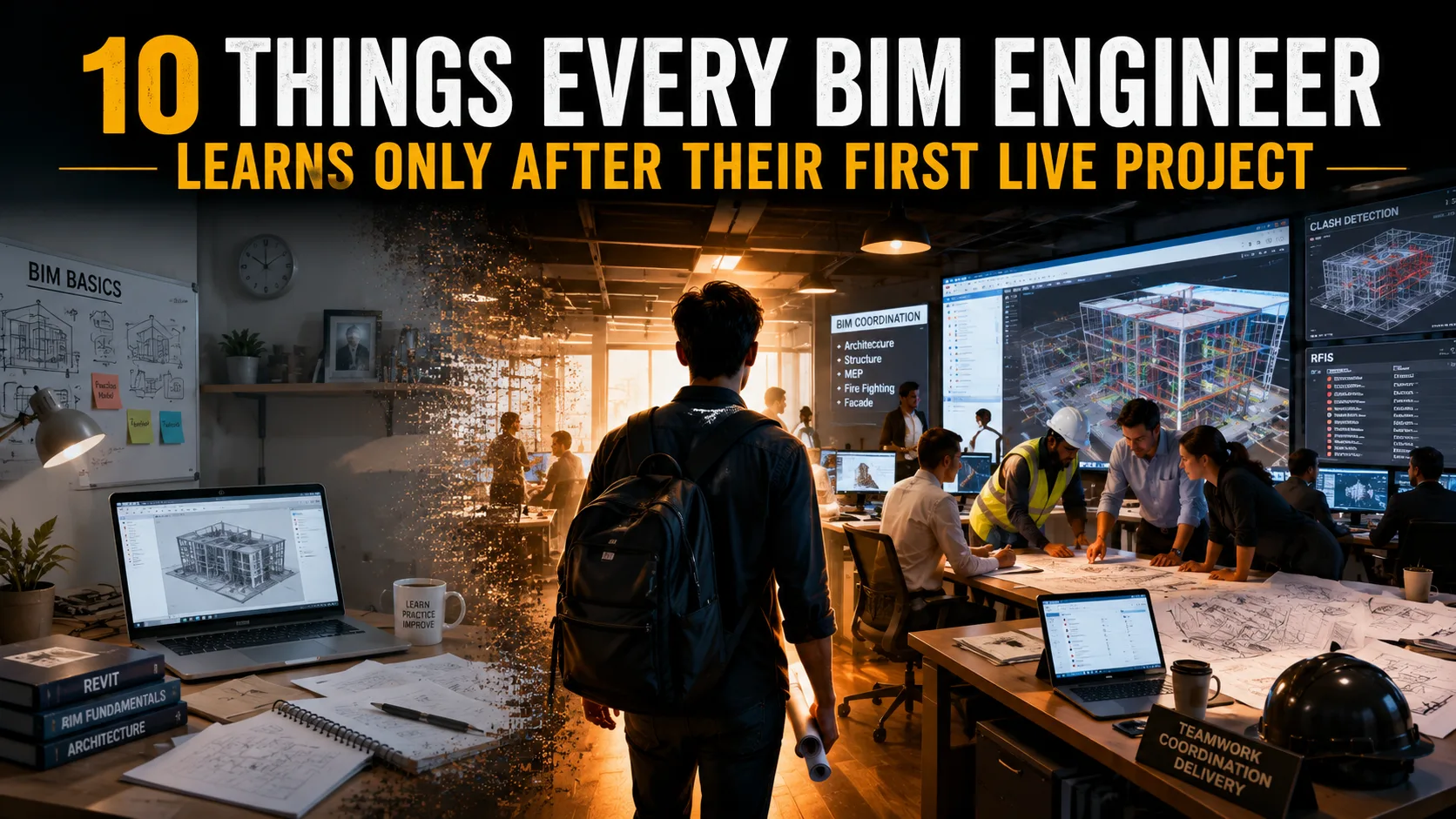
College vs First BIM Project
The First Six Months Shape Your BIM Career
Almost every experienced BIM professional remembers their first live project.
Not because it was easy—
But because it completely changed how they thought about BIM.
After a few months, software becomes routine.
Understanding workflows becomes the real challenge.
And that's the point where careers start to grow.
At BIM Cafe Learning Hub, students are encouraged to learn more than software commands.
Because real projects demand:
- Workflow understanding
- Coordination logic
- Documentation standards
- Communication skills
- Practical problem-solving
The transition from classroom learning to live project delivery becomes much smoother when training reflects how BIM is actually practiced in the industry.
Final Thoughts
Every BIM engineer experiences a moment when they realize:
"This is very different from what I practiced."
That's not a setback.
It's the beginning of becoming project-ready.
The professionals who grow fastest aren't necessarily those who know the most commands.
They're the ones who learn how projects actually work.
And that's a lesson no software tutorial can fully teach.
Professional BIM Course
Master BIM Course
Structural Design Concepts and BIM
Certified MEPF BIM Master Course
Electrical BIM Professional Program
RenderLab – Master 3D Modeling & Photorealistic Rendering
Multi-Tool Mastery for Architects & Engineers
BIM Coordinator Workflow Program
BIM FastTrack – 30 Day Intensive Training
Global Architectural & Structural BIM Project Program