Author: Devika R
March 24, 2026
6 min read
In the BIM industry, having a certificate alone is usually not enough to get hired.
What recruiters really want to see is what you can actually do — and the best way to demonstrate that is through your BIM portfolio.
At BIM Cafe Learning Hub, we often come across students who say:
"I've completed my BIM course… but I don't know how to get interview-ready."
And honestly, this is a very common situation. The answer is simple:
Your portfolio should clearly show how you work on real BIM projects, not just what you've learned.
In this blog, we'll walk you through the 7 key things BIM recruiters actually look for, so you can present your work with confidence and clarity.
Why BIM Portfolios Matter More Than Certificates
In many industries, resumes and certificates play a major role. But BIM works a little differently.
Here, recruiters are more interested in your actual work output than just qualifications. A strong BIM portfolio helps them quickly understand:
- ✔How accurately you model
- ✔Whether you understand real project workflows
- ✔How well you prepare drawings
- ✔How you approach problems
That's why interview questions often sound like this:
"Can you show us your Revit model?"
"Do you have sample drawings?"
"Have you worked on coordinated models?"
A good portfolio answers all of these — without you having to explain much.
The 7 Things Recruiters Actually Look For
Build each of these into your BIM portfolio to stand out in interviews.
A Complete Revit Model
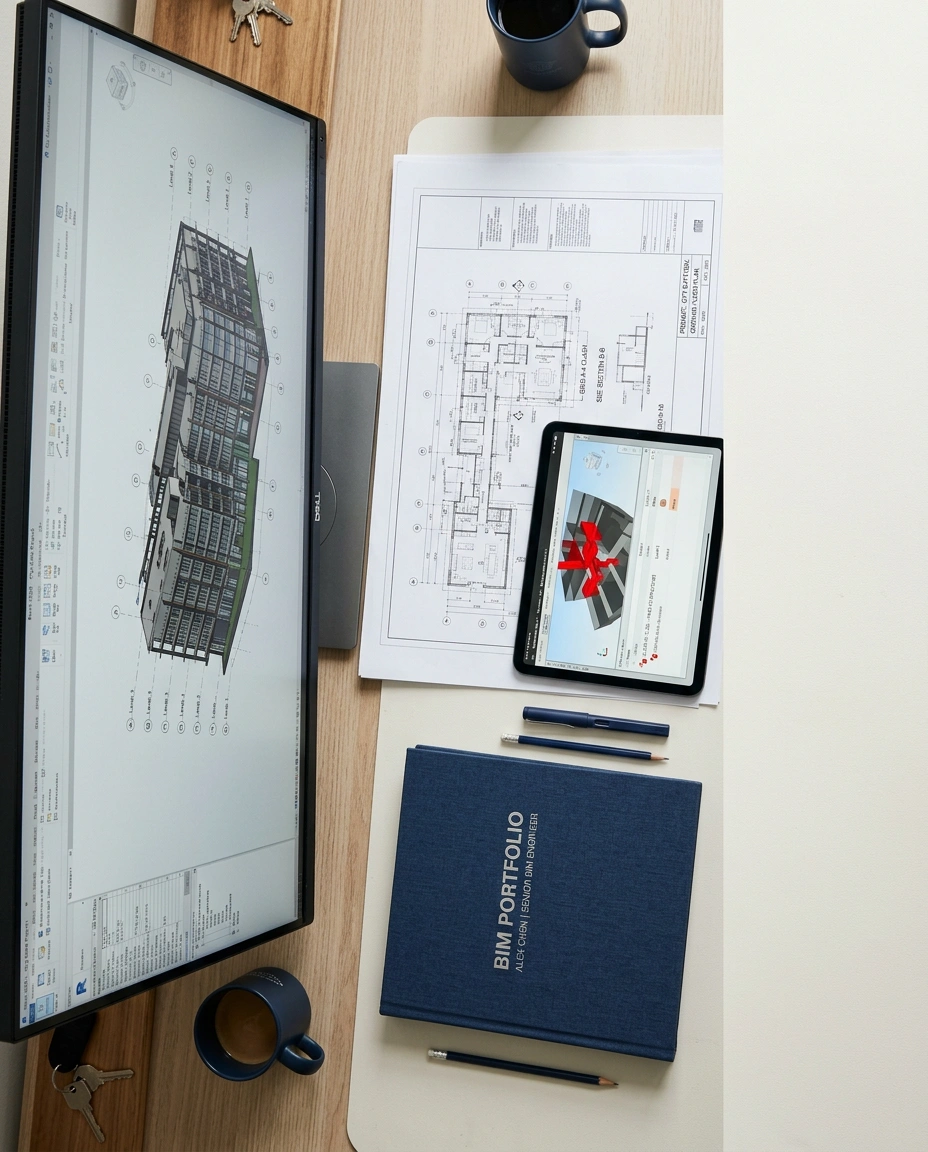
The first thing anyone will look at is your model itself — not just any model, but one that is clean, structured, and logically built.
Your portfolio should include:
- An architectural or structural model
- Proper levels and grids
- Well-organised views and sheets
- Clear modeling structure
Construction Drawings from the Model
A lot of beginners stop at 3D modeling. But in real projects, that's only half the job. BIM professionals are expected to produce drawings from the model.
Make sure your portfolio includes:
- Floor plans
- Sections and elevations
- Dimensioned views
- Proper annotations and tags
LOD-Based Modeling Understanding
In professional BIM projects, work is structured around LOD (Level of Development). Even if your project is small, showing this understanding adds a lot of value.
Try to reflect:
| LOD Level | What It Means |
|---|---|
| LOD 200 | Basic concept level |
| LOD 300 | Detailed design level |
| LOD 350 | Coordination level |
You don't need to label everything formally — but your model should reflect clarity in detail and intent.
Coordination and Clash Detection
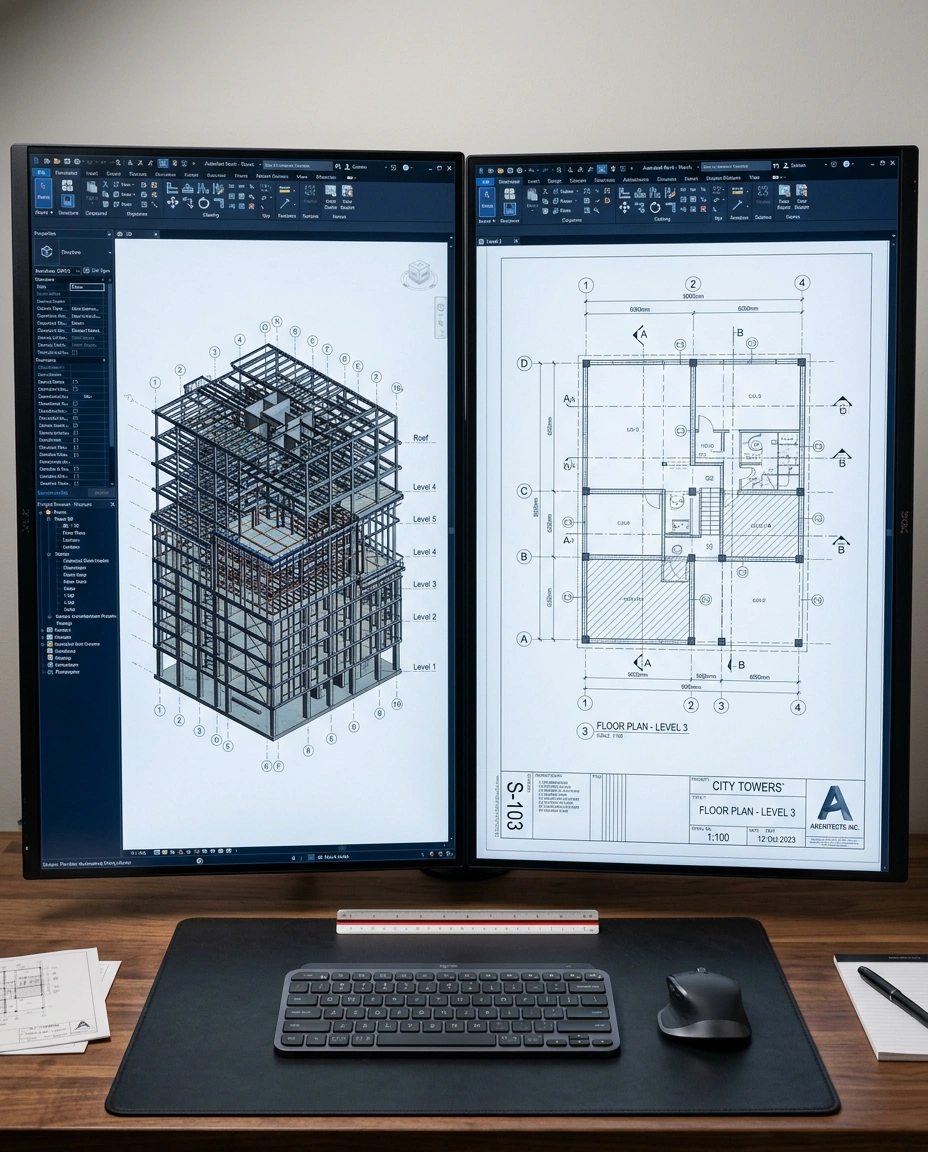
BIM is not a one-person job. It's all about collaboration. If you've worked on coordination — even at a basic level — include it.
Examples you can show:
- Clash detection using Navisworks
- Combined models (ARC + STR + MEP)
- Simple issue identification and fixes
Quantity Take-Offs and Schedules
One of the biggest advantages of BIM is that it's data-rich, not just visual. Your portfolio should reflect that.
Include examples like:
- Quantity schedules
- Area calculations
- Material take-offs
- Element counts
Clear Explanation of Your Work
Here's something many people miss. Recruiters don't just look at your model — they want to understand your thinking.
For each project, add a short explanation:
- What type of project is it?
- What exactly did you work on?
- Which tools did you use?
- Any challenges you faced?
Keep it simple — but clear. This helps them see how you approach work, not just what you produced.
Simple, Clean Presentation
Your portfolio doesn't need to be complicated or overly designed. In fact, simpler is better.
A good portfolio includes:
- Model screenshots
- Drawing sheets
- Coordination views
- Short explanations
⚠️ Common Mistakes to Avoid
Here are a few things that can weaken your portfolio:
A good portfolio is not about showing everything — it's about showing the right things clearly.
How BIM Cafe Helps You Build a Strong Portfolio
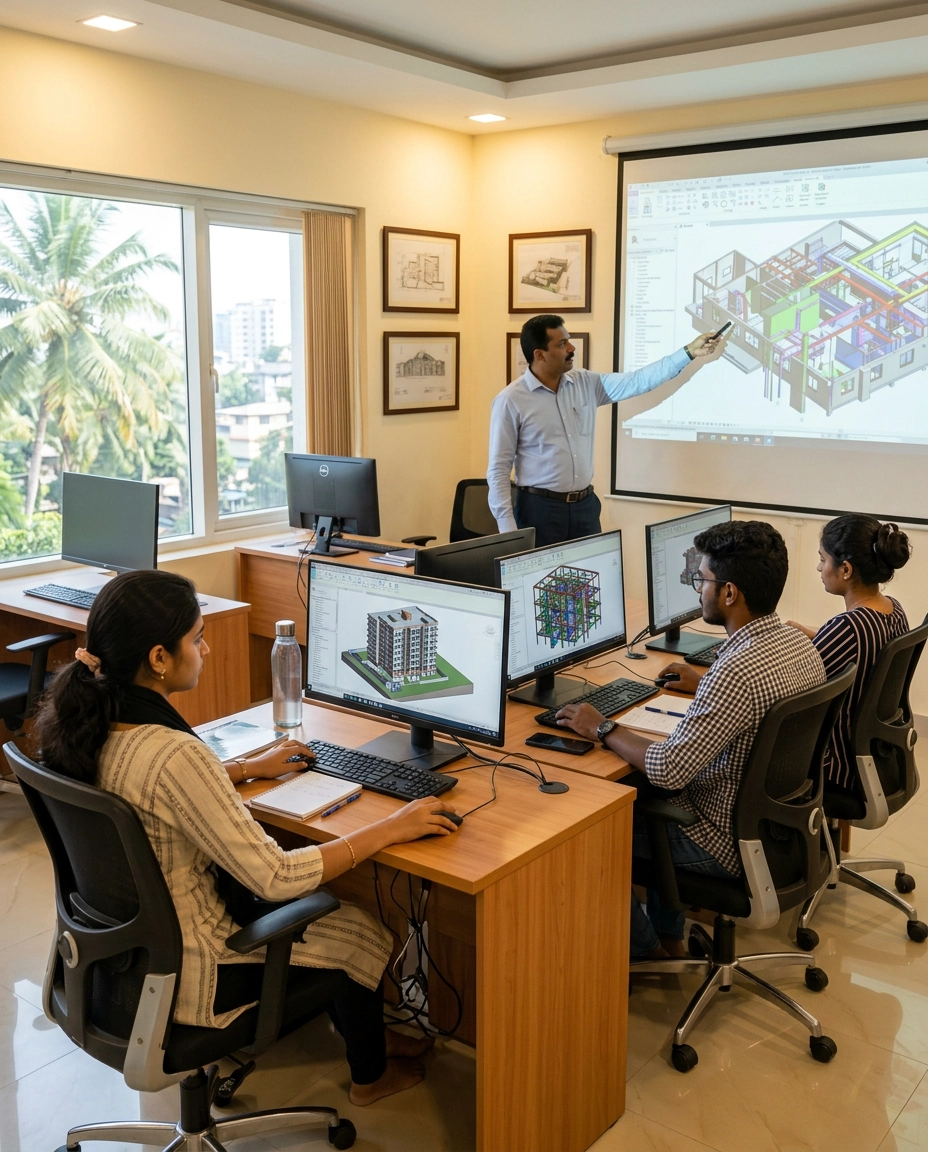
At BIM Cafe Learning Hub, portfolio creation is not an afterthought — it's part of the training.
Students work on:
- ✔Project-based Revit models
- ✔LOD-oriented deliverables
- ✔Coordination workflows
- ✔Real project-style exercises
So by the end of the course, you don't just "complete training" — you actually have something meaningful to show in interviews.
Ready to Build a Portfolio That Gets You Hired?
Explore our industry-ready BIM courses and start working on real projects from day one.
Explore BIM Courses →Final Thoughts
In BIM, your portfolio matters more than your resume. Because it shows:
- What you can do
- How you think
- How ready you are for real projects
If you want to stand out, start building your portfolio early — and focus on quality over quantity.