Author: Devika R
April 13, 2026
8 min read
The NEOM megaproject was never just about building a city. It was about redefining how cities could exist—fully digital, AI-driven, and deeply integrated with technology.
For a while, it felt like the future had already arrived.
Then came the shift.
Reports of scaling back The Line—the 170 km linear city—have raised questions across the global construction industry. Not just about NEOM itself, but about something deeper:
- Are we overestimating what technology can achieve in construction?
- What does this mean for BIM professionals?
This is where the conversation becomes valuable.
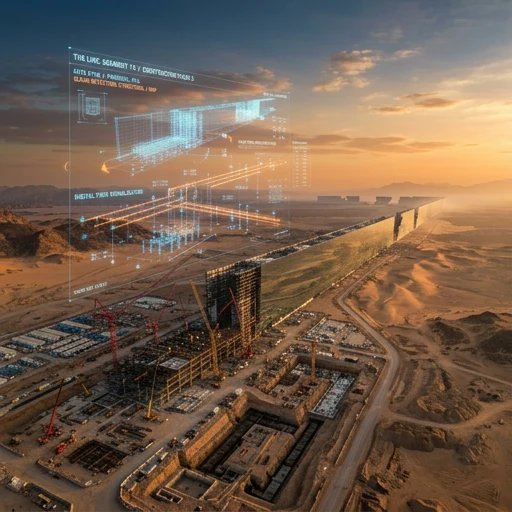
What is the NEOM project?
NEOM is a $500 billion smart city initiative aligned with Saudi Vision 2030, planned along the Red Sea. It includes multiple developments:
- The Line – a car-free vertical city
- Oxagon – an industrial port hub
- Trojena – a mountain tourism destination
- Sindalah – a luxury island project
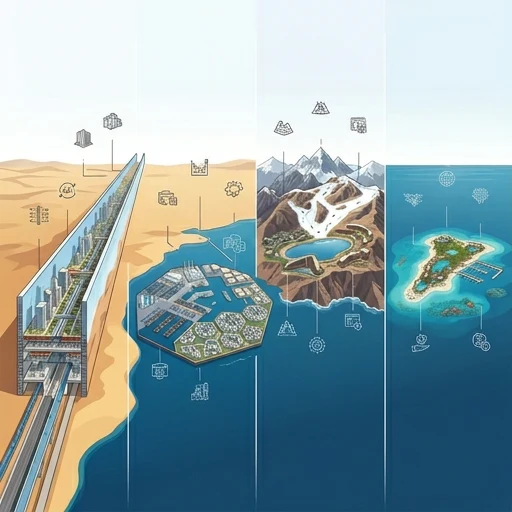
What made NEOM globally significant wasn’t only its scale—it was its reliance on digital construction technologies, including:
- BIM
- Digital twins
- AI-integrated infrastructure
That positioning made NEOM a reference point for future smart cities—and for how the industry talks about BIM at infrastructure scale. For broader context on how BIM shows up on ambitious developments, see our earlier overview NEOM: A Futuristic City Built on BIM.
Why the scaling back matters (beyond the headlines)
At first glance, scaling down can look like a setback. In practice, it is often a moment of correction—when delivery reality catches up with vision.
When vision meets execution
Large-scale infrastructure projects evolve as real-world constraints surface:
- Costs expand
- Logistics become complex
- Timelines stretch
- Assumptions get challenged
This is not unique to NEOM. It is a pattern seen across global megaprojects.
Engineering at this scale is different
Designing something and building it are two different things. A 170 km mirrored structure in a desert introduces challenges that go far beyond modeling:
- Material transportation across extreme terrain
- Infrastructure for millions of users
- Multi-disciplinary coordination at a global scale
- Sustainability targets under real site conditions
Even the most advanced BIM workflow cannot eliminate these complexities—it can only help manage them. Models and simulations reduce risk; they do not remove physics, procurement, or politics from the project.
A shift toward smarter priorities
Saudi Arabia’s increasing investment in AI, data infrastructure, and digital ecosystems suggests a strategic pivot. Instead of focusing purely on physical scale, the emphasis may shift toward:
- Smarter systems
- Scalable infrastructure
- Technology-first development
This is not a retreat. It is an adaptation.
What NEOM reveals about BIM (that we often ignore)
There is a tendency—especially among students—to see BIM as a solution to everything. NEOM quietly challenges that idea.
BIM is powerful—but not absolute
Modern projects rely heavily on BIM for coordination, simulation, data integration, and decision support. As highlighted across industry discussions and resources like the BIM Cafe blog and knowledge hub, BIM is transforming how projects are planned and executed—but it remains part of a larger system.
It supports decisions. It does not replace them.
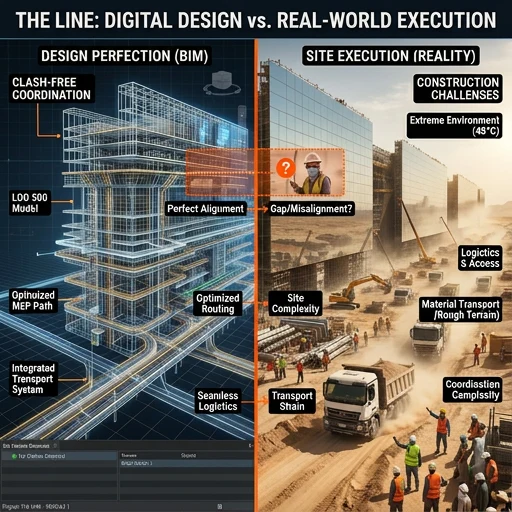
Digital models don’t guarantee buildability
This is where reality hits hardest. A model can be perfectly coordinated, clash-free, and data-rich—and still face issues during execution because real-world construction depends on:
- Cost feasibility
- Resource availability
- Site conditions
- Human coordination
NEOM highlights this gap clearly.
Scale changes the role of BIM completely
In smaller projects, BIM is often seen as a modeling tool. At the NEOM scale, it becomes:
- A coordination backbone
- A decision-making system
- A data ecosystem
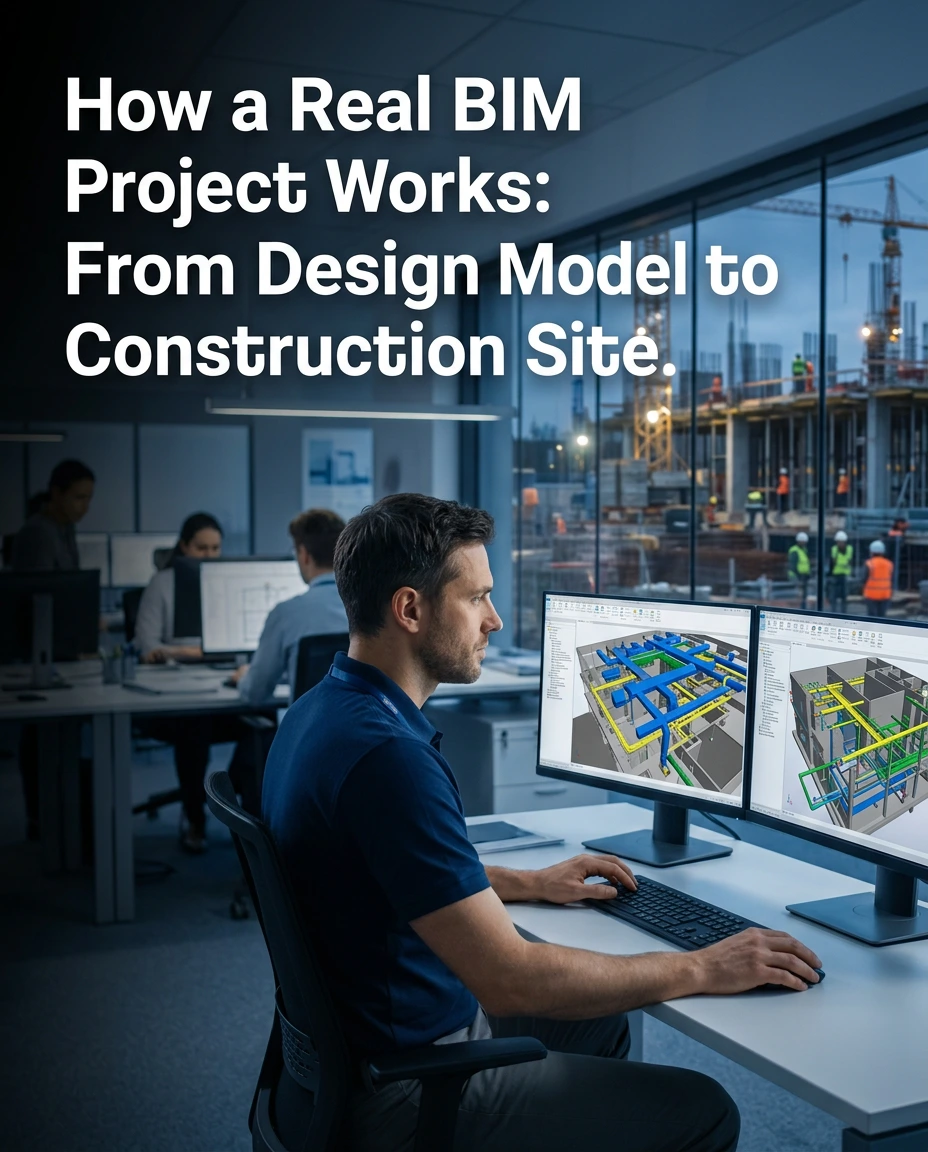
Many professionals only experience this shift once they work on large projects. For a grounded walkthrough of how workflows behave on real jobsites, read How a Real BIM Project Works: From Design Model to Construction Site.
Real-world perspective: what the industry actually learns
If you look beyond the headlines, NEOM is not only a warning—it is a lesson. In real projects, plans evolve constantly, design intent changes, coordination gaps emerge, and decisions are revisited.
BIM professionals are expected to adapt quickly, think beyond software, understand construction logic, and communicate across disciplines. That is why many people struggle after learning tools: they know commands, but not project reality.
Common misconceptions that NEOM exposes
Reality check
- “BIM makes projects smooth.”BIM improves coordination—but complexity, interfaces, and site unknowns still exist.
- “Megaprojects are perfectly planned.”They evolve continuously as stakeholders learn and conditions change.
- “Technology guarantees success.”Execution—contracts, people, supply chain—defines outcomes; tech is an enabler.
Industry relevance and future outlook
Key takeaway
Despite the headlines, NEOM reinforces that the future of construction is still digital: smart cities, integrated BIM workflows, digital twins at infrastructure scale, and data-driven planning are not fading—they are normalizing.
BIM is becoming foundational to modern infrastructure—but another realization matters just as much: ambition must align with feasibility. That balance will define the next generation of global projects.
A broader reflection for the BIM community
For years, the industry has chased bigger projects, smarter systems, and fully automated workflows. NEOM represents the peak of that ambition—and its evolution reminds us that complexity has limits, technology has boundaries, and adaptability often matters more than perfection.
For BIM professionals, this is grounding. It shifts the focus from “How advanced is the model?” to “How realistic is the outcome?”
BIM Cafe perspective
At BIM Cafe Learning Hub, projects like NEOM are learning references—not just headlines. Understanding BIM is not only about tools like Revit; it is about how projects evolve, how decisions are made, and how teams handle constraints.
Through structured learning paths—including BIM training for civil engineers, customized and short-term BIM programs, and ongoing posts on the BIM blog—the goal is to align learners with real industry expectations, not only software skills.

Final thoughts
The NEOM megaproject may evolve. Its scale may change. Its timeline may shift. But its impact is already clear: it has shown us what is possible, what is difficult, and what truly matters in digital delivery.
BIM is not about creating perfect models. It is about making complex projects work in the real world.
Frequently asked questions
What is the NEOM project?
NEOM is a futuristic smart city program in Saudi Arabia focused on AI-driven infrastructure, sustainability, and digital construction technologies.
Why is NEOM being scaled back?
Due to rising costs, engineering complexity, and shifting priorities, parts of the program are being re-evaluated and phased differently.
What does NEOM teach BIM professionals?
It highlights the importance of BIM at large scale while showing the limits of digital modeling when cost, logistics, and feasibility enter the picture.
Is BIM important for future construction?
Yes. BIM is increasingly essential for smart cities, infrastructure, and modern construction workflows.
Can BIM guarantee project success?
No. BIM improves planning and coordination, but real-world factors like cost, logistics, and feasibility determine success.
Turn BIM news into career-ready skills
BIM Cafe programs focus on real workflows, coordination logic, and industry expectations—so you are prepared for complex projects, not just software commands.