Author: Devika R
January 15, 2026
10 min read
By mid-January, something very specific and predictable happens every year.
Students start feeling uneasy.
The motivation that comes with a new year begins to fade. Job applications sent in December haven’t converted into interview calls yet. LinkedIn and WhatsApp groups are suddenly filled with peers announcing new certifications, course enrollments, and “upskilling journeys.”
In that moment, many learners make a critical decision — not based on clarity, but on anxiety.
They enrol in a BIM course quickly, not because it fits their career direction, but because doing nothing feels dangerous.
In 2026, this reactionary decision is more harmful than ever before.
Choosing the wrong BIM course today doesn’t just waste money. It can quietly cost you 6–12 months of career momentum, delay your entry into the industry, and create long-term confusion about your professional direction.
Waiting a few weeks to choose the right course is far less risky than rushing into the wrong one.
Why This Decision Matters More in 2026 Than Ever Before

Five or six years ago, the BIM hiring landscape was very different.
Simply listing Revit knowledge on your CV could open doors. Many companies were still transitioning from 2D CAD to BIM, and basic modelling skills were considered valuable.
That is no longer the case.
In 2026, BIM is no longer a “special skill.” It is an expected baseline.
Today’s recruiters operate under very different assumptions:
- BIM exposure is expected by default, not treated as a differentiator
- Entry-level competition is significantly higher, especially in India and the Gulf
- CV screening happens faster, often in seconds, not minutes
Recruiters are no longer asking, “Do you know BIM?”
They are asking, “Can you function in a BIM role from day one?”
This is why many candidates feel confused when their applications are rejected despite having completed a BIM course. The issue is rarely effort — it is usually misalignment between what was learned and what the role actually requires.
This industry shift, including how expectations differ between India and Gulf markets, is explained in detail in:
BIM Career Roadmap 2026 – Skills Recruiters Actually Look For
Understanding this context is essential before choosing any course in 2026.
The First Mistake Most Learners Make in January

When learners start searching for courses, they usually ask one question first:
“Which BIM course is best?”
This feels logical — but it is the wrong starting point.
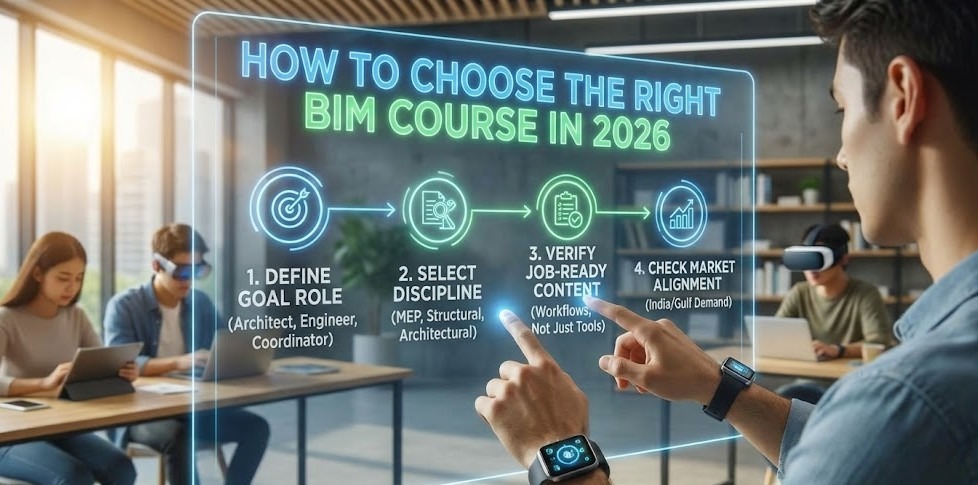
The correct question is:
“What role am I preparing for?”
BIM is not a single job. It is a workflow framework used across multiple disciplines and roles. Without defining a target role, course selection becomes guesswork.
This is where many candidates unknowingly sabotage themselves.
They complete a course, apply for jobs, and then discover that:
- Their CV doesn’t match any specific role
- Recruiters can’t place them into a defined position
- Interview questions don’t align with what they learned
Most BIM CV rejections happen before interviews, precisely because the candidate’s profile does not clearly map to a role.
This is not speculation — it’s a pattern repeatedly observed in hiring and screening processes, and broken down in detail here:
Revit Skills Recruiters Reject CVs For (And Why)
Until a learner clearly answers “What role am I training for?”, no BIM course — no matter how popular — can be the “right” one.
Step 1: Be Honest About Why You’re Learning BIM
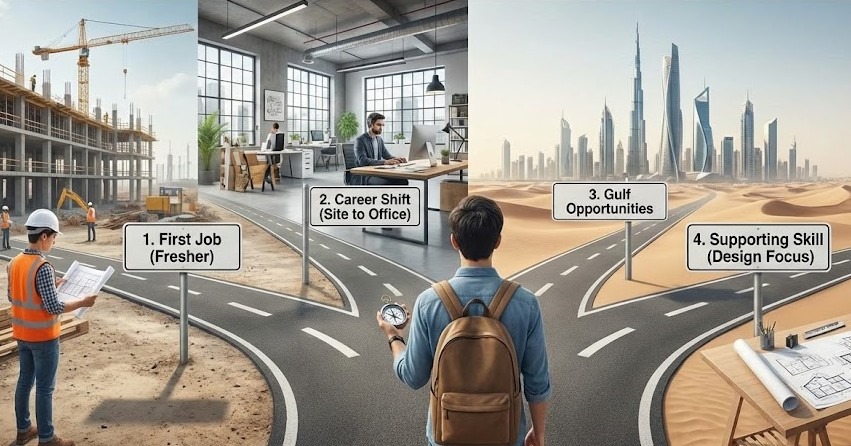
Before choosing any BIM course in 2026, you need to answer a question most learners avoid because it feels uncomfortable:
Why am I actually learning BIM?
Not why it sounds good on LinkedIn.
Not because someone else enrolled.
Not because “BIM has demand.”
Your real reason determines everything that follows — the discipline you choose, the depth of learning required, and even how long it will take you to become employable.
Let’s break this down honestly.
1. Learning BIM to Get Your First Job
If you are a fresher or recent graduate, BIM is not an “add-on” skill — it becomes your primary employability lever.
For first-job seekers, recruiters look for:
- Ability to follow project workflows
- Understanding of drawings and documentation
- Discipline-specific modelling logic
- Awareness of coordination basics
In this case, a BIM course that only teaches software commands is not enough. You need job-ready exposure that mirrors how entry-level BIM professionals actually work inside firms.
A course that lacks:
- project structure
- drawing output
- role-based tasks
will leave you trained, but not employable.
2. Shifting from Site or Design Roles to BIM
For professionals moving from site execution, drafting, or design roles, BIM is a career transition, not a restart.
Your advantage is industry exposure — but only if the BIM course:
- connects your past experience to digital workflows
- teaches coordination and documentation, not just modelling
- helps reposition your CV logically
Many experienced professionals feel stuck after training because the course treats them like freshers and ignores their background.
A well-chosen BIM program should help you translate your experience into BIM value — not erase it.
3. Preparing for Gulf Opportunities
This is where many learners make costly mistakes.
BIM expectations in the Gulf are not the same as India.
For Gulf roles, employers typically expect:
- strong documentation discipline
- awareness of international standards
- coordination exposure across trades
- clear role definition
A generic BIM course focused only on modelling speed or software shortcuts often fails here.
If your goal is Gulf employment, your learning path must reflect how BIM is implemented on large, regulated projects, not just how tools operate.
This difference — and how it affects course choice — is explained in detail here:
India vs Gulf BIM Career Expectations – What Students Must Know
4. Adding BIM as a Supporting Skill
Some professionals don’t want to become full-time BIM specialists.
They want BIM to:
- strengthen their design profile
- support project coordination
- improve documentation quality
This is completely valid — but requires a lighter, focused learning path, not an intensive job-ready BIM program.
The mistake many make is enrolling in a deep BIM execution course when they only need BIM literacy. This leads to frustration and wasted effort.
Why This Step Cannot Be Skipped
Each of these goals requires:
- different depth
- different timelines
- different outcomes
Skipping this clarity is the single biggest reason learners feel confused after completing a BIM course.
Until your goal is defined, no course structure can truly fit you.
Step 2: Discipline Clarity Is Not Optional Anymore
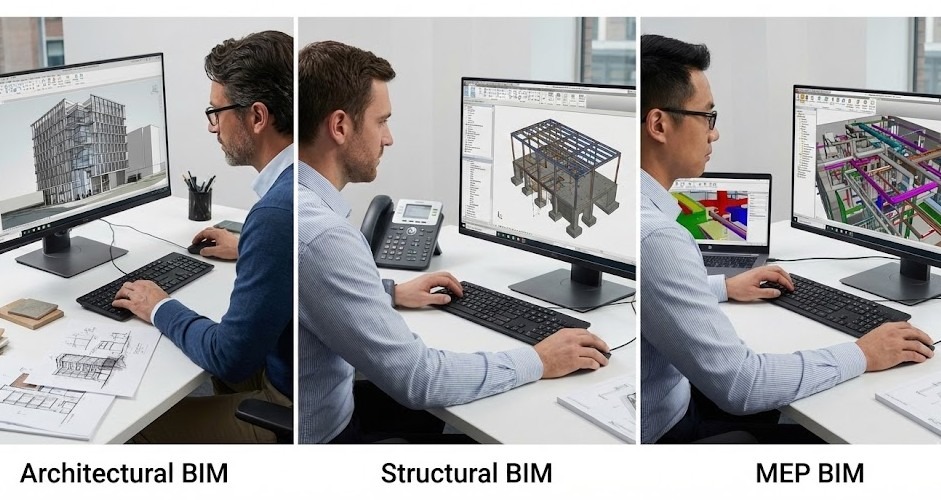
Once your goal is clear, the next decision becomes unavoidable.
Recruiters do not hire generic “BIM professionals.”
They hire:
- Architectural BIM professionals
- Structural BIM professionals
- MEP BIM professionals
Each of these roles operates under different workflows, responsibilities, and expectations.
A candidate who lists “BIM knowledge” without discipline clarity is difficult for recruiters to place — which often results in rejection, not because of skill, but because of ambiguity.
Why Discipline Mismatch Creates Career Stagnation
Many learners complete a BIM course and then say:
“I know BIM, but I’m not getting calls.”
In most cases, the issue is not competence — it is discipline mismatch.
Examples include:
- Civil engineers trained in architectural workflows
- Architects learning structural modelling without context
- MEP professionals trained only in generic Revit tools
This creates a profile that looks broad, but not usable.
Recruiters prefer depth over spread.
Understanding Demand Before Choosing a Discipline
Demand for BIM roles is not equal across disciplines, and it changes based on:
- project type
- region (India vs Gulf)
- consultancy vs contractor roles
Understanding where demand is strongest helps learners choose strategically instead of emotionally.
A clear breakdown of current market demand is covered here:
Most In-Demand BIM Specializations
This insight is critical before enrolling in any discipline-focused BIM course
Civil Engineers
For civil engineers, BIM learning in 2026 must go far beyond software familiarity.
Many civil-focused learners make the mistake of enrolling in generic BIM or Revit courses that concentrate only on modelling tools. While this may improve software comfort, it does not translate into employability.
What Civil BIM Roles Actually Require
Recruiters hiring for civil or structural BIM-related roles expect candidates to understand:
- Construction documentation workflows
- Drawing production and annotation standards
- Coordination between architectural, structural, and MEP models
- How models support BOQs, schedules, and site execution
A software-only course that teaches “how to model” without explaining why models are built a certain way leaves civil engineers unprepared for real project environments.
The Right Learning Direction for Civil Engineers
Civil engineers benefit most from job-ready BIM courses that include:
- Realistic project documentation sets
- Coordination exposure with other disciplines
- Practical understanding of construction sequencing
MEP Engineers (Highest Demand)
Across both India and the Gulf, MEP BIM continues to show the strongest and most consistent hiring demand in 2026.
However, MEP learners face a unique challenge.
Many struggle not because of low demand — but because they confuse MEP design with MEP BIM execution.
Why This Confusion Is Costly
MEP design focuses on:
- System sizing
- Load calculations
- Engineering logic
MEP BIM execution focuses on:
- Constructible modelling
- Clash coordination
- Shop drawings and installation-ready documentation
Learners who enrol in design-oriented programs expecting BIM roles often feel misaligned during interviews. Recruiters are not evaluating theoretical design knowledge — they are assessing coordination readiness.
What Recruiters Expect from MEP BIM Candidates
In 2026, employers look for:
- Strong discipline-specific modelling logic
- Coordination awareness across trades
- Ability to work within BIM execution standards
Understanding this distinction early helps learners choose the correct course and avoid relearning later.
Architects & Interior Designers
For architects and interior designers, the BIM landscape has changed significantly.
In earlier years, visual modelling alone was enough to attract attention. Today, that approach is insufficient.
Why Visual Modelling Is No Longer Enough
Recruiters now expect architects and interior designers to contribute to:
- Construction documentation
- Coordination with structure and MEP
- Drawing accuracy and model reliability
A portfolio that focuses only on aesthetics but lacks technical depth often fails to meet professional BIM expectations.
What Modern BIM Training Should Include
Architects and interior designers need BIM programs that emphasise:
- Buildable models, not just visually appealing ones
- Drawing extraction and detailing
- Coordination workflows
Choosing the wrong path can lead to strong modelling skills but weak employability.
To understand how architectural BIM compares with other disciplines, refer to:
Architectural vs Structural vs MEP BIM – Which Path Is Right for You?
Step 3: Job-Ready vs Software-Ready BIM Courses
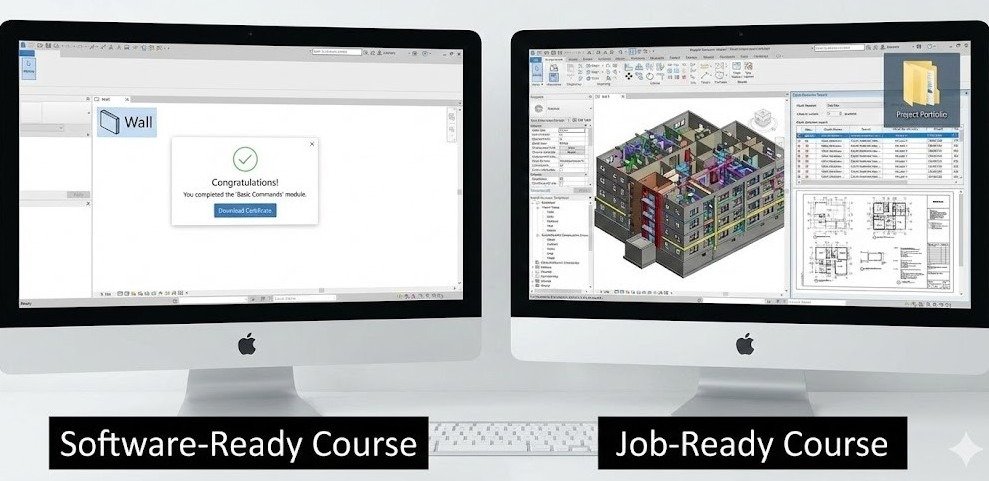
This distinction is one of the most important — and most misunderstood — aspects of BIM education in 2026.
Software-Ready BIM Courses
These courses focus primarily on:
- Tool navigation
- Commands and features
- Short exercises
They are useful for basic exposure but do not prepare learners for real project environments.
Job-Ready BIM Courses
Job-ready programs teach:
- How BIM is used across project stages
- Role-based responsibilities
- Coordination workflows and documentation logic
Recruiters consistently prefer candidates trained in project-based BIM environments because they adapt faster and require less on-the-job correction.
This employability difference is explained in detail here:
How to Become a Job-Ready BIM Professional
Step 4: Course Duration — The Truth Most Learners Discover Late
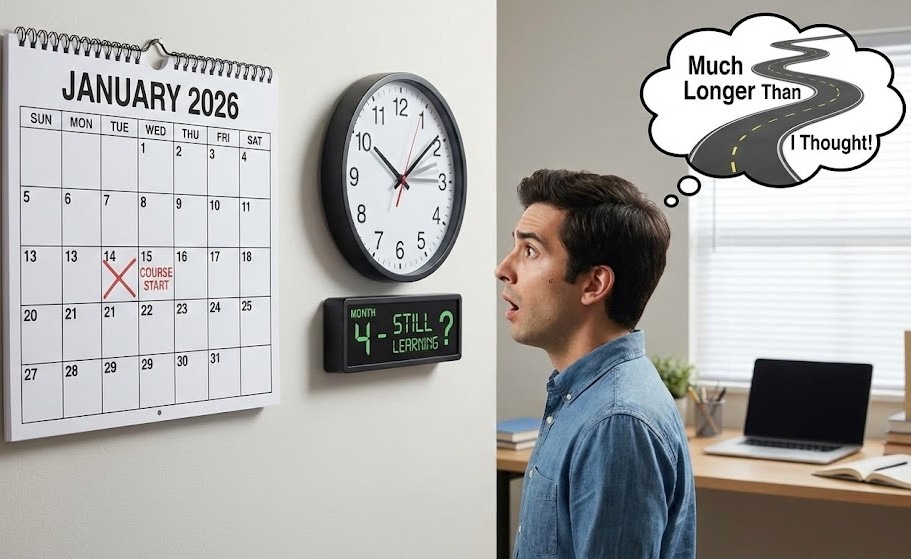
In January, short-duration BIM courses often feel attractive.
They promise speed, certificates, and quick results.
By March, many learners realise:
- Confidence is missing
- Interview questions feel unfamiliar
- Practical readiness is low
Why This Happens
BIM is not just a software skill — it is a process-driven workflow. Understanding coordination, documentation, and standards takes time.
Most learners only realise this after completing a crash course.
Step 5: Look at Outcomes, Not Marketing Language
Marketing language can be persuasive — but it does not guarantee employability.
Before enrolling in any BIM course, learners should evaluate outcomes, not promises.
What to Check Before Enrolling
Look for clarity on:
- Student project samples
- CV structure and positioning guidance
- Placement transparency
- Role-specific training depth
These indicators matter far more than course length or certificate names.
Why Outcome-Driven Learning Matters
Structured learning environments such as BIM Cafe Learning Hub focus on:
- Real project workflows
- Discipline-specific depth
- CV and portfolio alignment
- Placement assurance through project-oriented learning
This approach aligns learning with how recruiters actually evaluate candidates, not how courses are marketed.
The Mid-January Trap (Very Common)
By mid-January, many learners panic-enrol due to peer pressure.
This often leads to:
- Course hopping
- Re-learning
- CV confusion
Understanding how BIM interviews actually work helps avoid this trap.
A Smarter Mid-January Strategy

Instead of rushing:
- Fix your target role
- Choose depth over speed
- Ask about projects, not tools
- Align learning with India + Gulf expectations
Final Thought
A BIM course is not just a training program.
In 2026, it is a career direction decision.
Every choice you make — the discipline you select, the depth you pursue, the type of projects you train on — quietly shapes how recruiters perceive you for years to come. A well-chosen course can shorten your job search, build confidence in interviews, and place you clearly within a professional role. A poorly chosen one can do the opposite, even if you work hard.
This is why timing matters less than clarity.
Mid-January often feels late because anxiety is high and comparisons are everywhere. But in reality, it is one of the best moments to pause and decide wisely. You now have enough information to understand how the market works, what recruiters expect, and where most learners go wrong.
Rushing into a course because others are enrolling is rarely the right move. Taking time to define your goal, your discipline, and your target market — India or the Gulf — is what prevents wasted months and repeated learning.
Choosing wisely does not mean delaying endlessly.
It means choosing with intent, structure, and alignment.
In 2026, the most successful BIM professionals are not the ones who enrolled first — they are the ones who chose correctly.
Frequently Asked Questions (FAQs)
There is no single “best” BIM course for everyone.
In 2026, the best BIM course for freshers is one that is project-oriented, discipline-specific, and job-ready.
Freshers should look for courses that include:
- Real or simulated project workflows
- Clear discipline focus (Civil, MEP, Architecture, or Interior)
- CV and portfolio guidance
Avoid short, tool-only courses that focus only on software commands.
No.
Revit is still essential, but Revit alone is no longer enough.
Recruiters now expect:
- Workflow understanding
- Coordination exposure
- Documentation logic
- Awareness of standards like LOD and naming conventions
Candidates who list only “Revit knowledge” without project context are often rejected.
For most learners:
- 4–6 months of structured, project-based BIM learning builds employability
- 6+ months is needed for coordination-focused or Gulf-oriented roles
Courses promising job-readiness in 30–45 days usually provide only basic exposure, not confidence.
In 2026, MEP BIM continues to show the highest demand across India and the Gulf.
Other strong specializations include:
- Structural BIM (consultancies)
- Architectural BIM with coordination focus
Choosing one specialization and going deep is far more effective than learning multiple disciplines superficially.
To avoid choosing the wrong BIM course:
- Define your target role before enrolling
- Ask about projects, not certificates
- Check student work and placement outcomes
- Ensure the course aligns with India or Gulf job expectations
A BIM course should reduce job search time — not extend it.