How reflective façades, transparent glass and artificial lighting affect birds—and what architects can do to make buildings safer.
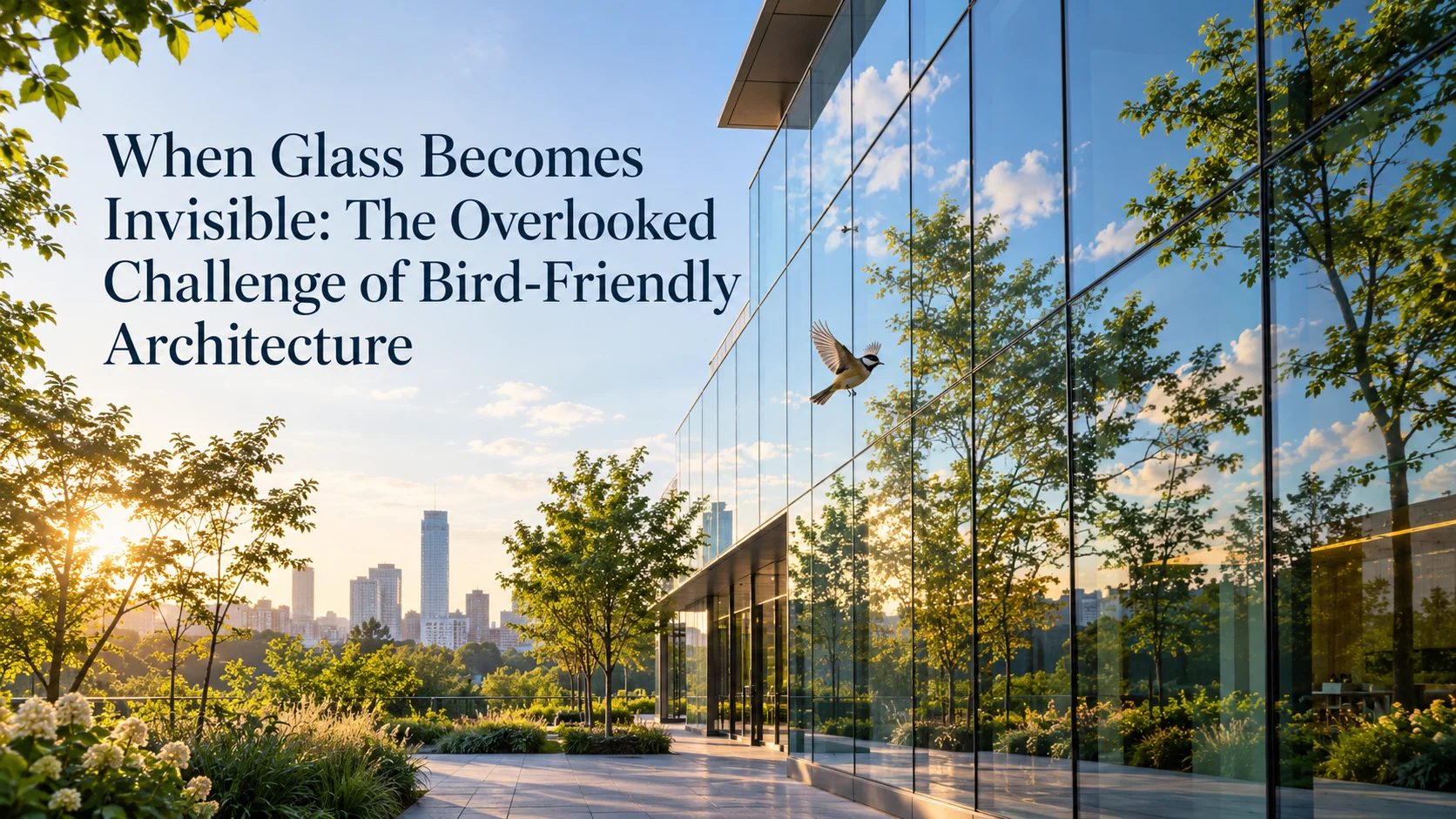
A glass building can look almost weightless. Its façade reflects the sky, nearby trees and the surrounding landscape, creating a seamless connection between architecture and nature.
For the people inside, the view may be one of the building’s most attractive features.
For a bird flying towards it, that same glass can present a serious danger.
A reflection of trees may appear to be somewhere safe to land. A transparent corridor may look like an open passage. The bird continues flying, unable to recognise the solid surface in its path.
This is one of the less visible challenges of contemporary architecture.
Bird-friendly architecture addresses this problem by considering how buildings appear to wildlife, not only to the people who occupy or admire them.
Why Birds Cannot Always Recognise Glass
People understand that a window is a physical barrier because they recognise frames, reflections and other visual clues.
Birds do not necessarily interpret glass in the same way.
Two properties are especially important: reflection and transparency.
Reflective glass can mirror trees, vegetation, clouds and open sky. A bird may attempt to fly towards the reflected environment without recognising the glass between it and the apparent destination.
Transparent glass presents a different problem. When a bird can see vegetation or daylight through a glazed corridor, corner or building entrance, it may interpret the space as an unobstructed flight path.
These risks are not limited to skyscrapers.
Residential windows, low-rise offices, glass walkways and transparent barriers can also create collision hazards.
The U.S. Fish and Wildlife Service identifies building glass as a significant threat to birds, particularly because reflective and transparent surfaces can be difficult for them to recognise.
When Architectural Transparency Creates a Problem
Glass has an important place in architectural design.
It brings daylight into interiors, provides views, supports visual connections between spaces and allows architects to create open, contemporary environments.
The challenge is not that glass is inherently unsuitable for buildings. It is that extensive or poorly considered glazing can introduce risks that are easy to overlook during design.
Consider a glazed passage connecting two buildings. From inside, it offers an uninterrupted view of the landscape. From outside, a bird may see trees through the passage and attempt to fly straight towards them.
Glass corners, transparent railings and enclosed courtyards can create similar conditions.
Reflective façades near landscaped areas deserve particular attention because vegetation may be mirrored across large sections of glass.
These situations show why assessing a façade solely through appearance, daylight or energy performance does not capture every aspect of its environmental impact.
The building’s relationship with the surrounding landscape matters too.
What Makes Glass Bird-Friendly?
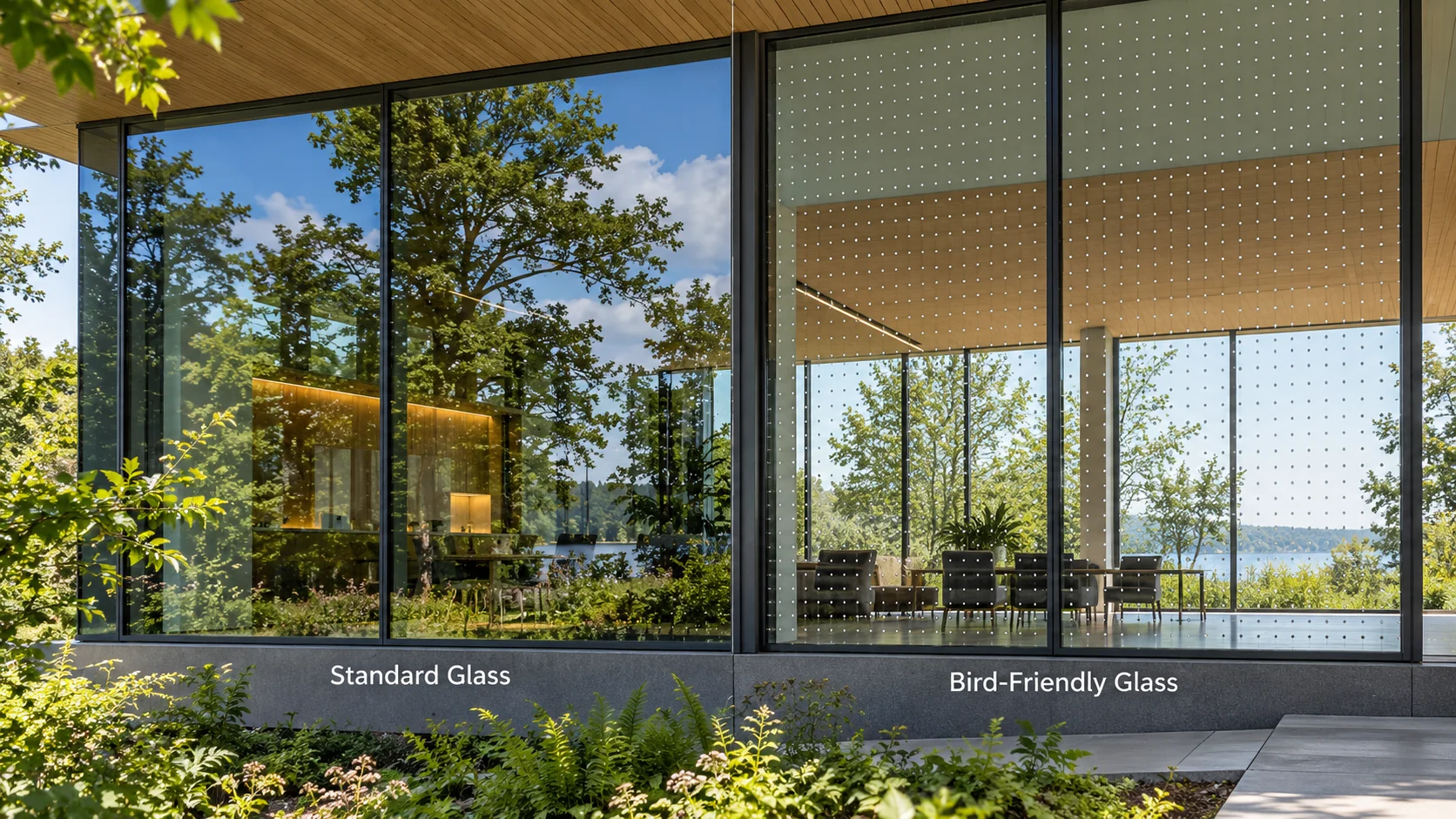
Bird-friendly glass is designed or treated to make glazed surfaces more recognisable as barriers.
One established approach is to introduce visible patterns across the glass.
These may consist of dots, lines or other markings that interrupt reflections and indicate that the surface cannot be flown through.
Fritted glass uses ceramic patterns incorporated into the glazing during manufacture. Other options include etched glass, suitable patterned films and exterior screens.
The placement and spacing of these treatments matter.
A few isolated decorative decals may leave large areas of glass appearing transparent or reflective. Effective treatments generally use closely spaced, visible markings distributed across the hazardous glazing.
Guidance from organisations such as the American Bird Conservancy recommends patterns with no more than approximately 5 cm, or 2 inches, between visual markers in both directions, using suitable marker dimensions and contrast.
Exterior treatments are generally preferable because reflections from the outer glass surface can reduce the visibility of markings placed behind it.
Importantly, bird-friendly glazing does not necessarily mean eliminating transparency or daylight.
Architects can select treatments that allow views and natural lighting while making the glass more detectable to birds.
The appropriate solution depends on the glazing type, location, design intent and tested performance of the chosen product.
Lighting Can Make Buildings More Dangerous
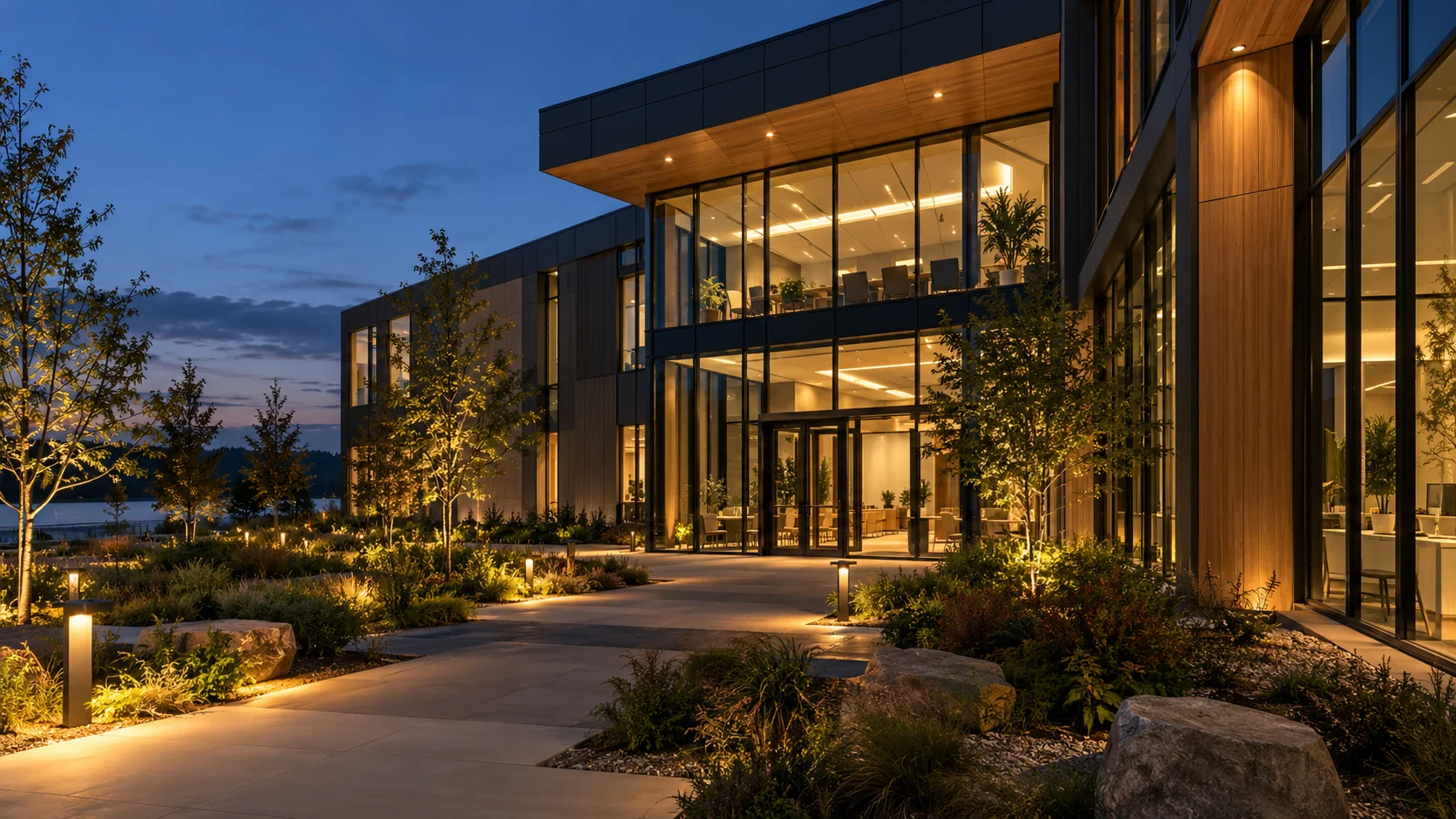
Glass is not the only architectural feature associated with bird collisions.
Artificial lighting can also affect bird movement, particularly during nighttime migration.
Many bird species migrate after dark. Brightly illuminated buildings can attract or disorient some migrating birds, increasing their exposure to buildings and other hazards.
The problem may involve façade lighting, illuminated interiors, rooftop lighting or unnecessary exterior illumination.
Reducing these risks does not require buildings to remain completely dark.
Lighting can be directed towards areas where it is needed, rather than scattered into the sky or across surrounding vegetation.
Timers, occupancy sensors, dimming controls and appropriate shading can help reduce unnecessary illumination.
For example, an office tower may require lighting during evening working hours, but keeping every floor brightly illuminated throughout the night may serve little operational purpose.
Thoughtful lighting design can support bird protection while also reducing unnecessary energy use.
Landscaping and Façade Design Must Be Considered Together
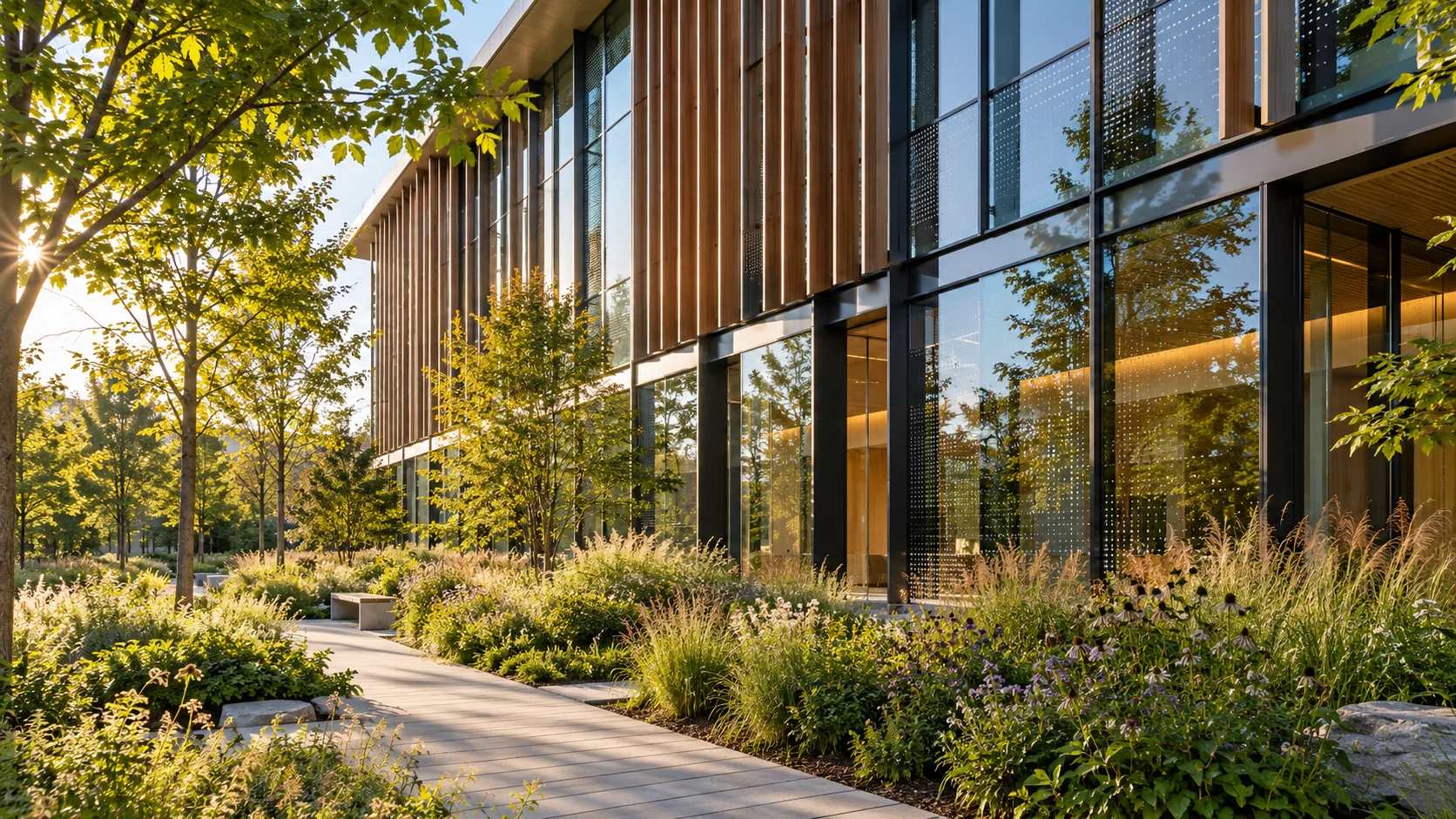
Landscape design is often treated as a separate discipline from façade design.
For bird-friendly buildings, the relationship between the two is especially important.
Trees, planted courtyards, green roofs and water features can attract birds into areas near buildings. If nearby glazing reflects the vegetation or creates apparent openings, collision risks may increase.
This does not mean architects should avoid planting trees beside buildings.
The more effective approach is to recognise where vegetation, bird activity and hazardous glass may interact.
A landscaped courtyard surrounded by reflective glazing, for example, may require greater attention than an equivalent courtyard enclosed by opaque walls.
Similarly, a glass corner facing a planted garden may benefit from patterned glazing or an external screen.
In these situations, bird-friendly design is not a single product decision. It requires coordination between architecture, landscape design, lighting and façade detailing.
Bird-Friendly Design Begins at the Planning Stage
Retrofitting hazardous glass is possible, but considering bird safety early in design offers more flexibility.
Architects can review glazing locations, transparent corners, glass corridors and other potentially hazardous features before they are built.
Façade specifications can incorporate suitable glazing treatments, while lighting and landscape plans can be assessed together.
For an existing building, the process may begin by identifying windows where collisions have occurred or where reflective vegetation creates an obvious concern.
Exterior films, screens or other appropriate treatments can then be evaluated as retrofit options.
New construction allows bird-friendly measures to be integrated into the architectural design from the beginning rather than added later as visible corrections.
There are also established references for this work.
The Canadian standard CSA A460 addresses bird-friendly building design for new and existing buildings, including glazing and site considerations. Its requirements provide a useful example of how bird safety can be translated into design criteria.
However, standards and mandatory requirements differ between jurisdictions. Project teams must identify the regulations and guidance applicable to their building’s location.
Can Bird-Friendly Architecture Still Look Beautiful?
Bird-friendly design is sometimes assumed to limit architectural creativity.
In practice, the challenge can encourage more considered façade design.
Patterned glass can introduce texture and visual rhythm. Screens can provide shading and architectural depth. Carefully positioned opaque elements can reduce unnecessary glazing while supporting other building-performance objectives.
Some glazing treatments may also influence solar heat gain, glare and privacy, although their performance needs to be evaluated rather than assumed.
The objective is not to cover every building with identical patterns.
It is to understand where birds are likely to encounter hazardous glass and select suitable solutions that work with the architectural concept.
A building can remain visually appealing, naturally lit and contemporary without treating maximum transparency as its only measure of quality.
Designing Beyond the Human Viewpoint
Architecture has traditionally focused on the requirements of people: safety, comfort, function, appearance and the experience of moving through spaces.
Those responsibilities remain essential.
But buildings also exist within larger environments shared with plants, animals and other living organisms.
A façade that appears elegant to a person may reflect a landscape that misleads a bird. A brightly illuminated building may look impressive at night while contributing unnecessary light to its surroundings.
Recognising these effects expands the way architectural performance is understood.
Bird-friendly design asks architects to consider not only how a building looks from the street or from inside a room, but also how it interacts with the living environment around it.
The solutions may be relatively small: a different glazing specification, an external pattern, a redesigned transparent corner or a more carefully controlled lighting system.
Their value comes from considering these details before they become problems.
A building that responds thoughtfully to its surroundings should be designed for more than the people who can see it. It should also consider the wildlife that cannot see its glass.
Professional BIM Course
Master BIM Course
Structural Design Concepts and BIM
Certified MEPF BIM Master Course
Electrical BIM Professional Program
RenderLab – Master 3D Modeling & Photorealistic Rendering
Multi-Tool Mastery for Architects & Engineers
BIM Coordinator Workflow Program
BIM FastTrack – 30 Day Intensive Training
Global Architectural & Structural BIM Project Program