Author: Devika R
December 6, 2025
8 min read
In 2025, the AEC industry is experiencing a new digital trend: almost everyone online suddenly claims to be a “Revit Expert,” “BIM Specialist,” “BIM Guru,” “No.1 in Revit,” or even a “BIM Master.” Social media is overflowing with glamorous titles, quick certification posts, and screenshot-heavy portfolios. But when you look deeper—beyond the filters and flashy badges—one truth becomes obvious: software skills alone aren’t enough to make someone BIM-ready.
Most of these self-proclaimed experts lack the real foundations that define true BIM capability: hands-on project experience, genuine BIM exposure, and responsibility for actual deliverables. At BIM Cafe, we meet hundreds of students and young engineers every month who proudly say, “I know Revit. I’m ready for BIM roles.” But as soon as we evaluate their understanding of workflows, standards, coordination, and real-world practices, it becomes clear that knowing how to use a tool is very different from knowing how to deliver in a BIM environment.
But within a few minutes of assessment, the truth becomes obvious.
Most have:
- Never worked on a multidisciplinary project (Architecture + Structure + MEP)
- Never visited a construction site or understood site conditions
- Never used Navisworks, BIM 360, or Autodesk Construction Cloud (ACC)
- Never participated in coordination meetings
- Never handled LOD standards, BEP documentation, or project workflows
In simple words:
They know the tools — not the process.
And in BIM, process is everything.
The Mindset Problem: Skills Without Experience
The AEC industry is going through a major transition. BIM is no longer an optional skill — it is now the backbone of modern construction, design automation, digital twins, and project delivery.
However, many fresh graduates entering BIM roles carry a problematic mindset shaped by:
1️ Choosing Jobs Only Based on Salary
Many beginners don’t look at learning potential, exposure, or mentorship — only the salary number.
This leads to fast burnout and slow growth.
2️ Ignoring Training & Mentorship
Freshers often assume they “already know enough Revit” and don’t require proper training in BIM workflows.
3️ Prioritizing Titles Over Capability
Everyone wants to become a BIM Coordinator or BIM Lead within months — without gaining the technical depth required for these roles.
4️ Interrupting Seniors, Thinking “I Know Revit”
This is a classic mistake.
Knowing buttons is not the same as understanding:
- Project stages
- Construction logic
- Interdisciplinary dependencies
- Coordination cycles
- Issue resolution workflows
This misunderstanding exists because most freshers have only learned the button-clicking side of Revit, not the BIM execution process that real companies follow.
The Hard Truth Most Students Don’t Hear
Here is the reality every engineering student must understand:
A tool without process knowledge is just a toy.
Revit alone doesn’t make you BIM-ready.
You can model walls, beams, and slabs all day —
but that skill alone will NOT make you a BIM Engineer.
The BIM industry doesn’t hire people for drawing.
It hires people who can manage:
- Coordination workflows
- LOD-based delivery
- Clash detection & resolution
- Multidisciplinary collaboration
- BEP documentation
- Issue tracking & QC cycles
- CDE platforms like BIM 360 and ACC
- Real-time project communication
And here’s the part no YouTube tutorial will tell you:
These skills cannot be learned from shortcuts, notes, or 10-minute videos.
They come only from structured training + real project exposure.
What the Industry Actually Looks For

Today’s AEC job market is more competitive and more demanding than ever. Companies are no longer impressed by candidates who “know Revit” or have completed a few online tutorials. The real BIM industry expects something far deeper — project awareness, coordination maturity, and the ability to deliver professional-grade outputs under real-world conditions.
In simple words:
BIM roles require responsibility, not just software knowledge.
Companies hire contributors, not button-clickers.
Here’s a detailed breakdown of what organisations actually look for when hiring BIM Engineers, Revit Modellers, and BIM Coordinators.
1. Understanding of Project Deliverables
This is the foundation. Every BIM project revolves around clear deliverables, and companies expect you to know:
- Which drawings and schedules must be produced?
(GA drawings, sections, elevations, BOQs, quantity extractions, shop drawings) - What stage the project is in?
Concept → Schematic → Design Development → IFC → Shop Drawings → As-Built - What format is required?
PDF, RVT, DWG, NWC, IFC, Revit sheets, 3D views, COBie data, etc. - What level of accuracy is needed for the current milestone?
Fresh graduates rarely understand this — and that’s where the industry notices the gap immediately.
2. Ability to Perform Multidisciplinary Coordination
BIM is collaboration, not isolated modelling.
Companies need professionals who can:
- Coordinate Architecture, Structure, and MEP models together
- Understand relationships between building elements
- Detect constructability issues early
- Read and interpret engineering drawings
- Participate in coordination meetings with consultants and contractors
A BIM Engineer must think beyond a single discipline and see the building as a complete system.
3. Identifying & Resolving Clashes Professionally
Clash detection is one of the biggest responsibilities in BIM.
You must know how to:
- Run clash tests in Navisworks Manage
- Categorise clashes: hard clashes, soft clashes, workflow clashes, clearance issues
- Group, assign, and track issues
- Generate professional clash reports
- Communicate resolutions with respective teams
- Revalidate after amendments
Companies expect BIM professionals who can reduce site errors, not create new ones.
4. Strong Knowledge of LOD Standards
Every stage of BIM is tied to Level of Development (LOD).
You must clearly understand what each LOD requires:
- LOD 100 – Concept design
- LOD 200 – Approximate geometry
- LOD 300 – Accurate geometry
- LOD 350 – Interfaces and connections
- LOD 400 – Fabrication-ready
- LOD 500 – As-built
BIM professionals must deliver only what the standard demands — not overmodel, not undermodel.
This is where real industry experience matters.
5. Ability to Use CDE Platforms (BIM 360 / ACC)
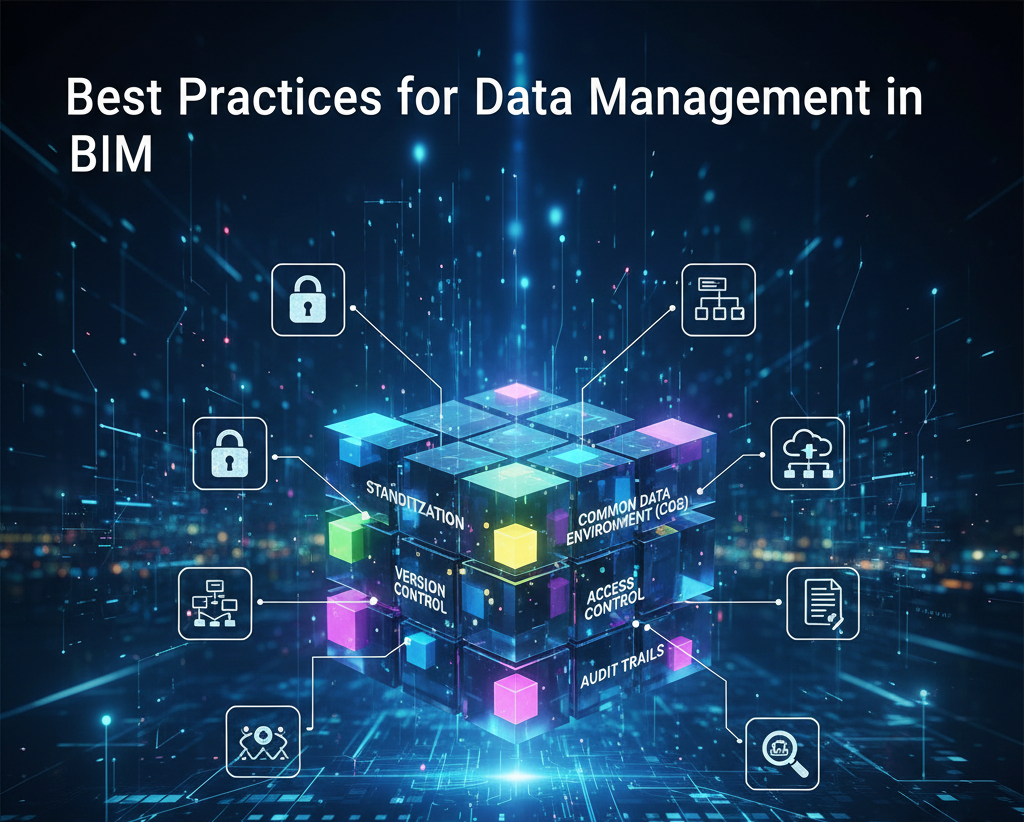
Modern BIM workflows depend on a Common Data Environment.
Companies expect you to be comfortable with tools like:
- Autodesk BIM 360
- Autodesk Construction Cloud (ACC)
- Trimble Connect
- Dalux
- Revizto
You should know how to:
- Upload and manage model versions
- Log issues and track progress
- Assign tasks to disciplines
- Review comments and RFIs
- Maintain audit trails
- Work in cloud-based collaborative models
If you’ve never touched a CDE, your BIM readiness is incomplete.
6. Handling Revisions, Comments & Quality Control (QC)
BIM is a cycle of review → comment → revise → approve.
A real BIM professional must:
- Maintain revision history
- Track consultant comments
- Apply updates correctly
- Follow drafting and modelling standards
- Ensure zero mismatches between model and sheets
- Perform self-checks and QC before submissions
Companies need people who can deliver reliable, error-free outputs — not raw, unchecked models.
7. Communication & Team Coordination Skills
BIM is a teamwork ecosystem.
Even if you are technically strong, you will struggle in BIM roles if you cannot:
- Communicate clearly during coordination meetings
- Present issues confidently
- Explain modelling constraints
- Document changes and updates
- Collaborate with architects, engineers, and contractors
- Handle pressure and deadlines professionally
Soft skills are not optional in BIM — they are a core requirement.
Everyone Wants to Lead — But No One Wants the Journey
In today’s AEC job market, almost every fresher dreams big the moment they learn Revit.
We hear it all the time:
- “I want to be a BIM Coordinator.”
- “I want to lead a team.”
- “I want a high salary package.”
- “I want international projects.”
Ambition is good — but ambition without process is dangerous.
What many young engineers forget is this:
Leadership in BIM is not a title you take — it’s a responsibility you earn.
Everyone wants the result.
Very few want the journey.
BIM Is Not a Shortcut Profession

BIM is a discipline that combines technical knowledge, project experience, coordination maturity, and a deep understanding of construction workflows.
It cannot be mastered in 10 days, nor can it be learned from shortcuts.
A BIM Leader is someone who has:
- Spent hours resolving clashes
- Understood why certain modelling decisions fail on-site
- Learned how disciplines interact
- Made mistakes — and learned from them
- Followed standards, documentation, and deliverables
- Earned trust through reliability
This journey cannot be skipped.
Knowing Revit is only the starting point — not the destination.
Leadership in BIM comes only after you’ve experienced the real workflow from start to finish.
How BIM Cafe Builds True BIM Professionals

At BIM Cafe, we don’t create “button experts.”
We create real BIM engineers who can handle responsibilities from Day 1.
Here’s what makes our training unmatched:
1. Hands-On Real Project Training
No dummy files.
No textbook examples.
Students work on actual LOD-based live projects — the same way BIM is executed in global firms.
This teaches:
- Real modelling logic
- Sheet creation discipline
- Clash-free design thinking
- Project documentation awareness
You learn BIM the way the industry practices it, not the way tutorials simplify it.
2. Multidisciplinary Coordination Workflows
You don’t just model.
You learn how Architecture, Structure, and MEP interact and affect each other.
This builds:
- Coordination mindset
- Ability to detect workflow conflicts
- Awareness of cross-discipline dependencies
- Understanding of construction logic
This is one of the biggest skill gaps among freshers — and one of the strongest training strengths at BIM Cafe.
3. Clash Detection (Practical, Not Theory)
You master Navisworks Manage, not just watch videos.
You learn how to:
- Run clash tests
- Categorise issues
- Create clash reports
- Communicate resolutions
- Work with consultants and teams
- Track changes and verify solutions
This alone makes you stand out in interviews.
4. BEP, ISO 19650 & Workflow Understanding
We teach the full BIM process, not just software.
You learn:
- BIM Execution Plans (BEP)
- Naming standards
- Drawing management
- Version control
- Documentation best practices
- ISO 19650-aligned workflows
This gives you what companies value most — process maturity.
5. Exposure to BIM 360 / ACC (CDE Platforms)
Modern BIM projects operate on the cloud.
So you gain hands-on experience with:
- Autodesk BIM 360
- Autodesk Construction Cloud (ACC)
- Issue tracking
- Versioning
- Review workflows
- Team collaboration
This is something most freshers have zero experience in.
6. Interview Preparation + Portfolio Development
We ensure you build:
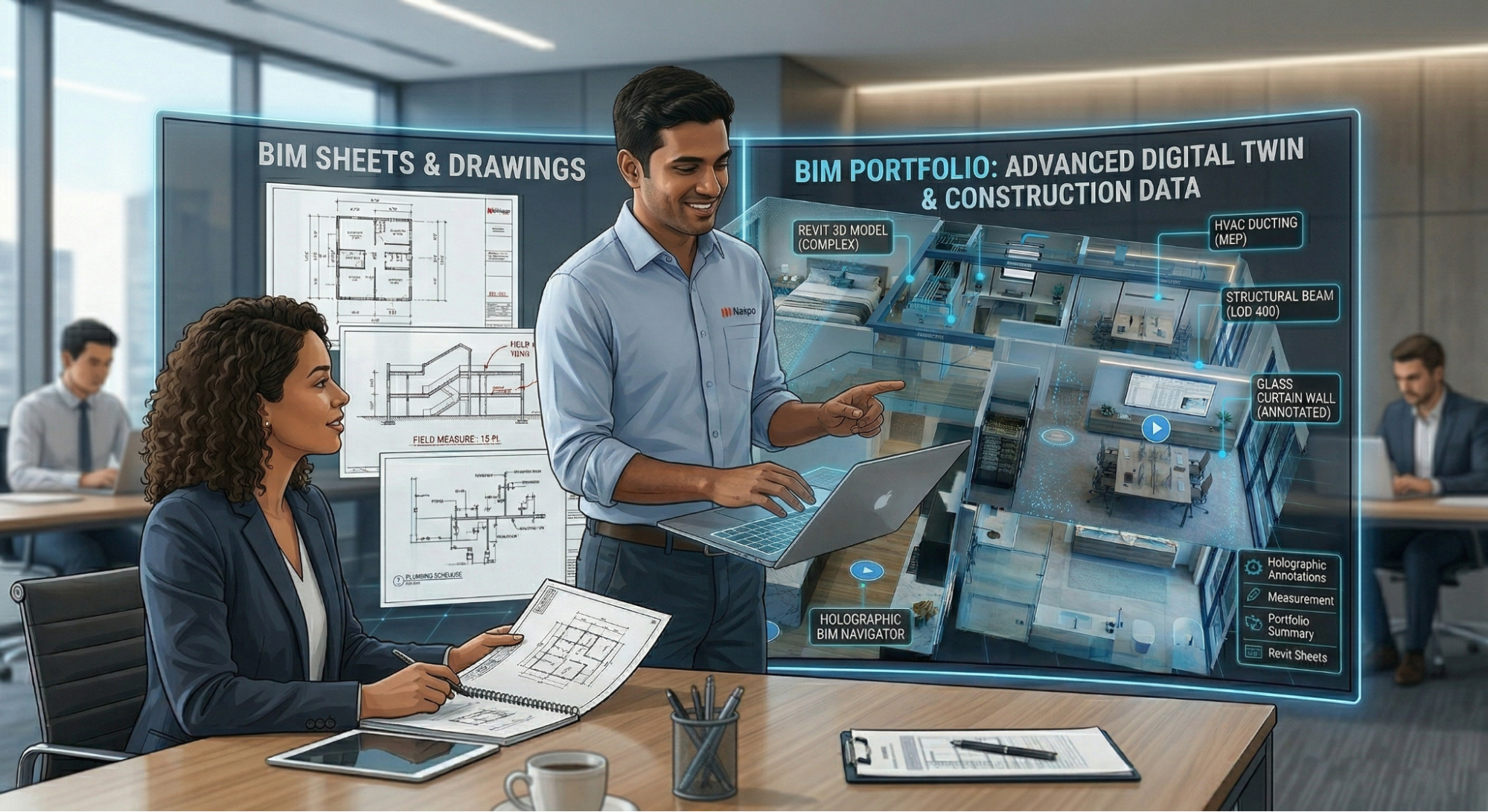
- A strong BIM portfolio
- Project case studies
- Clash reports
- Sheet sets
- Model documentation
- Professional CV + LinkedIn optimisation
This makes your profile stand out in screenings.
7. Assured Placement Support
Through DDG BIM Services and BIM Cafe’s strong industry linkage, trained students receive structured placement support.
Your growth becomes predictable — not left to chance.
Final Thoughts: Respect the Process, Earn the Results

Titles don’t make you a BIM Engineer — experience does. Software skills like Revit may help you begin your journey, but only real BIM exposure builds long-term career stability, international opportunities, and industry credibility. Before calling yourself a BIM expert, you must be able to answer a few critical questions: Do you understand multidisciplinary coordination? Have you worked on a real LOD-based project? Do you know BIM standards, workflows, clash detection, and CDE platforms like BIM 360 or ACC? These are the fundamentals that separate a modeller from a true BIM professional.
If your honest answer to these questions is “not yet,” that’s not a limitation — it’s your starting point. It means you’re ready for the real journey, not the shortcut. At BIM Cafe, you learn the tools, apply them on real projects, gain hands-on coordination experience, and develop the confidence needed to take full project responsibility. With structured guidance, you evolve step-by-step into a BIM professional the industry genuinely respects. Respect the process — and the results will follow.
Ready to build real BIM experience that employers can trust? Contact BIM Cafe Learning Hub and start your transformation today.