Author: Devika R
December 1, 2025
10 min read
“We’ve Been Doing It This Way for 40 Years — and It Works!”
The Old Habit That’s Holding Us Back
If you have ever tried to introduce Revit or BIM to a senior architect, engineer, or contractor, chances are you’ve heard something like this:
“We’ve been doing it this way for 40 years — and it works!”
This statement doesn’t come from a place of ignorance — it comes from comfort. For decades, AutoCAD has been the dominant drafting tool. It transformed paper drawings into digital lines and helped the industry achieve faster design delivery.
But that transformation happened 30–40 years ago. The world has changed — dramatically.
At BIM Cafe, we see this hesitation firsthand. Every week during our workshops and consultations, professionals express uncertainty about adopting new workflows — even when they clearly understand the benefits. The resistance isn’t about Revit or BIM being difficult. It’s about the fear of changing familiar habits.
Unfortunately, this reluctance can have long-term consequences:
- Young engineers copy outdated workflows and restrict their skill growth
- Organizations remain inefficient due to avoidable rework and design clashes
- Project timelines stretch and budgets get wasted
- Global market opportunities are missed due to skill gaps
The result? While the rest of the world is moving forward with digital construction technology, many in the AEC industry are stuck using tools that were built for a different era.
Let’s clear the biggest misconception:
Revit is not “new.” BIM is not “too modern.”
What’s outdated is choosing to stay behind.
Today’s buildings — hospitals, airports, metro stations, skyscrapers — are not simple 2D line drawings. They are complex, multidisciplinary digital systems where Architecture, Structure, and MEP must function as one.
And that requires a smarter way of working.
Revit + BIM doesn’t replace the knowledge and experience of professionals — it amplifies it:
- Your design intelligence remains the same
- Your technical decisions remain the same
- But your ability to execute improves dramatically
The industry is asking for better coordination. Clients demand fewer errors. Project owners expect accountability. Governments require digital submissions.
BIM and Revit provide exactly that:
- Greater clarity in documentation
- Data-driven project management
- Real-time collaboration and clash resolution
- Reliable cost and quantity takeoffs
- A single source of truth for all disciplines
This is no longer optional — it is the new minimum expectation.
AutoCAD helped us transition from paper to digital.
Revit and BIM help us transition from digital to intelligent.
AutoCAD = Lines
Revit/BIM = Data + Meaning + Collaboration
The Bottom Line
Sticking to what worked 40 years ago may feel safe — but it limits growth, productivity, and competitiveness.
The future of AEC belongs to those who adapt.
🔹 Students who master BIM become globally employable
🔹 Engineers who embrace change deliver projects with fewer errors
🔹 Firms that adopt digital workflows win better, larger projects
The world is evolving. The question is:
Will we evolve with it?
The Common Arguments Against Revit (And Why They’re Outdated)
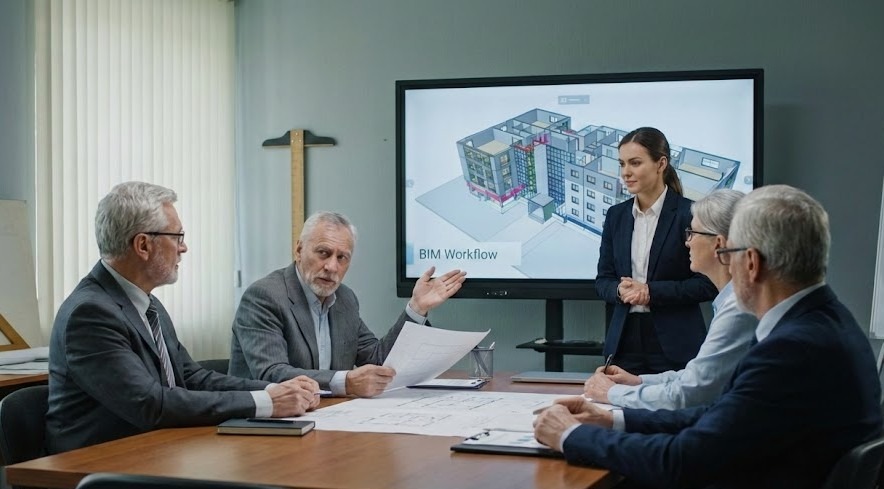
Whenever architects, engineers, project managers, or contractors hear about the transition from CAD to BIM, the same objections appear — often word-for-word:
“AutoCAD is fine; why change?”
“This method worked for decades.”
“Revit is too modern.”
“BIM is unnecessary for small offices.”
“Revit takes too long to learn.”
“Clients don’t ask for BIM.”
At first glance, these may sound like practical concerns. In reality, they are comfort zones disguised as arguments. They reflect a mindset of protecting familiar workflows rather than embracing proven advancements.
Why These Arguments No Longer Hold Up

1️ “AutoCAD works. Why switch?”
AutoCAD does what it was designed to do — create 2D line drawings.
But buildings today are no longer planned in isolated layers. They are data-rich systems requiring seamless coordination across Architecture, Structure, and MEP. AutoCAD simply can’t keep up with that complexity.
2️ “Revit is too new and complicated.”
Revit has been around for over 20 years. BIM adoption is now mandatory or highly preferred in the Middle East, Europe, and rapidly growing in India. What was once “new” is now the industry standard.
3️ “We are a small firm. BIM is only for big projects.”
Modern clients — even homeowners — expect:
- Faster revisions
- 3D clarity
- Fewer construction mistakes
Small offices benefit the most because BIM eliminates the costly rework that tight budgets can’t absorb.
4️ “Clients don’t ask for BIM.”
Clients don’t ask for the tool — they ask for:
- Accuracy
- Predictable timelines
- Reduced errors
- Transparency
BIM is the path to delivering all of those consistently.
Revit Is Not Just a Tool — It’s a Mindset Shift
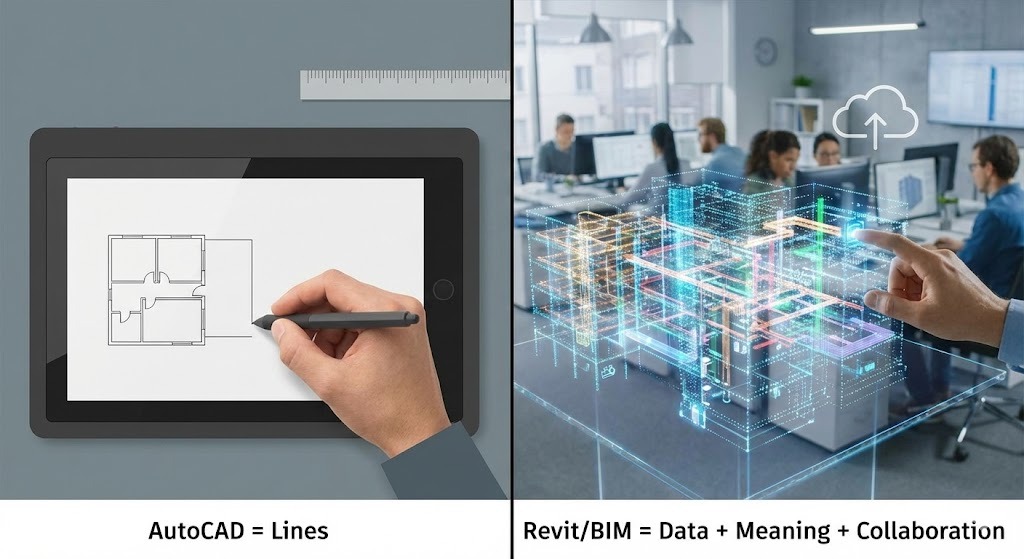
The biggest misconception is believing Revit is simply AutoCAD with 3D capabilities.
But the difference is fundamental:
| AutoCAD | Revit |
| Draws lines | Builds intelligent objects |
| 2D documentation | Data-driven models |
| Information scattered across drawings | Single source of truth |
| Manual coordination | Automatic + multidisciplinary coordination |
| High risk of clashes | Clash-free, predictable design |
AutoCAD helps you draw a building.
Revit helps you build it — digitally — before the first brick is laid.
And when Revit is combined with BIM workflows, the impact becomes transformative:
What Revit + BIM Brings to the AEC Industry
- Higher precision in modeling and detailing
- Faster coordinated output with automatic sheet updates
- Fewer errors and clashes, especially between MEP and structure
- Seamless collaboration across all disciplines
- Centralized data, accessible to the entire team
- Real-time teamwork using BIM 360 / Autodesk Construction Cloud
- Better decision-making backed by smart building information
This isn’t just a software upgrade.
This is a shift from reactive designing to proactive building management.
The Cost of Not Adopting BIM
Continuing with outdated tools leads to:
- Repeated onsite modifications
- Budget and timeline overruns
- Miscommunication between stakeholders
- Loss of competitive edge in tenders
- Skill mismatch with global project standards
The biggest risk is not learning something new —
it’s being left behind while the industry moves forward.
The World Accepted Change Before — Why Not This?
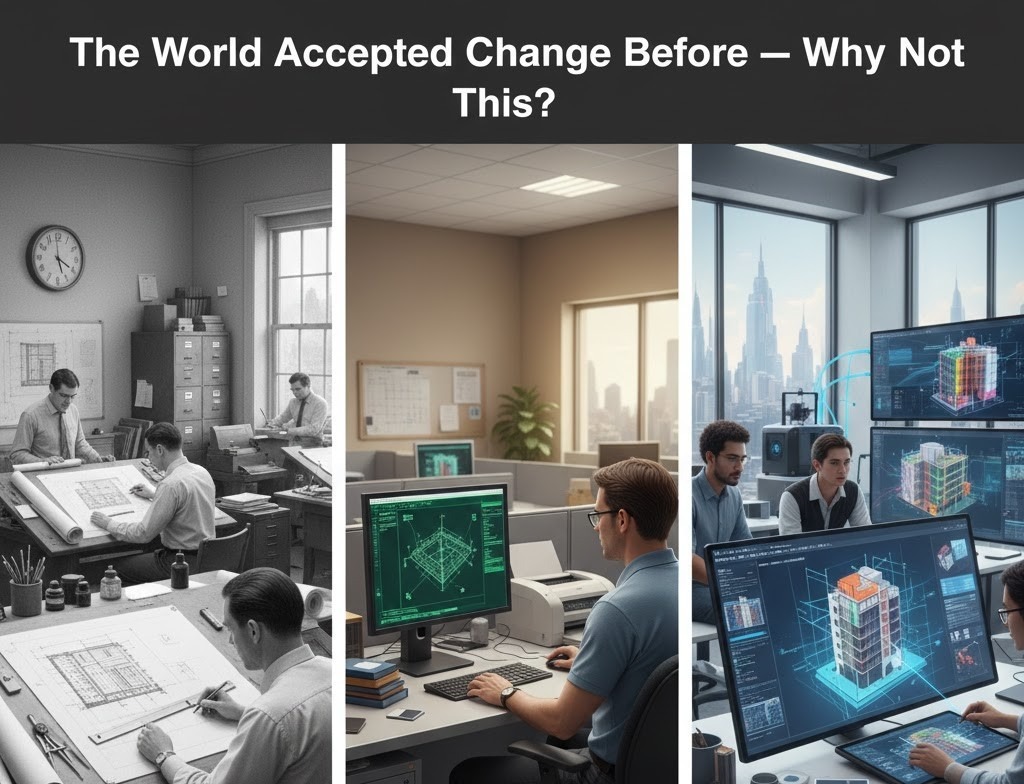
Change has always been uncomfortable — until it becomes second nature.
Think about the last few decades of transformation in the AEC industry:
We once sketched every detail on drawing boards. Then AutoCAD arrived — and suddenly drafting became cleaner, faster, and more accurate. Many professionals resisted at first, claiming digital drawings felt “unrealistic.” Yet today? Nobody questions it.
Typewriters ruled offices worldwide… until computers redefined how we create and share information.
Paper mail used to be the only means of communication… until email made global collaboration instant.
Manual estimates and handwritten quantities were the standard… until digital tools simplified cost analysis and project documentation.
Every major shift in technology seemed “too modern” or “too risky” — right up until it became the global norm.
So why does the move from CAD to BIM still feel like a massive leap?
Why are we holding back now when the world has already proven that upgrading is the smart move?
The Real Truth
- Revit has been around for over 20 years.
- BIM is already the industry standard in more than 70% of major global projects.
- What’s outdated is a system still training students on tools from 1995.
The world has progressed.
The industry has progressed.
Your competitors have progressed.
The project your office lost? The client your company couldn’t win?
There’s a strong chance the team that replaced you was using BIM.
Why AutoCAD Alone Is Not Enough Anymore
Let’s be clear — AutoCAD isn’t the problem.
It’s a powerful drafting tool. But drafting alone is not what modern buildings require.
Construction today demands data — accurate, connected, intelligent data.
That’s where AutoCAD falls short:
- No automated clash detection
- Difficult MEP / Structural / Architectural coordination
- No real-time schedules or BOQ extraction
- Prone to version conflicts with multiple team members
- No centralized building data for facility management
Modern buildings are complex. They involve architects, engineers, contractors, suppliers — all working together. AutoCAD simply can’t handle that level of collaboration.
What the Industry Now Expects
Modern projects demand capabilities such as:
- Parametric & intelligent modeling
- LOD-based deliverables with accuracy
- Multi-disciplinary coordination
- Cloud collaboration & common data environments
Model-based quantity take-offs and schedules
These aren’t optional anymore — they are baseline requirements.
And only BIM delivers them.
Only Revit makes it possible.
The industry isn’t asking if you know BIM.
It’s asking how well you can deliver with BIM.
The Bottom Line
AutoCAD helped build the past.
BIM is building the present — and defining the future.
If you stick with outdated tools, you won’t just fall behind…
You will be replaced.
The question is simple:
The world has already moved forward. Will you?
Why Revit + BIM Matter for Students in Kerala
Kerala’s AEC industry is undergoing a rapid digital shift — and the change is driven by necessity, not trend. Government authorities and private developers are increasingly relying on smarter, data-driven design processes to speed up approvals and improve construction outcomes.
Today’s buildings come with higher design expectations — energy-efficient spaces, modern architecture, seamless coordination between services, and accurate cost planning. BIM simplifies this complexity, making it easier for teams to deliver quality without compromise.
Kerala is also a major hub for international project outsourcing, especially to the Middle East, UK, and Europe. These markets mandate BIM for almost every project — which means companies here must hire talent that can meet those standards from day one.
The growth of Smart City initiatives, metro expansion, airports, hospitals, high-rises, and infrastructure projects has further strengthened the demand for BIM-based workflows.
Companies in Kochi, Calicut, Trivandrum, Thrissur, and even tier-2 cities now clearly state their preference:
Candidates who understand BIM
Candidates who can model in Revit
Candidates who can collaborate digitally
This is why learning Revit is no longer optional — it has become essential for engineering and architecture students in Kerala who want a future-proof career.
How BIM Cafe Helps Professionals Transition From CAD to BIM
At BIM Cafe, we understand that learning BIM requires more than just clicking buttons on software. It requires real project exposure and understanding how the industry works.
That’s why our training approach focuses on practical, job-ready skills:
- Revit Architecture, Structure & MEP — full building modeling workflows
- Navisworks Manage — clash detection and coordination simulations
- BIM 360 / Autodesk Construction Cloud — cloud collaboration used in real projects
- ISO 19650 — global standards for information management in BIM
- Live LOD-Based Projects — modeling with real-world accuracy and deliverables
- Family Creation & Parametric Modeling — customization for professional usage
- Documentation & Coordination Workflows — drawings, schedules, BOQ extraction
We don’t stop at teaching software — we build careers.
BIM Cafe also provides:
- Assured placement support through DDG BIM Services
- Autodesk Certified Training with globally acknowledged credentials
- A clear growth pathway from Modeler → Specialist → BIM Professional
Our goal is simple yet powerful:
Make you industry-ready — not just software-ready.
Revit Isn’t a Revolution — It’s the Next Logical Step
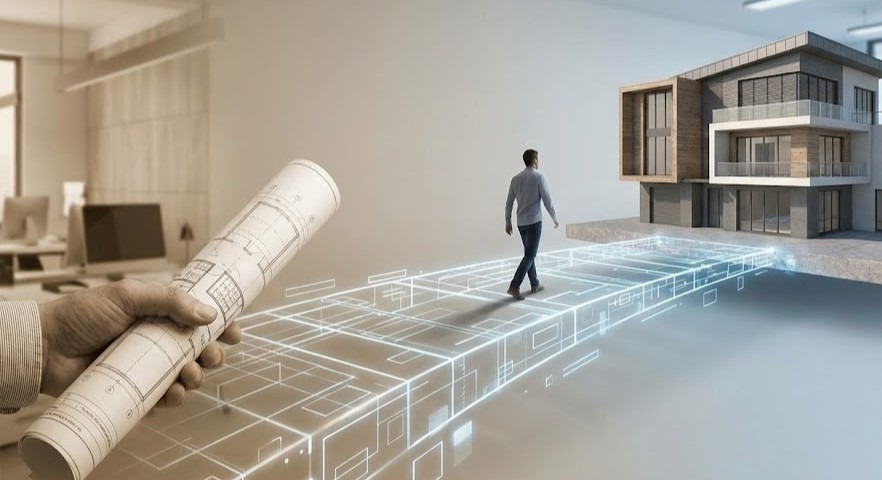
Revit is not something new we are waiting to adopt.
BIM is not a technology of tomorrow.
They are both the current foundation of global architecture, engineering, and construction.
Major projects across the world already rely on BIM for accuracy, collaboration, and data-driven results.
The faster professionals accept this shift, the faster they experience:
- Greater efficiency — fewer errors, faster delivery, smarter design changes
- Better predictability — clear visualization of outcomes before construction begins
- Higher profitability — optimized materials, reduced rework, controlled timelines
- Seamless collaboration — every discipline connected in one intelligent model
The sooner students embrace BIM, the sooner they become:
- More confident
- More employable
- Globally competitive from Day One
Because the next call you receive may not ask:
“Do you know AutoCAD?”
Instead, interviewers are now asking:
“Can you deliver in BIM?”
“Do you know Revit at a professional level?”
That’s the skill gap today’s industry wants to see filled.
Conclusion: The Future of Design Is Already Here

Saying “We’ve been doing it this way for 40 years — and it works!”
may have once been true… but now it represents a mindset that is slowing innovation and limiting professional growth.
Holding on to old tools creates barriers.
Embracing BIM creates possibilities.
Revit and BIM aren’t trends — they are the global standard.
They ensure accuracy, collaboration, and project success from design to facility management.
At BIM Cafe, our mission is simple:
- To empower Kerala’s engineers and architects with modern skills
- To prepare talent for world-class opportunities
- To close the gap between education and industry expectations
This shift doesn’t require fear.
Just the willingness to press one button:
Start.
Because moving from CAD to BIM is not just a smart decision —
it’s an inevitable one.