Author: Devika R
November 24, 2025
8 min read
Across Kerala — and increasingly across India — several BIM training institutes have begun advertising programs titled “BIM Coordinator Course for Freshers.”
At first glance, this sounds attractive. The title feels senior, authoritative, and career-boosting. Who wouldn’t want to skip a few steps and jump directly into a leadership-oriented BIM role?
But here’s the reality many students are unaware of:
A BIM Coordinator is not an entry-level job.
At BIM Cafe Learning Hub, we frequently meet students who share statements like:
“I completed a BIM Coordinator course… so I’m looking for a coordinator job now.”
And almost always, this misunderstanding results in disappointment — because the BIM Coordinator role requires much more than software familiarity. It demands real project exposure, coordination experience, and the ability to guide multidisciplinary teams.
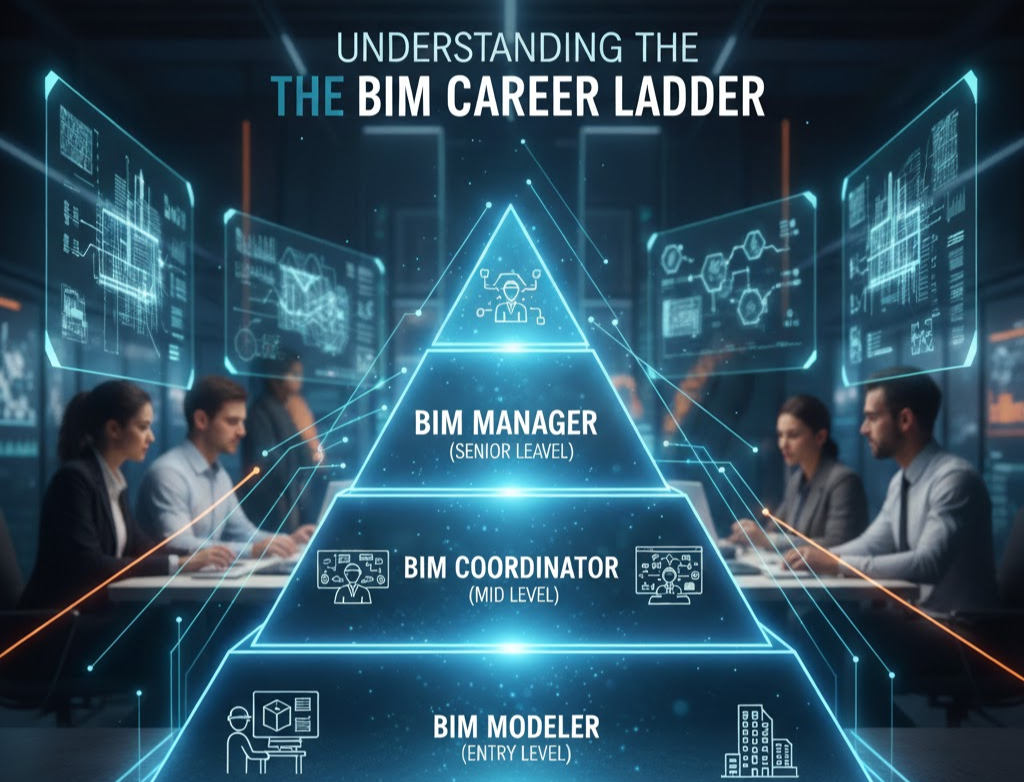
Understanding the BIM Career Ladder

Understanding the BIM Career Ladder
Before diving into what a coordinator actually does, it’s essential to understand how BIM careers are structured. Every BIM professional moves through a clear progression:
BIM Modeler (Entry Level)
A BIM Modeler is the starting point of every BIM career. Their responsibilities include:
- Creating accurate and detailed 3D models using Revit, Navisworks, AutoCAD, and discipline-specific tools
- Following project templates, standardized naming conventions, and drafting standards
- Producing architectural, structural, or MEP deliverables under senior supervision
- Understanding LOD (Level of Development) requirements for various project stages
- Supporting coordination teams with updated models and revisions
This is a hands-on technical role where you build the foundations of your BIM skills.
BIM Coordinator (Mid Level)
The Coordinator sits between the Modeler and the BIM Manager. Their responsibilities are significantly more complex:
- Reviewing architectural, structural, and MEP models for coordination issues
- Running clash detection using Navisworks Manage or ACC (Autodesk Construction Cloud)
- Facilitating weekly or biweekly coordination meetings
- Communicating with consultants, contractors, and project teams to resolve clashes
- Ensuring all models follow BEP (BIM Execution Plan) and ISO 19650 standards
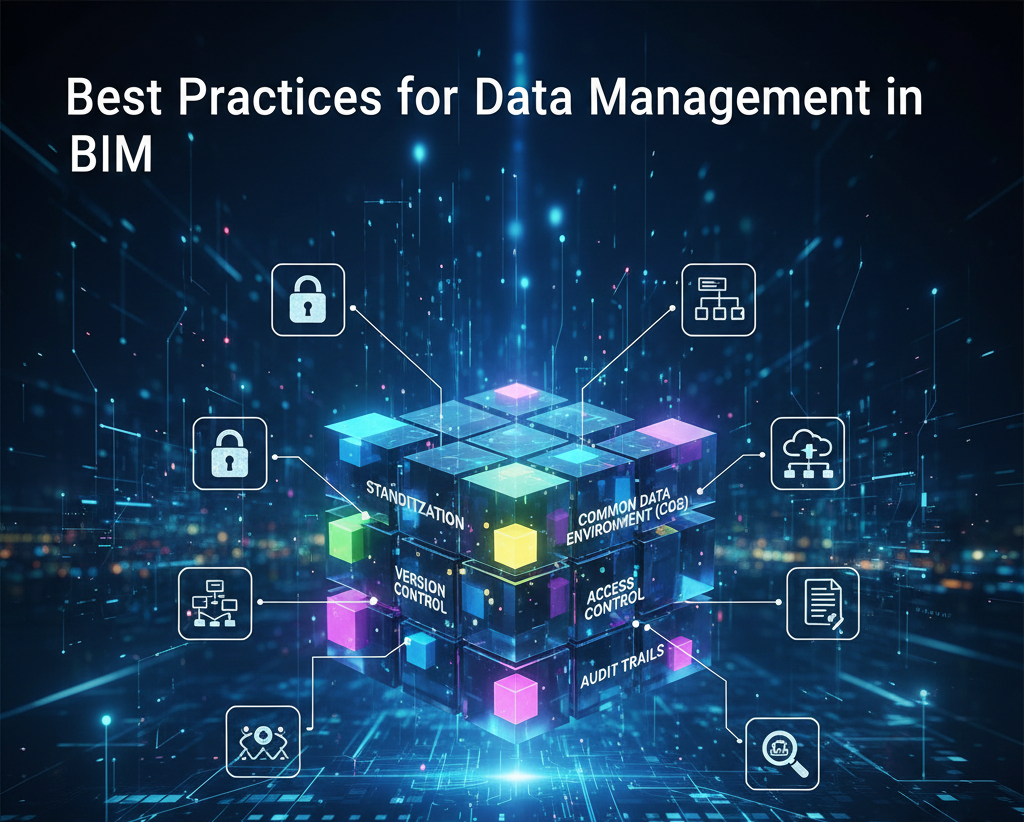
- Managing model versions, naming conventions, file structures, and workflow compliance
- Preparing federated models and coordination reports for client review
This role requires technical maturity and strong communication skills, which only come from experience.
BIM Manager (Senior Level)
The BIM Manager oversees the entire BIM workflow of a project or company:
- Developing BEPs, model standards, workflows, and quality guidelines
- Managing teams of coordinators, modelers, and technical specialists
- Communicating directly with the client, design consultants, and contractors
- Defining project-wide strategies for model delivery and CDE workflows
- Ensuring quality, consistency, and adherence to international standards
This is a leadership and strategy-focused role.
A BIM Coordinator sits in the middle of this hierarchy — and reaching that middle point requires experience that cannot be gained from software learning alone.
Why a Fresher Can’t Directly Become a Coordinator
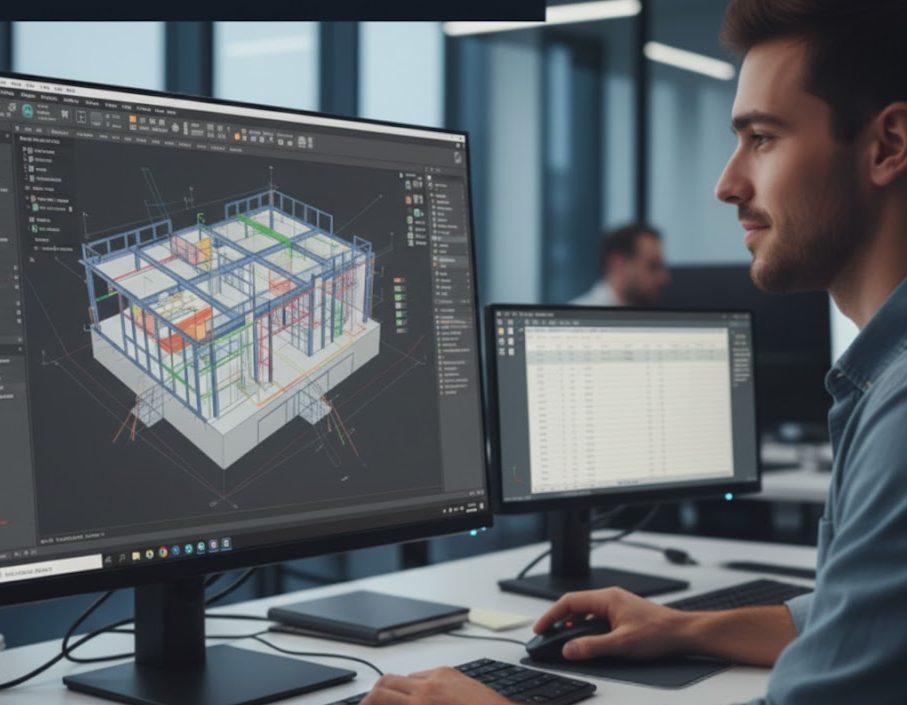
The core responsibility of a coordinator is managing and evaluating the work of others.
But a fresher has not yet built enough practical experience to take on that responsibility.
Fresh graduates typically lack:
- Experience working on LOD-based real-world BIM projects
- Knowledge of clash detection workflows, grouping, filtering, and reporting
- Proficiency in federated model assembly and QA checks
- Familiarity with ISO 19650 standards, naming rules, and documentation formats
- Confidence in communicating with consultants, clients, or site teams
- The decision-making ability needed during coordination meetings
- The technical maturity to handle model audits and model health assessments
Giving a fresher the title “BIM Coordinator” is like handing the controls of an aircraft to a trainee who hasn’t flown yet.
A first-year pilot cannot become an Airline Captain — they must earn flight hours.
Likewise, BIM Coordinators need project hours before leading others.
The Marketing Trap
Many training centers have realized that “Coordinator” sounds more appealing than “Modeler.”
So they label fundamental BIM programs as BIM Coordinator Courses to attract freshers.
But in reality, most of these programs teach:
- Basic Revit modeling
- Simple Navisworks navigation (not actual clash detection workflows)
- Limited drafting/documentation exercises
- No real multi-disciplinary project experience
- No exposure to BEP, CDE, or ISO workflows
This leads students to believe they are job-ready for a coordinator role — when industry expectations are far higher.
The industry never hires coordinators based on certificates alone.
They hire based on demonstrated project experience.
What a Real BIM Coordinator Actually Does
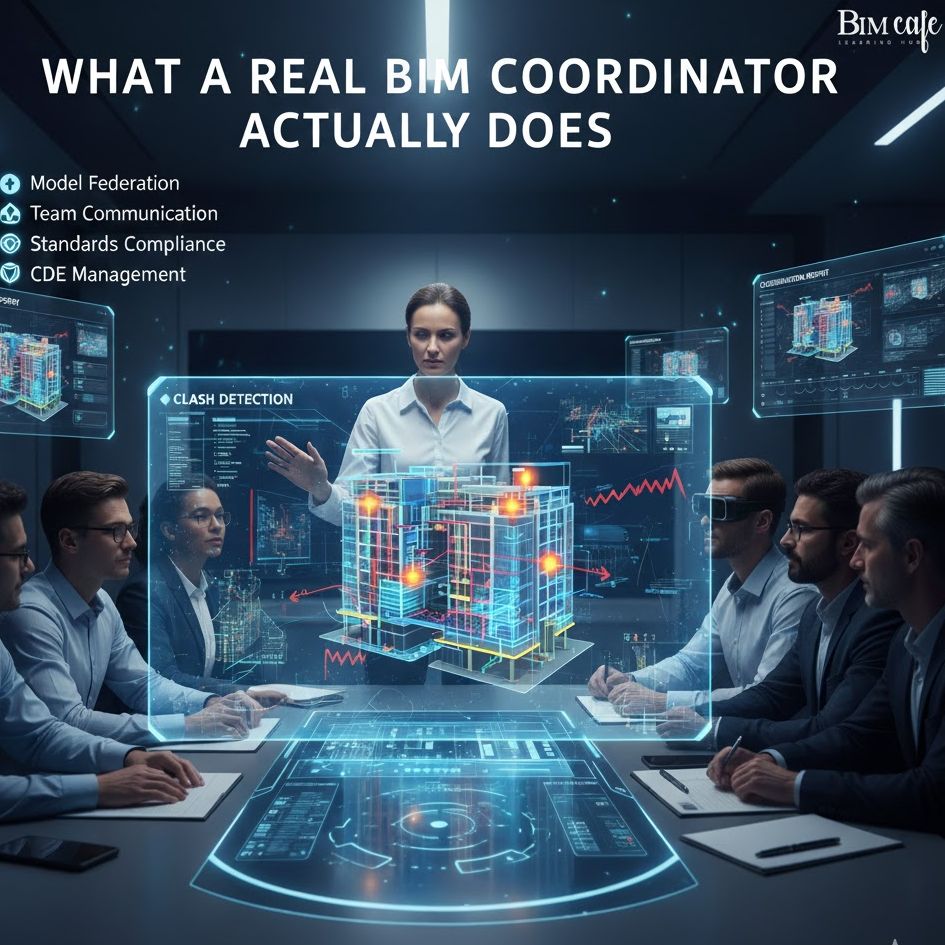
A genuine BIM Coordinator performs complex, multidisciplinary tasks that require judgment, communication, and technical depth:
- Model Federation: Combining architectural, structural, and all MEP models in Navisworks or ACC
- Clash Detection: Running clash tests, grouping clashes, identifying critical issues
- Report Preparation: Producing clear, actionable clash resolution reports with screenshots, priorities, and assigned responsibilities
- Team Communication: Coordinating with designers, contractors, and project teams to resolve clashes in coordination meetings
- Standards Compliance: Ensuring LOD, naming conventions, and documentation rules are strictly followed
- CDE Management: Working with platforms like BIM 360 / ACC for file hosting, versioning, permissions, and workflows
- Quality Control: Performing model audits and maintaining model health (warnings, file size, worksets, element IDs)
- BEP Implementation: Ensuring that every team follows the BIM Execution Plan correctly
This is a leadership-heavy role that requires both discipline and knowledge to project confidence.
How BIM Cafe Builds Coordinators the Right Way
At BIM Cafe Learning Hub, we don’t promote unrealistic titles.
We build industry-ready professionals through a structured, experience-based development track:
Stage 1: Learn the Tools
Students first acquire strong software and documentation skills:
- Revit (Architecture / Structure / MEP)
- Navisworks Manage (full clash detection workflows)
- BIM 360 / Autodesk Construction Cloud
- AutoCAD and project documentation workflows
- CDE navigation, file management, and version control
Stage 2: Apply on Real Projects
Students participate in real or simulated LOD-based, multi-disciplinary BIM projects:
- Full modeling of architecture, structure, and MEP
- Exposure to coordination cycles, issue tracking, and clash resolutions
- Producing project deliverables following standards
- Understanding BEP-driven workflows and industry file exchanges
- Participating in coordination reviews like real project teams
Stage 3: Grow into a Coordinator
After building technical foundations:
- Students learn issue tracking and coordination management
- They perform model audits, QA/QC checks, and BEP-driven workflows
- They gain confidence to communicate and coordinate across teams
This structured approach is called the:
“Modeler-to-Coordinator Pathway”
— the only realistic path to becoming a capable BIM Coordinator.
The Smart Way to Start Your BIM Career

The Smart Way to Start Your BIM Career
If you’re a fresher, the ideal and industry-accepted starting point is:
BIM Modeler
Why?
- You gain essential modeling accuracy and discipline knowledge
- You experience real-world BIM workflows, standards, and deliverables
- You understand how teams coordinate and resolve issues
- You gradually develop the technical and communication skills needed to become a coordinator
There are no shortcuts — but the growth is steady and reliable.
When you eventually become a BIM Coordinator, you won’t just review models.
You’ll manage people, processes, and quality.
Final Thoughts
A course can teach you software tools, but only real project experience can teach true coordination. So the next time you see a “BIM Coordinator Course for Freshers,” pause and ask yourself whether you will actually coordinate real project teams or simply learn how to use the software.
At BIM Cafe Learning Hub, we focus on what the industry genuinely demands rather than what sounds appealing for marketing, and that’s why our graduates emerge confident, employable, and globally BIM-ready. If you want training that mirrors real BIM workflows and prepares you for actual industry roles, explore our Professional BIM Programs and take the first step toward a career that truly matches your potential.
FAQs:
A BIM Coordinator, however, manages models from multiple disciplines, resolves clashes, and ensures BIM standards are followed across the entire project. The Coordinator role is a progression that comes after mastering modeling workflows and real project execution.
- Revit (Architecture, Structure, MEP)
- Navisworks Manage for clash detection
- Autodesk Construction Cloud (ACC) / BIM 360
- ISO 19650 documentation and BEP requirements
- Coordination workflows and issue tracking