Author: Devika R
January 9, 2026
8 min read
India’s infrastructure sector is undergoing a major digital shift.
When a conglomerate like Adani Group partners with a global technology leader like Autodesk, it sends a clear message to the industry — and especially to students.
BIM is no longer optional.
Digital construction is no longer future-facing.
It is how large projects are being delivered today.
This blog explains what the Autodesk × Adani collaboration really means, and why BIM students and early professionals should pay close attention in 2026.
What Is the Autodesk × Adani Partnership About?
The Adani Group has partnered with Autodesk to implement BIM and digital construction platforms across its large infrastructure projects.
The focus is not just design software, but:
- Digital project delivery
- Integrated BIM workflows
- Data-driven decision-making
- Collaboration across design, construction, and execution teams
In simple terms:
BIM is being used as a project management and coordination system — not just a modelling tool.
Why This Is Big News for BIM Students
The Autodesk × Adani collaboration is not just another corporate technology announcement—it reflects a structural change in how large infrastructure projects are now planned, executed, and controlled. For BIM students and early-career professionals, this shift carries serious career implications.
1. BIM Is Now a Core Industry Process
Large infrastructure organisations do not adopt digital platforms for experimentation or trend-following. Companies operating at the scale of Adani Group manage projects worth thousands of crores, involving multiple contractors, consultants, timelines, and risk layers. Any system adopted at this level must deliver measurable operational value, not theoretical benefits.
BIM is being embedded because it directly improves:
Coordination efficiency
BIM enables multidisciplinary teams—architects, structural engineers, MEP consultants, contractors, and project managers—to work within a shared digital environment. Conflicts are identified early, communication gaps are reduced, and coordination becomes systematic rather than reactive.
Cost and time predictability
When BIM is used as part of project delivery, quantities, sequencing, and construction logic are digitally validated before execution. This reduces rework, unexpected variations, and scheduling delays—critical factors for infrastructure projects where time overruns translate into massive financial losses.
Project control at scale
BIM allows project leadership to monitor progress, design changes, and issue resolution across multiple packages and stakeholders. Instead of fragmented drawings and disconnected reports, decision-makers rely on a centralized, data-driven system that reflects real project status.
The key takeaway for students is clear:
BIM is no longer positioned as a support tool for design teams. It has evolved into a core project management and delivery system used at the highest organisational levels.
This confirms a crucial industry reality for 2026:
BIM skills are no longer treated as an optional advantage or a “nice to have” certification. They are now part of baseline professional competency, especially for roles connected to infrastructure, EPC projects, and large-scale developments.
For BIM students, this means employability is no longer determined by whether you “know BIM software,” but by whether you understand how BIM operates within real project ecosystems. Those who align their learning with this reality gain a clear advantage, while those treating BIM as an add-on skill risk being left behind as industry expectations continue to rise.
2. BIM Is About Workflows, Not Just Software
The Autodesk × Adani collaboration clearly highlights a shift that has been building across the industry for several years—but is now impossible to ignore. BIM is no longer evaluated as a software skill; it is assessed as a project delivery capability.
For a long time, students believed that having credentials such as “Revit Certified” or stating “good knowledge of BIM software” was enough to secure entry-level roles. While software proficiency is still necessary, it is no longer sufficient. Large organisations implementing BIM at scale are not hiring model creators in isolation—they are hiring professionals who can function within structured, collaborative BIM ecosystems.
As a result, recruiters are increasingly unimpressed by CVs that focus only on tools. What they now look for goes much deeper.
Understanding of BIM workflows
Employers expect candidates to understand how information flows across a project lifecycle—from design development and coordination to construction support and handover. This includes knowing how models are developed, reviewed, shared, updated, and approved within defined processes, not just how they are created.
Coordination exposure
Modern BIM roles involve working with multiple disciplines simultaneously. Recruiters value candidates who have experience identifying clashes, managing coordination issues, participating in review cycles, and responding to design changes—because this reflects real project responsibility rather than isolated modelling tasks.
Standards awareness
Large infrastructure projects operate under strict BIM standards, naming conventions, LOD definitions, and documentation protocols. Candidates who can demonstrate familiarity with these frameworks show that they can integrate into professional project teams without extensive retraining.
Ability to work within shared digital environments
Platforms like common data environments (CDEs) are now central to project execution. Recruiters assess whether candidates understand version control, permissions, issue tracking, and collaborative workflows—because BIM today is as much about managing information as it is about creating models.
This is the core reason why many CVs are rejected even when candidates “know Revit.”
Software knowledge without workflow context signals limited project readiness. In contrast, candidates who demonstrate how they contribute within structured BIM processes are seen as immediately valuable to organisations operating at scale.
In 2026, BIM careers are shaped not by how well you use a tool, but by how effectively you function within a digital project delivery system.
3. Digital Construction Skills Are Becoming Mandatory
The Autodesk × Adani collaboration also signals a decisive move toward full-scale digital construction environments, where BIM extends far beyond modelling and becomes the central operating system for project delivery. Platforms such as Autodesk Construction Cloud (ACC) are no longer optional add-ons—they are becoming standard infrastructure on large projects.
These platforms are actively used to:
Share and control project data
All drawings, models, RFIs, submittals, and revisions are managed within a centralized environment. This ensures that every stakeholder works from the most current information, reducing errors caused by outdated files or fragmented communication.
Coordinate multiple disciplines
Architectural, structural, and MEP teams collaborate within a single digital framework. Changes made by one discipline are visible to others, enabling faster resolution of conflicts and more coordinated decision-making across the project team.
Track issues and changes
Digital construction platforms allow teams to log issues, assign responsibility, monitor progress, and document resolutions. This creates accountability and transparency, both of which are essential on large, complex projects with multiple contractors and tight timelines.
Maintain a single source of truth
Perhaps the most critical function, a shared digital environment ensures that all project decisions, approvals, and updates are recorded in one authoritative system. This eliminates confusion, reduces disputes, and supports data-driven project control.
This way of working is not experimental. It mirrors how projects are already executed in:
- The Gulf, where BIM-driven construction management is standard on major developments
- Large EPC environments, where digital coordination is essential to manage scale and risk
- International infrastructure projects, where distributed teams rely on shared digital platforms for execution
For students, the implication is clear and unavoidable:
Learning BIM today is not about producing visually impressive models. It is about understanding how real projects operate, how information is managed, and how decisions are coordinated across teams and timelines.
Those who develop digital construction skills early position themselves to integrate seamlessly into professional project environments. Those who focus only on modelling aesthetics risk being unprepared for how the industry actually works in 2026 and beyond.
What This Means for BIM Careers in India and the Gulf

| Area | Traditional Expectation | 2026 Reality |
| BIM Usage | Design support | Project delivery backbone |
| Skills Focus | Software commands | Workflow + coordination |
| Hiring Criteria | Tool knowledge | Responsibility & outputs |
| Student Advantage | Certificates | Project readiness |
Why Many Revit CVs Still Get Rejected

Despite news like this, many students still face rejection because their CVs show:
- Tools without context
- Academic projects presented as professional work
- No LOD or discipline clarity
- No coordination exposure
- No mention of standards or deliverables
Meanwhile, recruiters influenced by large-scale BIM adoption expect:
- Clear project roles
- Defined responsibilities
- Outputs, not tool lists
This gap is where most careers stall.
How Students Should Prepare After This Industry Shift
Instead of asking:
“Which software should I learn next?”
Students should ask:
- Can I explain a complete BIM workflow?
- Have I handled discipline coordination scenarios?
- Can I describe what I delivered on a project?
This approach aligns far better with how companies like Adani now expect teams to operate.
What This Confirms About BIM Training
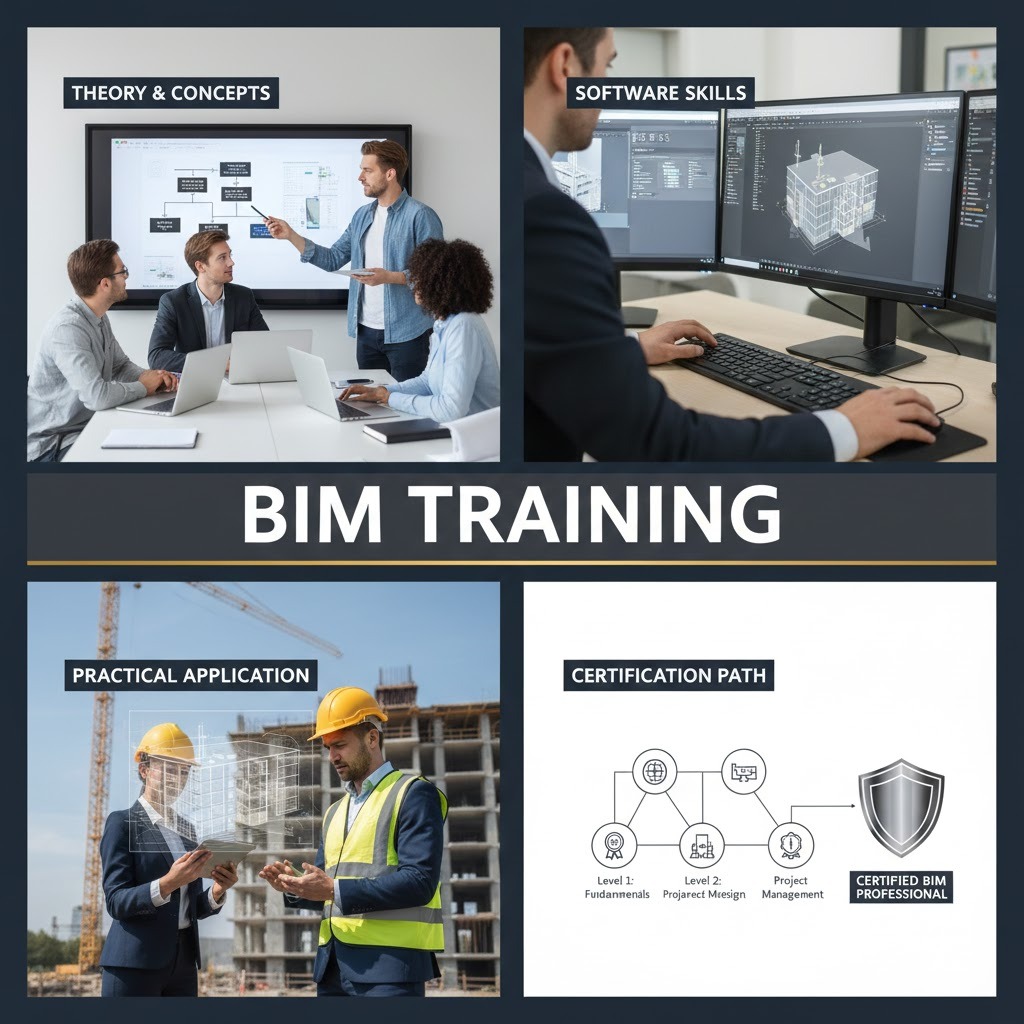
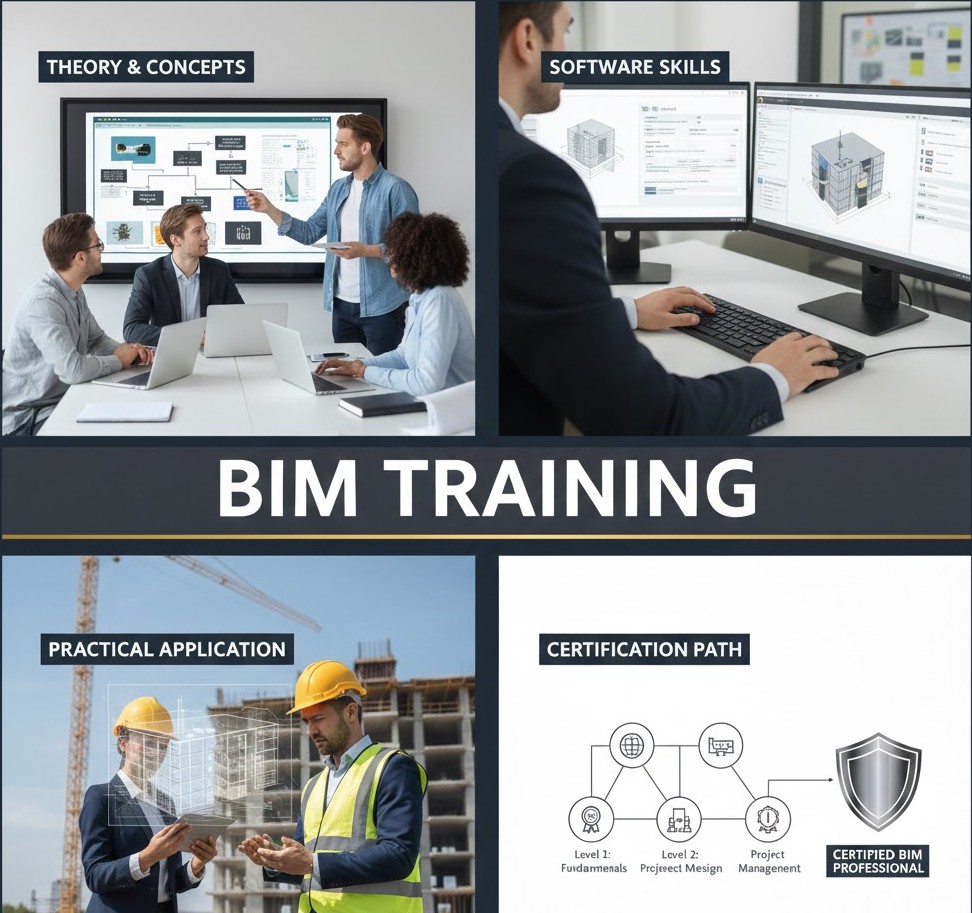
Industry-level moves such as the Autodesk × Adani partnership reinforce one critical truth about BIM education in 2026: learning BIM can no longer be software-centric or certificate-driven. As BIM becomes deeply embedded into real infrastructure execution, training models must reflect how projects are actually delivered on the ground.
BIM education today must be project-oriented, workflow-driven, and aligned with real industry delivery models—the same models used by large developers, EPC contractors, and international project teams.
This is precisely why structured learning environments like BIM Cafe Learning Hub are designed around industry realities rather than classroom theory. The focus is not on teaching tools in isolation, but on preparing learners to operate confidently within professional BIM ecosystems.
At BIM Cafe Learning Hub, training is built around:
Real project workflows
Learners are exposed to end-to-end BIM processes, helping them understand how information moves across disciplines, stages, and teams within live project environments.
Discipline-specific depth
Instead of generic BIM overviews, training dives deep into architectural, structural, and MEP-specific responsibilities, ensuring clarity on roles, deliverables, and coordination expectations.
CV and portfolio alignment
Students are guided to present their work the way employers expect—highlighting responsibilities, outputs, and project contributions rather than just software proficiency.
Job readiness over software-only training
The emphasis is on making learners project-ready, capable of contributing within shared digital environments from day one, rather than simply operating modelling tools.
Assurance of placement through project-oriented learning
By aligning training with real project execution models, learners are positioned to meet recruiter expectations, improving employability and long-term career growth.
The takeaway is simple:
As BIM becomes a core delivery system for major infrastructure projects, BIM training must evolve to match that reality. Platforms like BIM Cafe Learning Hub exist to bridge the gap between academic learning and industry execution—ensuring students are trained for how BIM is actually used, not just how it is taught.
Final Takeaway for Students
The Autodesk × Adani partnership is not just corporate news; it is a clear indicator of where the construction industry is heading. BIM is no longer positioned as a support function or optional digital layer—it is now embedded directly into real infrastructure execution, influencing how projects are planned, coordinated, monitored, and delivered at scale. This shift confirms that digital construction is no longer experimental or future-facing; it has become the operational foundation for how major organisations execute complex projects today.
It is a clear indicator of where the construction industry is heading.
- BIM is now embedded in real infrastructure execution
- Digital collaboration skills are becoming non-negotiable
- Students who align early will have a long-term advantage
If you are learning BIM in 2026, you are not preparing for theory —you are preparing for how the industry already works.