Cement Industry Moves Toward More Consistent Embodied-Carbon Reporting
October 10, 2026
2 Min Read
A new industry framework is aiming to make environmental reporting for cement and supplementary cementitious materials more consistent.
The American Cement Association has announced a unified Product Category Rule for cementitious materials. The framework brings together previously separate rules covering construction cements, supplementary cementitious materials, and slag cement.
Why This Matters for Construction
Environmental Product Declarations, or EPDs, are increasingly being used to understand the environmental impact of construction materials.
But comparing products becomes difficult when manufacturers use different approaches to calculate and report environmental information.
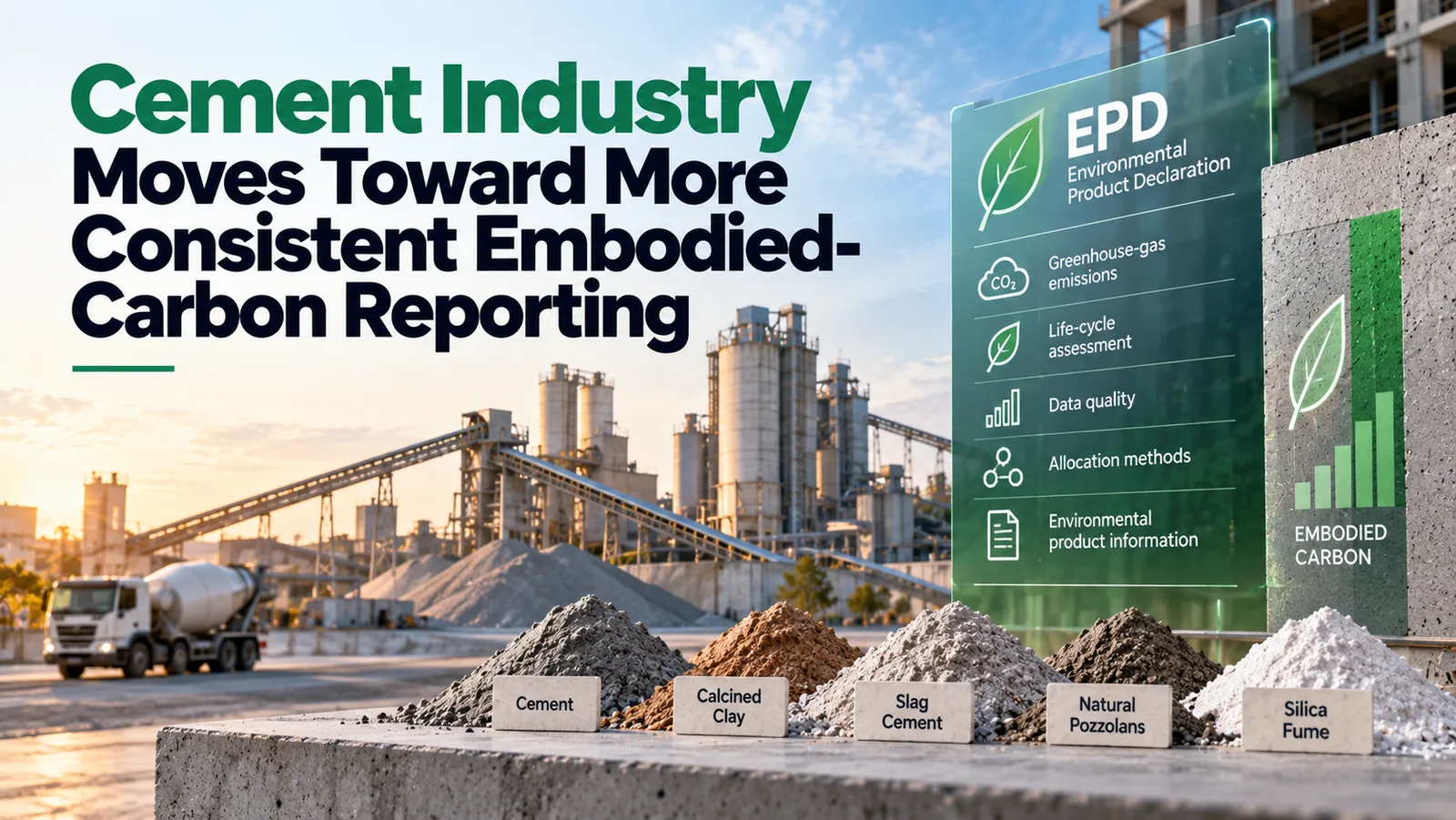
The new framework aims to create a more consistent basis for reporting areas such as:
- Greenhouse-gas emissions
- Life-cycle assessment
- Data quality
- Allocation methods
- Environmental product information
The framework covers a broad range of cementitious materials, including calcined clay, slag cement, natural pozzolans and silica fume.
The Design Impact
For architects, engineers and contractors, better environmental data can make material selection more informed.
As embodied carbon becomes increasingly important in project decisions, reliable product-level information can help design teams compare materials earlier rather than assessing environmental impact only after the design is complete.
Why It Matters
Sustainable construction increasingly depends on measurable data, not just broad sustainability claims.
BIM Cafe Insight: Greener construction needs more than greener materials. It needs reliable information that lets project teams understand and compare their environmental impact.
Related News
-

-

-

Dublin MetroLink Moves Into a Major Delivery Phase
October 1, 2026 -

-