
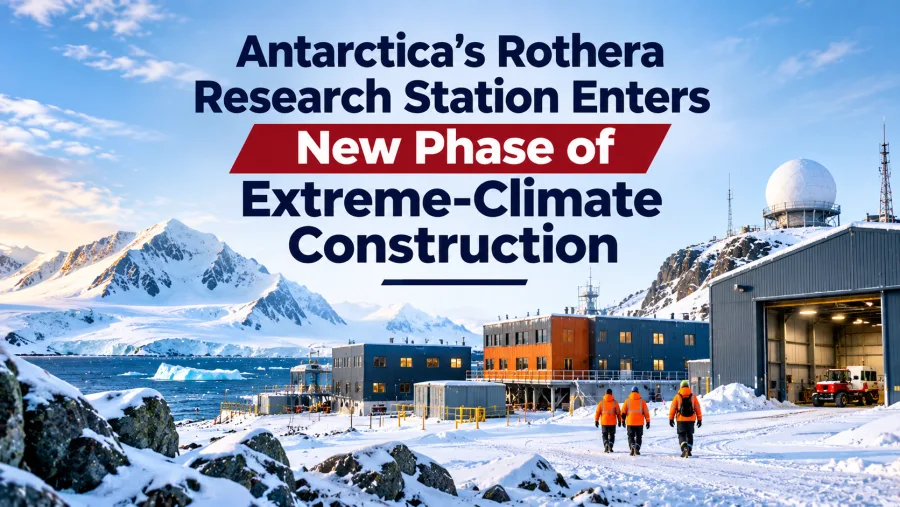
From wharf resurfacing to aircraft hangar improvements, the British Antarctic Survey is advancing infrastructure projects in one of the world's most demanding construction environments.
Building in Antarctica presents challenges rarely encountered on conventional construction sites. Extreme temperatures, remote logistics and limited seasonal access leave little room for delays.
At Rothera Research Station, the British Antarctic Survey (BAS) is advancing its infrastructure modernisation programme during the 2026–27 Antarctic season, combining new construction activities with improvements to existing facilities.
Several Projects, One Short Construction Season
One of the immediate priorities is resurfacing Rothera's wharf, an essential facility for receiving the equipment, materials and supplies needed to operate the research station.
Preparatory work is also beginning on the station's aircraft hangar redevelopment. This includes constructing a new access road and relocating runway lighting infrastructure to support future building activities.
Meanwhile, the recently constructed Discovery Building has completed its first Antarctic winter in use. Teams are undertaking remaining finishing works and improvements to mechanical, electrical, ventilation and fire-protection systems.
Preparing for Renewable Energy Integration
BAS is also developing plans to introduce building-mounted solar panels, battery energy storage and a smart grid.
The main renewable energy installation is scheduled for the 2027–28 Antarctic season, with preparatory design work progressing ahead of construction.
Delivering these projects requires careful scheduling around shipping windows, aircraft operations and ongoing scientific research.
For construction and engineering professionals, Rothera offers an unusual example of infrastructure delivery where environmental conditions and logistical constraints directly influence construction methods, building performance and project sequencing.