
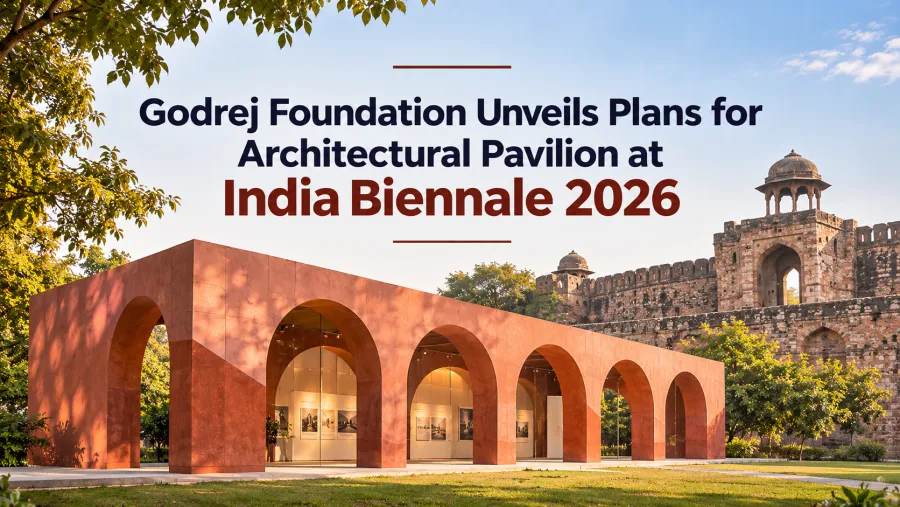
The temporary cultural space at Delhi's historic Purana Qila will bring contemporary architecture into dialogue with Mughal heritage.
A new architectural pavilion is planned within the historic grounds of Purana Qila in New Delhi as part of India Biennale 2026.
The Godrej Foundation, in collaboration with the Ministry of Culture and architectural practice AUR, will develop the Godrej Pavilion as a temporary space for exhibitions, artistic activities and public engagement.
The pavilion is scheduled to open on 4 December 2026, alongside the India Biennale, which will continue until 21 March 2027.
Architecture Inspired by Historic Arches
Designed around the theme Shadows of the Arches, the pavilion draws inspiration from the geometric forms found in Mughal architecture.
Its proposed design incorporates outward-facing arches and cement-board surfaces finished to evoke the red sandstone of the surrounding historic structures.
Strategically positioned openings will allow natural light into the exhibition spaces while providing views of the heritage setting.
The project also aims to employ low-impact, reusable construction methods, reflecting the installation's temporary nature and the sensitivity of its location.
Designing Within a Heritage Setting
Constructing a contemporary structure within a protected historic precinct requires careful consideration of materials, scale and the relationship between old and new architecture.
Rather than creating a permanent addition, the Godrej Pavilion is intended to demonstrate how temporary cultural spaces can engage with an important heritage site.
For architects and design professionals, the project offers a timely example of architectural expression shaped by historical context, material choices and the need for minimal intervention.