
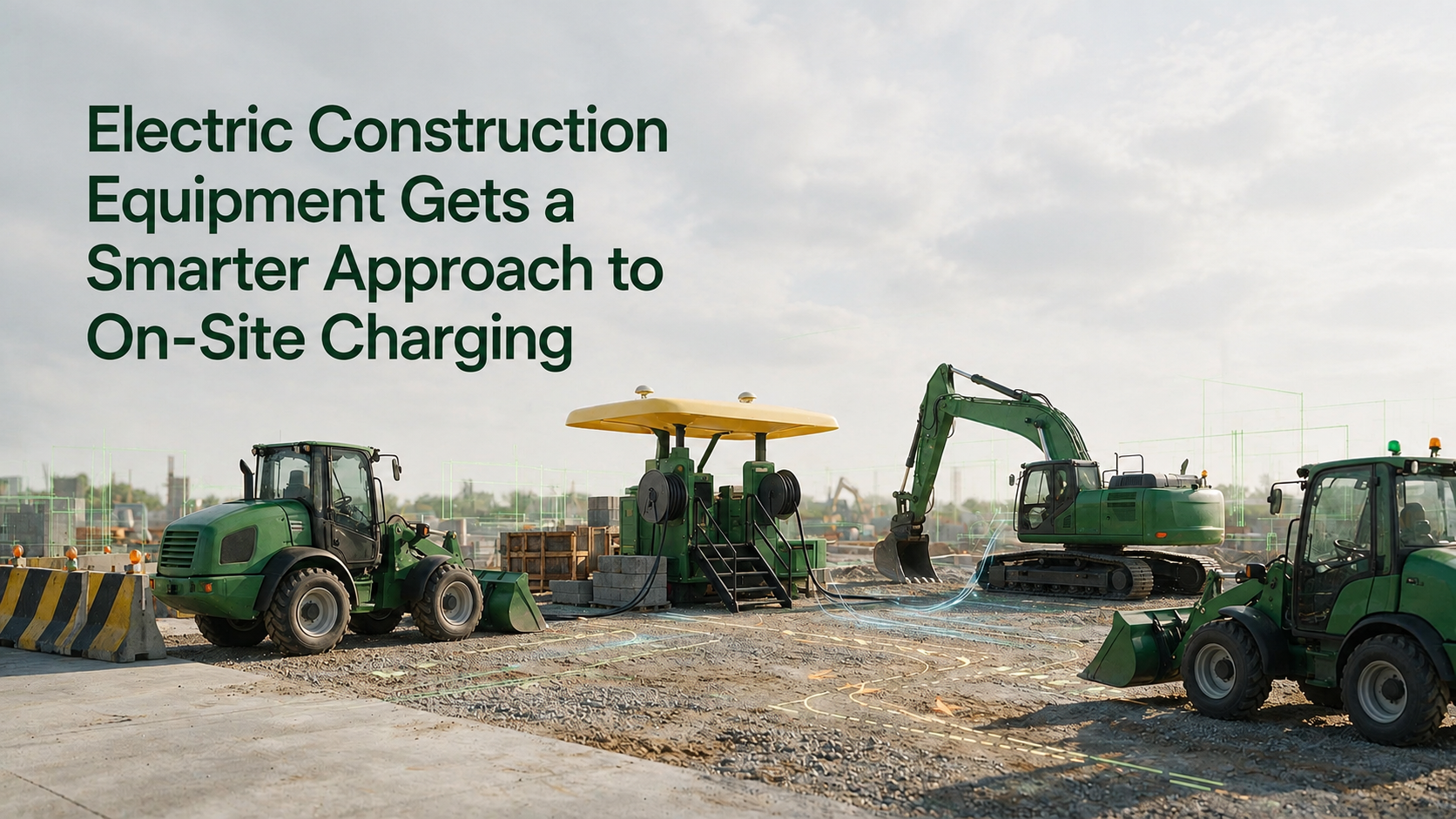
Electric Construction Equipment Gets a Smarter Approach to On-Site Charging
August 28, 2026
2 Min Read
Construction equipment is gradually moving away from diesel, but replacing a diesel machine with an electric one creates a practical challenge: how do you keep it charged while the work continues?
New research is looking at this problem from a site-planning perspective, exploring how electric construction vehicles can be coordinated with mobile charging stations rather than treating charging as a separate task.
The study uses real-world data from an electric excavator demonstration to examine how equipment activity, battery consumption and charging requirements can be managed together.
More Than Just Switching to Electric
Electrifying construction equipment isn't simply a matter of replacing one machine with another.
Electric excavators, loaders and other machinery need careful planning around:
- Battery consumption
- Charging locations
- Machine operating schedules
- Available charging capacity
- Equipment movement around the site
- Energy costs
- Project productivity
The research proposes coordinating equipment operations with mobile charging so that machines can receive power when and where it is needed, without unnecessarily interrupting construction activities.
A New Layer of Construction Planning
This could become increasingly important as contractors introduce more electric machinery onto projects.
A traditional construction schedule mainly asks which machine is needed, where and when. Electric equipment adds another question: when and where will that machine need energy?
That means future site planning could increasingly bring together equipment scheduling, logistics and energy management.
The implications extend beyond individual machines. As construction sites become more electrified, contractors may need to plan temporary charging infrastructure alongside access routes, work zones and equipment deployment.
Why It Matters
The move toward electric construction equipment is often discussed from a sustainability perspective, but the operational challenge is just as important.
Electric machinery can only deliver its full potential if charging can be integrated smoothly into the working day. Smarter scheduling could help reduce unnecessary downtime while making better use of available energy.
BIM Cafe Insight:
The construction site of the future won't just need a plan for where machines work—it may also need a plan for where those machines get their power.
Related News
-

BIM Could Give Construction Safety a Long-Term Memory
September 9, 2026 -

-

-
Construction Insurance Starts Looking to Digital Project Data
August 31, 2026 -

When the BIM Model Becomes the Construction Quality Inspector
August 24, 2026