
Construction Insurance Starts Looking to Digital Project Data
August 31, 2026
2 Min Read
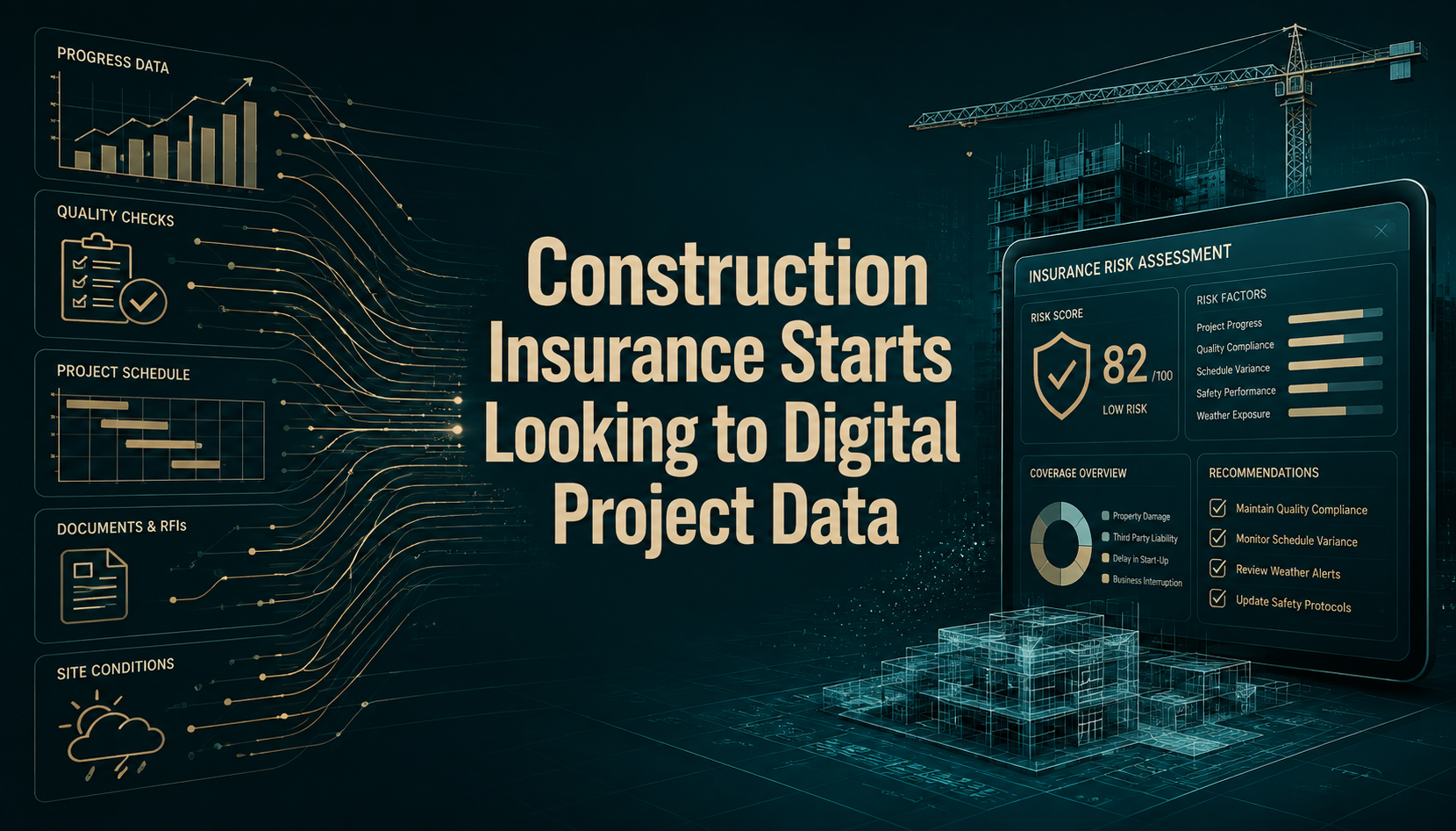
Construction projects are becoming more digital, but the insurance industry has traditionally relied on reports, photographs, and documentation gathered after problems occur. That approach is beginning to change as insurers and technology providers explore how digital project information can help them understand construction risk earlier.
Instead of waiting until a dispute, delay, or defect appears, insurers are increasingly interested in the data generated throughout a project—construction schedules, progress records, quality checks, and digital documentation.
Why This Is a Different Kind of Digital Construction Story
Most discussions around BIM focus on architects, engineers, and contractors. Insurance sits outside the traditional design team, yet it plays an important role in every major project.
Better access to reliable project information could help insurers understand:
- Whether construction is progressing as planned
- How changes are documented
- Where potential risks are emerging
- Whether quality checks have been completed
- How project records are maintained
The result could be a shift from reacting to claims after something goes wrong toward identifying warning signs while a project is still underway.
Why It Matters for BIM Professionals
This development expands the audience for digital construction information. BIM and connected project data are no longer valuable only to those designing or building an asset—they are increasingly relevant to owners, lenders, insurers, and other organisations that depend on accurate project records.
As digital delivery matures, reliable information may become an important part of how project risk is assessed as well as how projects are coordinated.
BIM Cafe Insight: The next users of BIM data may not be architects or engineers. As project information becomes more trustworthy, insurers and other financial stakeholders could become some of its most important users.
Related News
-

BIM Could Give Construction Safety a Long-Term Memory
September 9, 2026 -

-

-
-
When the BIM Model Becomes the Construction Quality Inspector
August 24, 2026